

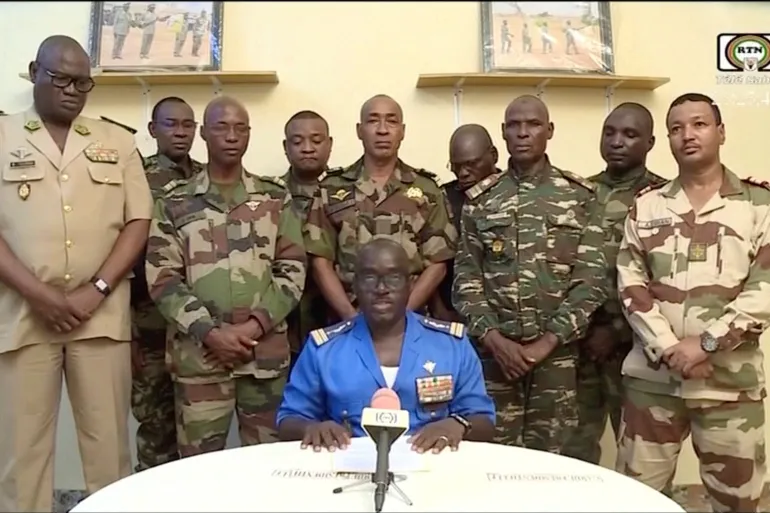

Niger soldiers stated that they had ousted President Mohamed Bazoum from power. This came after members of the presidential guard detained the politician at his official residence. Colonel-Major Amadou Abdramane announced that the defense and security forces had decided to put an end to the current regime.
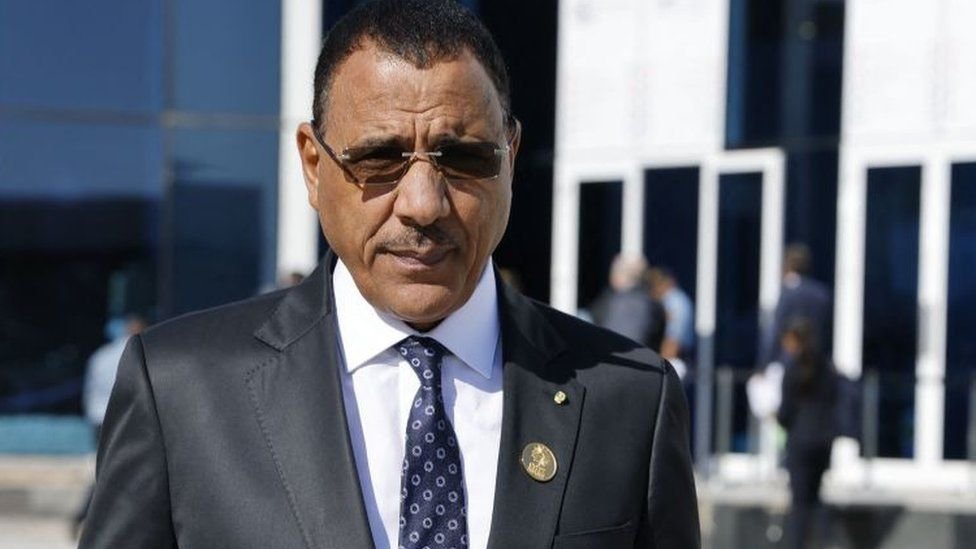
The soldiers attributed their actions to the worsening security situation and mismanagement of social and economic affairs. They closed the country’s borders and imposed a nationwide curfew, suspending all institutions.
Colonel-Major Amadou Abdramane, surrounded by nine other officers in military attire, delivered the statement on behalf of the group calling itself the National Council for the Safeguarding of the Country. They cautioned against foreign intervention.
Earlier in the day, Niger’s presidency reported that members of the elite guard unit were involved in an “anti-Republican demonstration,”. The news agencies indicated that President Bazoum was being held at the palace by the mutinous forces.
At the time of Abdramane’s announcement, it remained unclear where the president was, and whether he had resigned from his position.
The US calls for the release of President Mohamed Bazoum
Following the reports of President Mohamed Bazoum’s detention, the United States promptly called for his release.
US Secretary of State Antony Blinken expressed the United States’ strong support for President Bazoum. He called him the democratically elected leader of Niger and urged his immediate release.
The military takeover in Niger is the seventh coup in the West and Central Africa region since 2020. It could complicate efforts by Western powers to help countries with armed groups linked to al-Qaeda and ISIS.
The US has a vested interest in Niger, with two drone bases and about 800 troops, including special forces, supporting the Nigerian military. Niger is a critical ally in fighting armed groups and addressing irregular migration from sub-Saharan Africa.
The United Nations, the African Union, and the Economic Community of West African States (ECOWAS) all condemned the apparent coup. It emphasized the importance of protecting democratic governance and constitutional order.
Nigerian President Bola Tinubu, as the ECOWAS commission’s chairman, asserted that the regional bloc would resist any attempt to overthrow Niger’s government and pledged to ensure democracy thrives in the region.
President Patrice Talon of neighboring Benin traveled to Niger to assess the situation and emphasized the importance of restoring constitutional order peacefully.
