

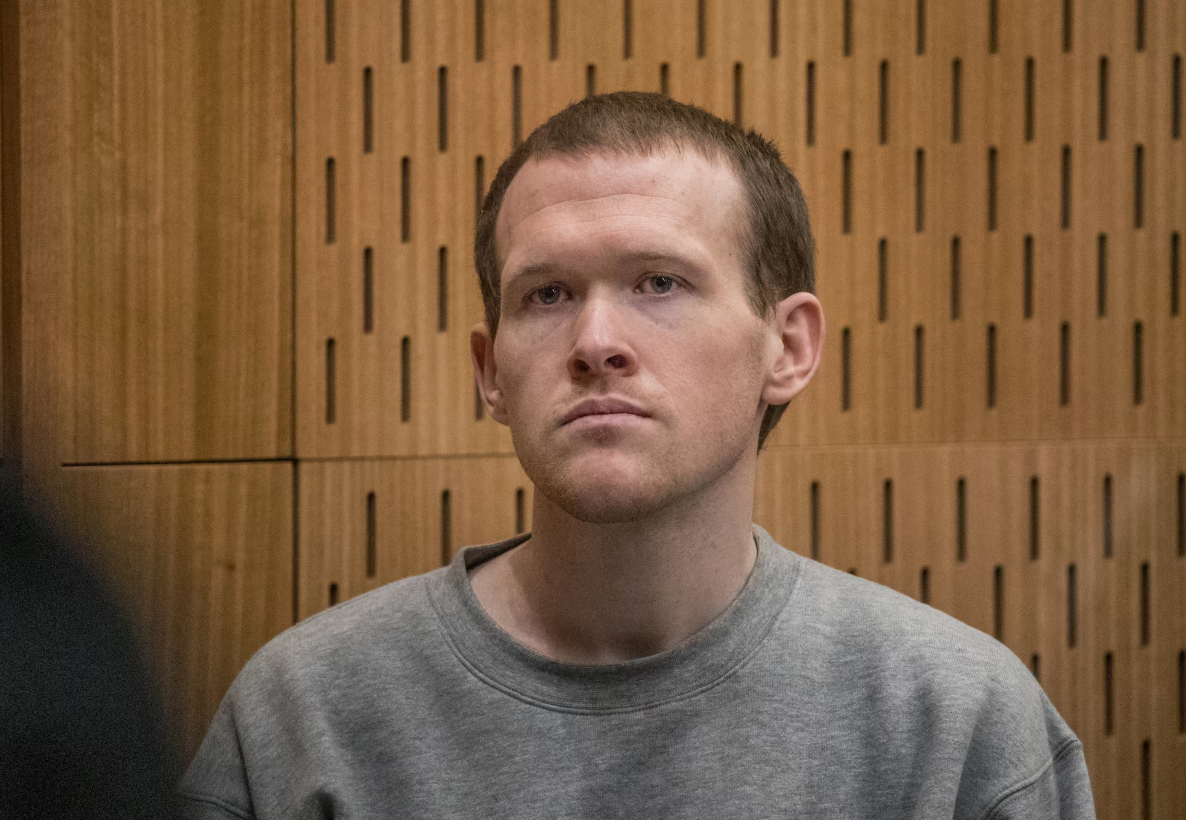

Brenton Tarrant, the gunman behind the 2019 Christchurch mosque attacks, has told a New Zealand court that mental health issues forced him to plead guilty. The 35-year-old, an Australian national, appeared in the Court of Appeal in Wellington via video link seeking to overturn his convictions.
Tarrant said prison conditions before his guilty pleas were harsh and inhumane, affecting his ability to make rational decisions. He argued that he was not mentally fit to enter informed pleas when he admitted to 51 counts of murder, 40 counts of attempted murder, and one charge of committing a terrorist act.
Background of the Christchurch Attack
In March 2019, Tarrant opened fire on two mosques during Friday prayers, killing 51 Muslim worshippers. The attack became the deadliest mass shooting in New Zealand’s history.
Tarrant had initially denied all charges and was preparing for trial. However, a year later he pleaded guilty, ending the court process and receiving life imprisonment without parole — the first such sentence in New Zealand’s legal history.
Prior to the attacks, Tarrant released a racist manifesto and livestreamed the shootings using a head-mounted camera. The manifesto reflected his extremist and white supremacist beliefs, which motivated the attack.
Mental Health Claims and Appeal Process
Tarrant told the Court of Appeal that prolonged imprisonment had deteriorated his mental health. “I did not have the mind frame or mental health required to be making informed decisions at that time,” he said. He explained that his choices were not voluntary or rational due to the conditions of his detention.
The appeal court will assess whether Tarrant was indeed incapable of rational decision-making when he entered his guilty pleas. If the court accepts the appeal, the case will return to the High Court for him to stand trial on the charges.
If the appeal is rejected, a separate hearing later this year will review the sentence imposed on Tarrant. The appeal process is scheduled for five days, concluding on Friday.
Life Sentence Without Parole
Tarrant remains in prison serving life without parole, marking a first in New Zealand’s judicial history. The sentence ensures he will spend the remainder of his life behind bars, reflecting the severity of his crimes.
Legal counsel representing Tarrant have been granted anonymity by the court and were unavailable for comment. Authorities and observers continue to follow the appeal closely due to its potential impact on criminal precedent in New Zealand.
