
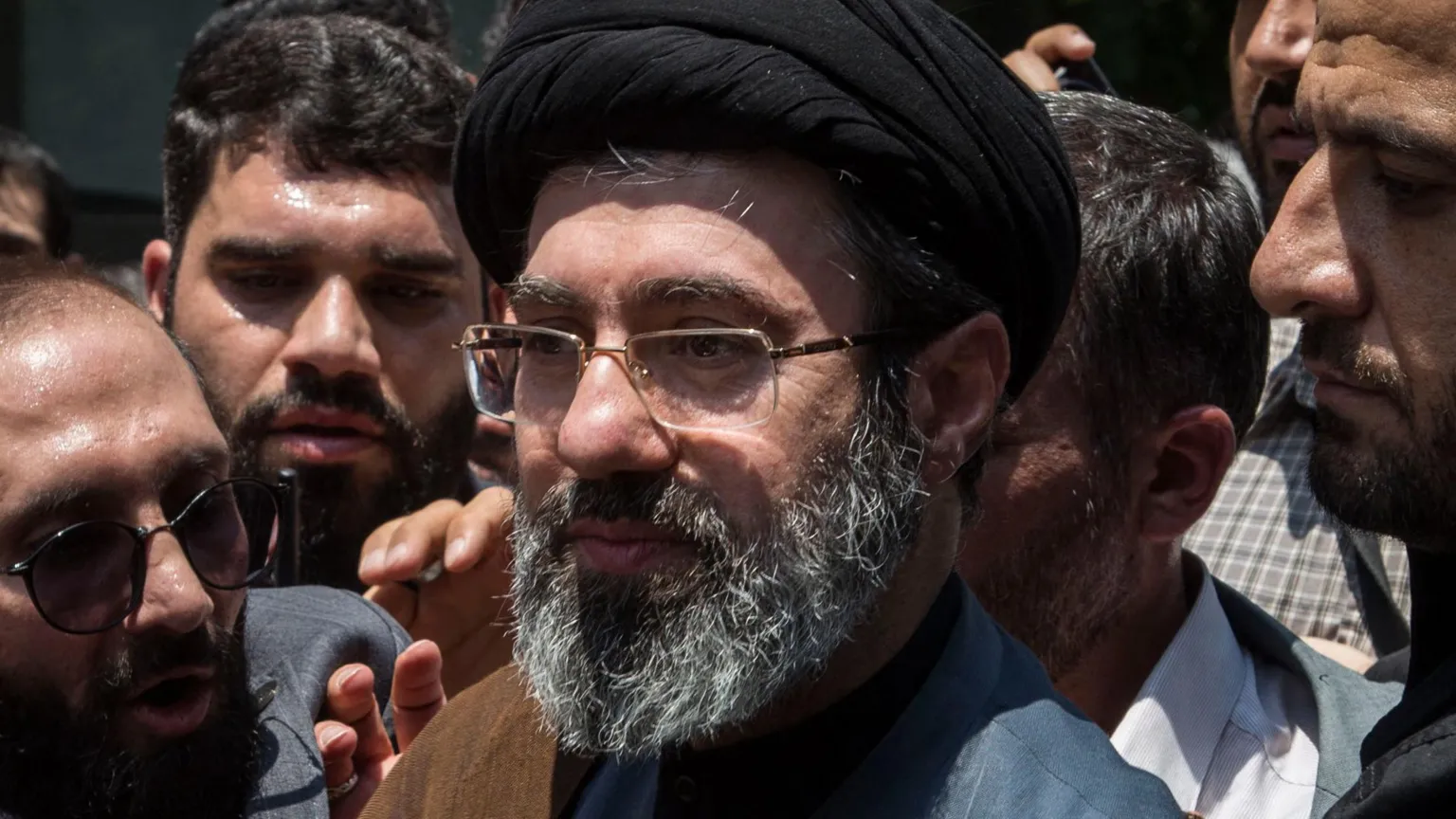

Iran’s newly appointed Supreme Leader, Ayatollah Mojtaba Khamenei, has delivered his first public message following his assumption of leadership.
The statement emphasized resistance, national unity, and continued military pressure during the ongoing regional conflict.
In his written address, the leader urged Iranians to remain united during what he described as a period of intense national challenge.
He stressed that maintaining social cohesion was essential as tensions across the Middle East continue to rise.
The speech comes at a time when military confrontations and political uncertainty dominate regional developments.
Warning Issued Over U.S. Military Presence
A central theme of the address focused on the presence of U.S. military bases in the region. The new Supreme Leader warned that attacks would continue unless those bases were closed.
He stated that Iran’s actions were directed specifically toward U.S. military installations rather than neighboring countries.
At the same time, he emphasized that Iran seeks stable and friendly relations with regional states.
According to the message, military operations would remain part of Iran’s strategy amid ongoing hostilities.
Strait of Hormuz to Remain Closed
The address also confirmed that the Strait of Hormuz would remain closed as pressure against Iran’s adversaries continues.
The strategic waterway is considered one of the world’s most important energy routes.
Therefore, any disruption carries significant global economic implications.
The leader described the closure as a necessary measure during the conflict.
He argued that strong actions were required in response to recent developments affecting Iran.
Calls for Unity and Support for Armed Forces
During the speech, the Supreme Leader praised Iran’s military forces for defending the country under difficult conditions.
He thanked soldiers and security personnel for what he described as preventing national instability.
Furthermore, he called on citizens to demonstrate resilience and solidarity.
He stated that unity would remain essential for overcoming external pressure and conflict-related challenges.
The address also referenced allied resistance groups in the region, noting their expected role during the crisis.
Promises of Assistance for Citizens
Alongside military messaging, the leader announced social support measures for those affected by the conflict.
He promised free medical treatment for wounded individuals.
Additionally, he pledged financial compensation for citizens who suffered losses during recent events.
These commitments were presented as part of broader efforts to maintain public stability during wartime conditions.
Leadership Transition Amid Regional Conflict
Mojtaba Khamenei assumed leadership following the death of his predecessor during recent military strikes linked to the ongoing conflict.
Reports indicate he was injured during the same attacks, while several family members were killed.
Although he previously held no formal political office, he has long been viewed as an influential figure within Iran’s religious and political establishment.
His appointment is being closely watched internationally, as governments assess Iran’s future political and military direction.
International Reaction and Rising Tensions
Global reactions to the leadership change have been swift.
The United States has expressed strong opposition to the new leadership, highlighting deepening geopolitical tensions.
Meanwhile, ongoing military exchanges across the region continue to heighten fears of a broader conflict.
As a result, analysts are monitoring whether the new leadership signals escalation or potential diplomatic shifts.
For now, the first speech suggests a continuation of firm policies during an already volatile regional crisis

