

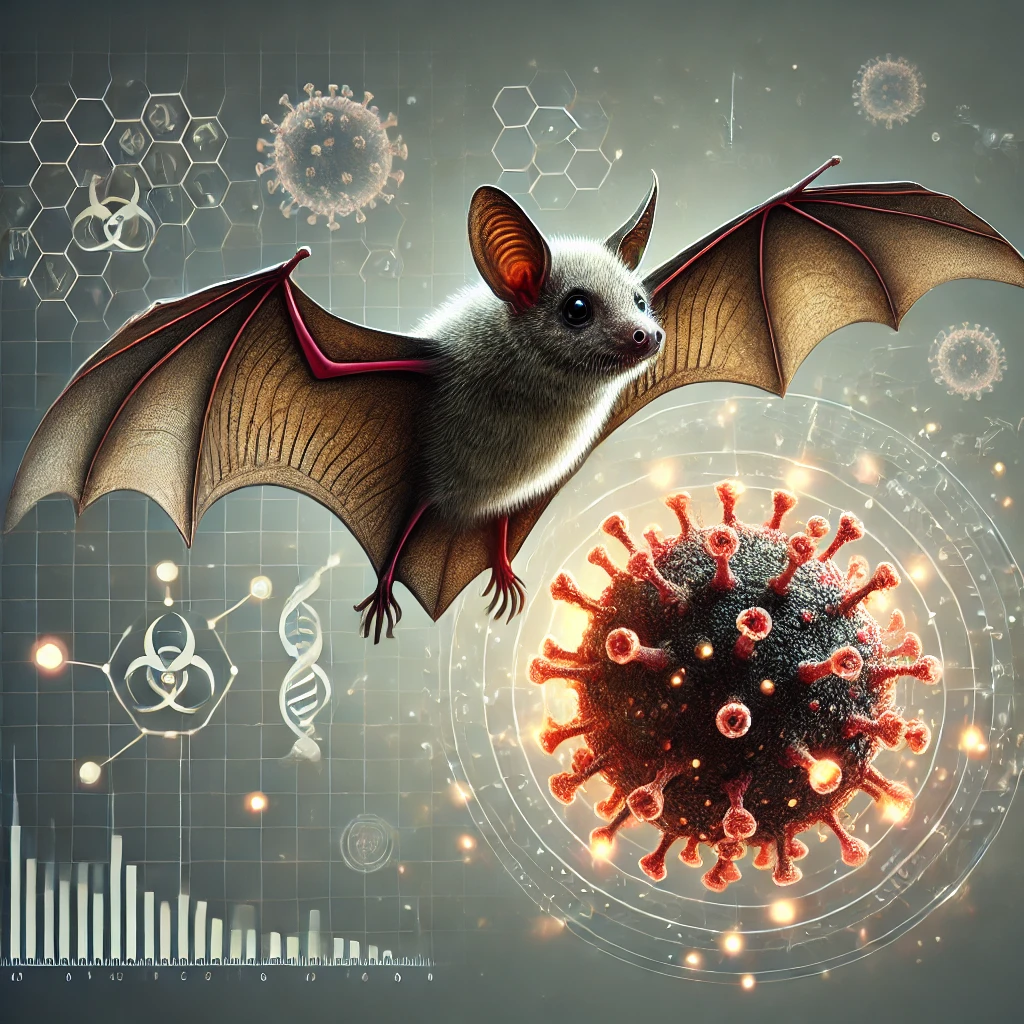

A newly discovered coronavirus found in bats in Brazil exhibits notable genetic similarities to the deadly MERS-CoV, according to researchers.
While its potential risk to humans remains uncertain, scientists are conducting further investigations to assess its threat.
A team of researchers from São Paulo and Ceará, in collaboration with colleagues from Hong Kong University (HKU), identified the virus and found that it shares approximately 72% of its genetic sequence with MERS-CoV. Additionally, its spike protein—crucial for binding to host cells—bears a 71.74% resemblance to that of the MERS virus.
Bruna Stefanie Silvério, a PhD candidate and lead author of the study, stated, “We cannot yet confirm whether this virus can infect humans, but we detected segments of its spike protein that suggest a possible interaction with the receptor used by MERS-CoV.”
The research, published in the Journal of Medical Virology, analyzed 423 oral and rectal swabs from 16 bat species. Scientists identified seven coronaviruses across five bat species in Fortaleza, a city in northeastern Brazil. The newly discovered virus showed striking similarities to MERS-related coronaviruses previously detected in humans and camels.
Co-author Ricardo Durães-Carvalho highlighted the importance of monitoring such viruses, stating, “Surveillance helps track circulating viruses and assess the risk of transmission to other animals and, potentially, to humans.”
The study also revealed evidence of genetic recombination, indicating that the virus may be evolving. These findings highlight the extensive genetic diversity of coronaviruses and emphasize the frequent recombination events among bat viruses in Brazil.
Dr. Durães-Carvalho stressed the need for ongoing monitoring, adding, “Bats serve as key viral reservoirs and must remain under continuous epidemiological surveillance.”
