

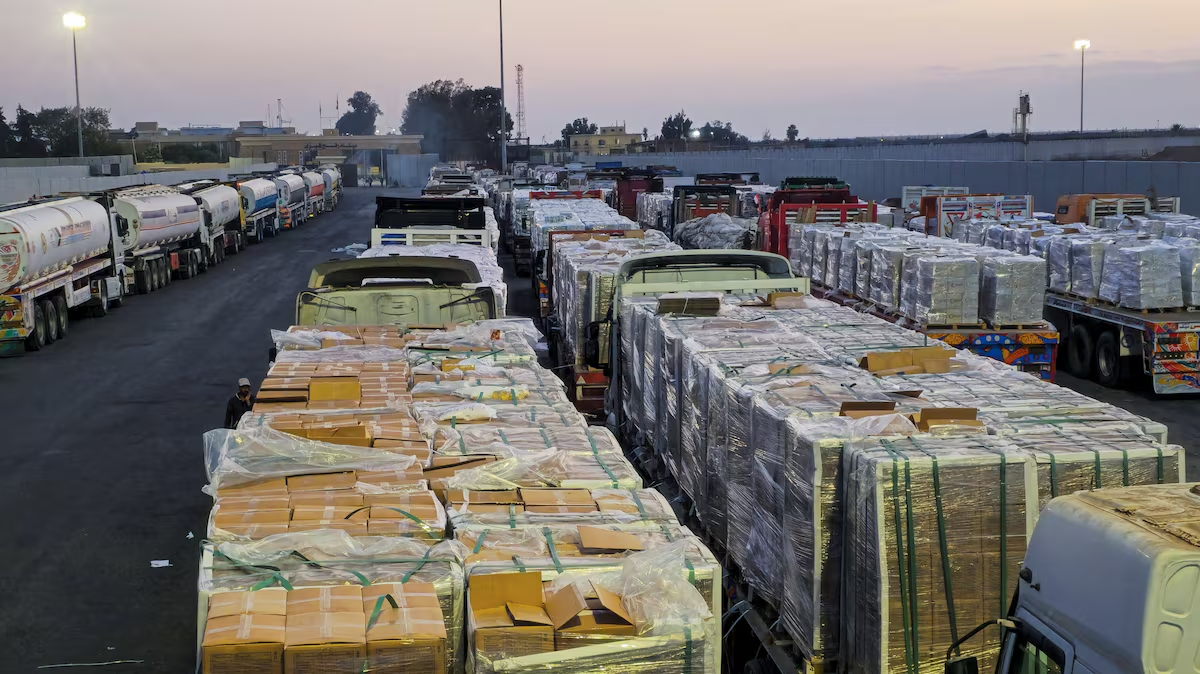

Israeli Prime Minister Benjamin Netanyahu announced on Saturday that the Rafah border crossing between Gaza and Egypt will remain closed until Hamas returns the bodies of deceased hostages. His decision follows the Palestinian embassy in Egypt’s earlier statement that the crossing would reopen on Monday for limited entry into Gaza.
The closure deepens tensions amid a fragile U.S.-brokered ceasefire, as both Israel and Hamas accuse each other of violations. The U.S. State Department said it had received credible reports of an “imminent ceasefire violation” by Hamas targeting civilians, warning that such an attack would be a “grave breach” of the truce.
U.S. President Donald Trump, who mediated the ceasefire deal, stated that he would consider allowing Israel to resume military operations if Hamas fails to uphold the agreement.
Meanwhile, Hamas condemned Netanyahu’s stance, calling it a “blatant violation” of the ceasefire and a breach of commitments made to mediators.
Hamas added that the closure of Rafah is hindering efforts to recover and hand over the remaining bodies of hostages buried under rubble. Israel confirmed receiving 12 out of 28 bodies agreed upon under the deal, while Hamas said locating the rest amid Gaza’s devastation would take time.
The dispute over the handover of bodies and humanitarian aid underscores the ceasefire’s fragility. The truce, part of Trump’s 20-point peace plan, also includes large-scale aid deliveries and the release of hostages and prisoners. Hamas freed 20 living Israeli hostages in exchange for nearly 2,000 Palestinian detainees.
Despite the ceasefire, famine persists across Gaza, with aid deliveries far below requirements. Key unresolved issues — including Hamas’ disarmament, Gaza’s governance, and the formation of an international stabilization force — continue to hinder lasting peace in the region.
