


Social Media Ban and Corruption Allegations Spark Widespread Unrest
Nepal’s Prime Minister KP Sharma Oli has resigned following a week of violent unrest across the country, triggered by a controversial social media ban and mounting allegations of government corruption. The protests, led largely by youth and civil society, have plunged the Himalayan nation into one of its worst political crises in years, with at least 19 people dead and over 300 injured.
The unrest erupted after the government blocked access to major social media platforms, including Facebook, TikTok, and Twitter, citing concerns over “misinformation and national security.” The ban, seen by many as a direct attack on freedom of expression, was met with immediate backlash. Combined with ongoing corruption scandals involving top officials, public anger quickly spilled onto the streets.
On Tuesday, Prime Minister Oli officially stepped down, announcing his decision shortly after protesters set fire to his private residence and attacked other government buildings. The same day, Nepal’s Civil Aviation Authority temporarily shut down Tribhuvan International Airport in Kathmandu due to security concerns.
Protesters Defy Curfews, Ministers Resign Amid Escalating Violence
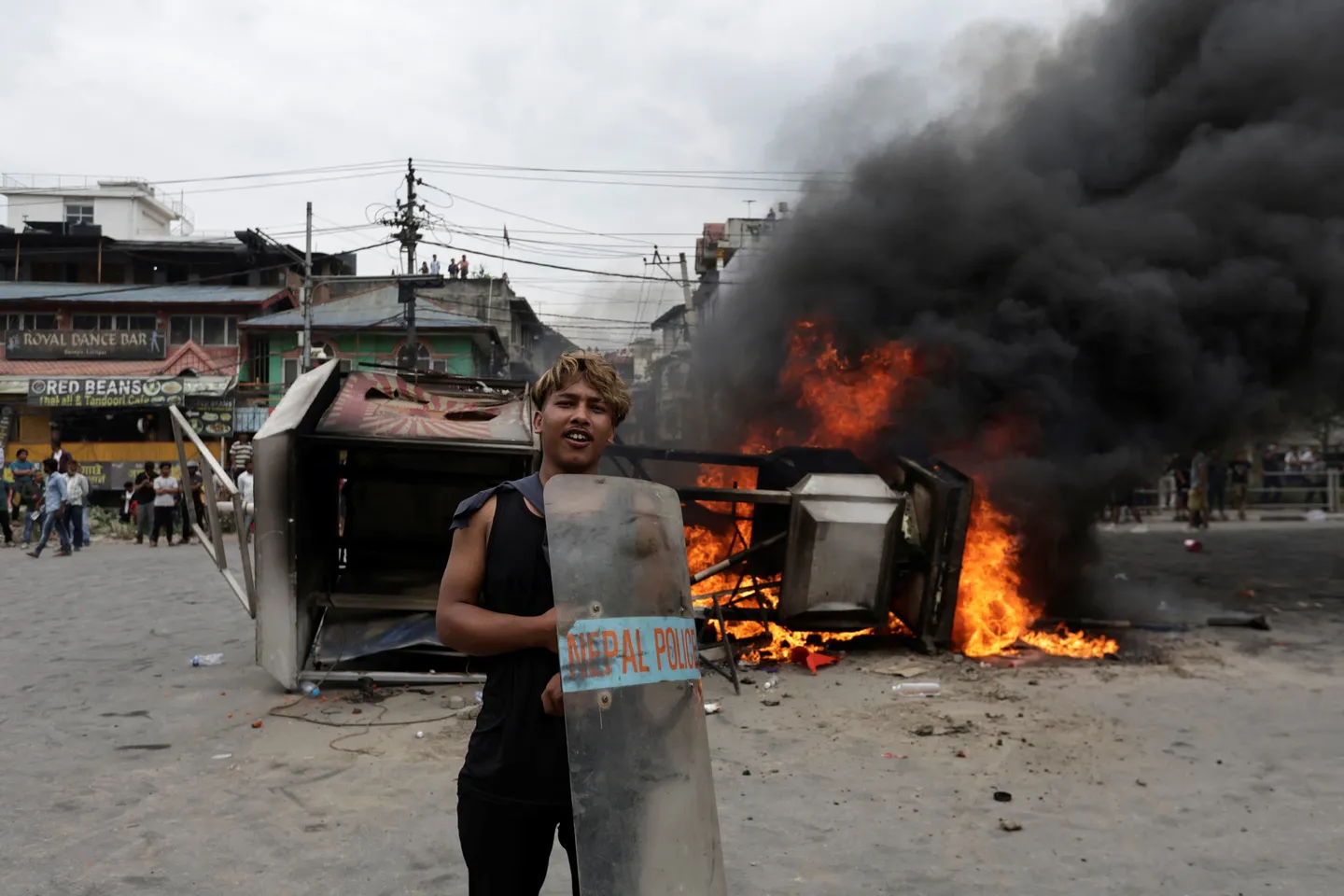
Protesters defied government-imposed curfews in Kathmandu and surrounding areas, setting vehicles on fire, targeting politicians’ homes, and clashing with riot police. Kathmandu police spokesperson Shekhar Khanal confirmed reports of multiple fires ands violent confrontations throughout the capital. According to local media, several senior ministers had to be airlifted to safety.
Interior Minister Ramesh Lekhak resigned on Monday, followed by the resignations of Communication Minister Prithvi Subba Gurung and Agriculture Minister Ramnath Adhikari on Tuesday. In his resignation letter, Adhikari condemned the “authoritarian crackdown” and accused the government of betraying democratic principles.
Although the government restored access to social media platforms late Monday night, protests continued. Thousands of youth, many without banners or party affiliations, gathered near the parliament building in New Baneshwar on Tuesday morning. One protester said, “Yesterday’s violence showed the government’s failure. I’m here to support the youth demanding change.”
Curfews Imposed as Nepal Faces a Turning Point
To control the situation, authorities imposed curfews across key regions including Kathmandu’s Ring Road area, Lalitpur, and Bhaktapur. However, unrest continues to spread. Hospitals across the capital are overwhelmed, treating hundreds of injured civilians. With dozens still in critical condition, the death toll is expected to rise.
In a final effort to defuse tensions, Oli had earlier called for an all-party dialogue, promising to investigate the violence. But critics say his move came too late. The youth-led demonstrations show no sign of waning, with the public demanding accountability, transparency, and a renewed commitment to democratic values.
