

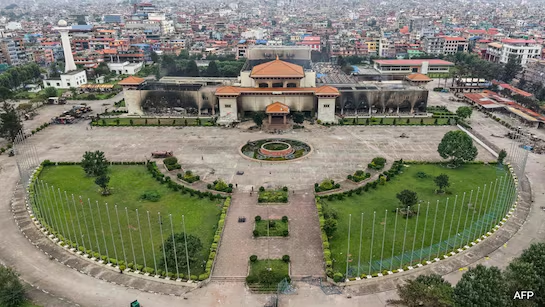

Nepal’s President Ram Chandra Paudel dissolved parliament on Friday and announced fresh elections for March 5, 2026, hours after swearing in former chief justice Sushila Karki as interim prime minister.
The move followed violent anti-corruption protests that killed at least 51 people, injured more than 1,300, and forced Prime Minister KP Sharma Oli to resign. On the recommendation of Karki, the House of Representatives was dissolved, plunging the nation of 30 million into its deepest political crisis in years.
Karki, 73, Nepal’s first woman chief justice, took oath at the presidential palace in Kathmandu during a modest ceremony attended by diplomats and political leaders. “I… take an oath in the name of the country and the people to fulfil my duty as the prime minister,” she declared. She will oversee a six-month transition until elections are held.
The unrest was triggered by Oli’s controversial social media ban, later rolled back, but spiraled into widespread demonstrations fueled by corruption and discontent. Security forces clashed with mainly young protesters, with parliament set ablaze before Oli stepped down on Tuesday.
The army imposed curfews and restored order midweek, though police presence remained heavy in major cities.
India swiftly welcomed the leadership change and the poll announcement. Prime Minister Narendra Modi congratulated Karki in a post on X, pledging India’s support for Nepal’s “peace, progress, and prosperity.”
Nepal has faced repeated political instability since abolishing its monarchy in 2008. Economic struggles and job shortages have driven millions of Nepalis to seek work abroad. By late Friday, signs of calm returned to Kathmandu, with shops reopening and traffic resuming, though uncertainty looms ahead of the 2026 vote.
