

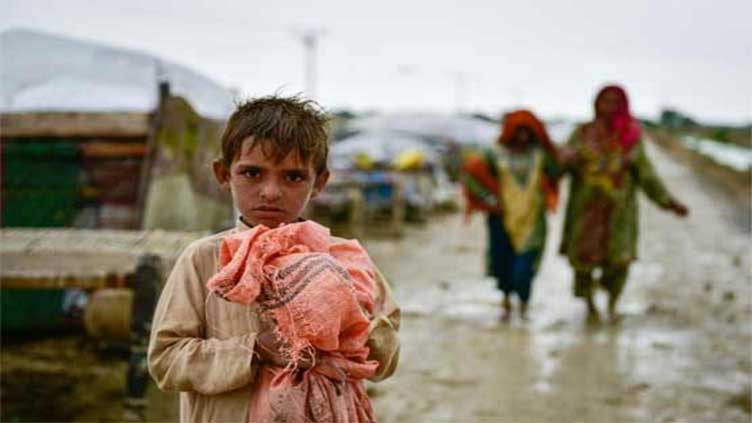

A recent report by the Khyber Pakhtunkhwa (KP) Education Department has revealed a troubling statistic: 37% of children in the province—around 4.92 million—are currently out of school.
The highest exclusion rates were recorded in Kolai-Palas Kohistan, where over 80,000 children lack access to education. Nearby districts, Upper and Lower Kohistan, also show severe educational neglect, with approximately 79% of children not enrolled in any school.
By contrast, Upper Chitral has the lowest rate of exclusion in the province, with only 10% of children out of school.
The provincial capital, Peshawar, is also facing a major education crisis. Over half a million children are out of school there, including 319,000 girls, highlighting a significant gender disparity in access to education.
KP Education Minister Faisal Tarakai acknowledged the scope of the crisis, stating that over 4.8 million children remain outside the formal education system. He added that the provincial government is working to improve the situation, noting that 1.3 million children were enrolled last year and that the goal for this year is to enrol one million more.
This provincial report aligns with a broader national concern. In January, the Pakistan Institute of Education (PIE) reported in its Pakistan Education Statistics 2021–22 that 26.2 million children across the country are out of school. This represents 39% of Pakistan’s school-age population—an improvement from 44% in 2016–17, yet the absolute number has grown due to population expansion.
Balochistan continues to be the worst-affected region, with 65% of children out of school. Islamabad Capital Territory (ICT) has the lowest exclusion rate. KP’s own rate has climbed from a previous national estimate of 30% to the current 37%.
The report also emphasizes that 10.77 million children at the primary level alone are not in school nationwide. Socioeconomic inequality plays a significant role, with children from the poorest households being most vulnerable. The dropout rates are also high at advanced levels—44% at the high school level and 60% at the higher secondary level remain unenrolled.
