

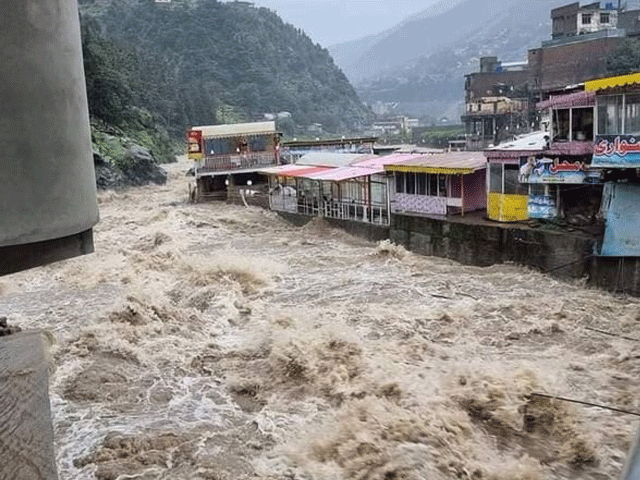

ISLAMABAD — The National Disaster Management Authority (NDMA) has issued a comprehensive rain and flood alert for multiple regions across Pakistan, warning of the growing risks of Glacial Lake Outburst Floods (GLOFs), flash floods, urban flooding, and widespread infrastructure damage due to heavy rainfall and abnormal temperature patterns.
In its advisory, the NDMA identified Gilgit-Baltistan, Chitral, Upper Dir, Swat, and Kumrat Valley as high-risk zones for GLOFs. Accelerated glacier and snowmelt, combined with ongoing rainfall, has significantly increased the chances of flash floods, rising river levels, and the destruction of roads, bridges, and power lines in these areas.
In Khyber Pakhtunkhwa, particularly in northern districts, authorities anticipate sudden flash floods, landslides, and disruptions to transportation and public movement. The alert also points to the risk of damage to communication infrastructure and localized thunderstorm activity.
Azad Kashmir is expected to experience persistent rainfall that may result in flooding of low-lying areas, urban drainage failures, and road blockages, especially in areas with limited flood management systems.
In Punjab, strong rain and thunderstorm activity is forecast for Murree, Galiyat, and parts of central Punjab. These conditions may cause urban flooding, power breakdowns, and structural damage, particularly in areas with poor drainage or fragile infrastructure. The capital city Islamabad is also expected to face similar weather conditions over the next 24 to 48 hours, with potential visibility issues during dust-rain spells.
Balochistan will see isolated thunderstorms and strong winds, increasing the threat of infrastructure damage, reduced visibility, and temporary power disruptions, especially in remote areas with underdeveloped grids.
In Sindh, districts including Karachi, Hyderabad, Sukkur, Larkana, Mirpur Khas, Tharparkar, Badin, Umar Kot, and Jacobabad are likely to experience heavy monsoon showers. The NDMA warns of severe urban flooding, traffic gridlocks, and possible collapse of weakened structures under intense rain pressure.
The NDMA has directed all provincial and district disaster management authorities to stay on high alert, activate emergency response systems, and ensure readiness of rescue and relief operations. The public has been urged to monitor official weather updates, avoid unnecessary travel, and stay away from flood-prone areas during the forecast period.
