
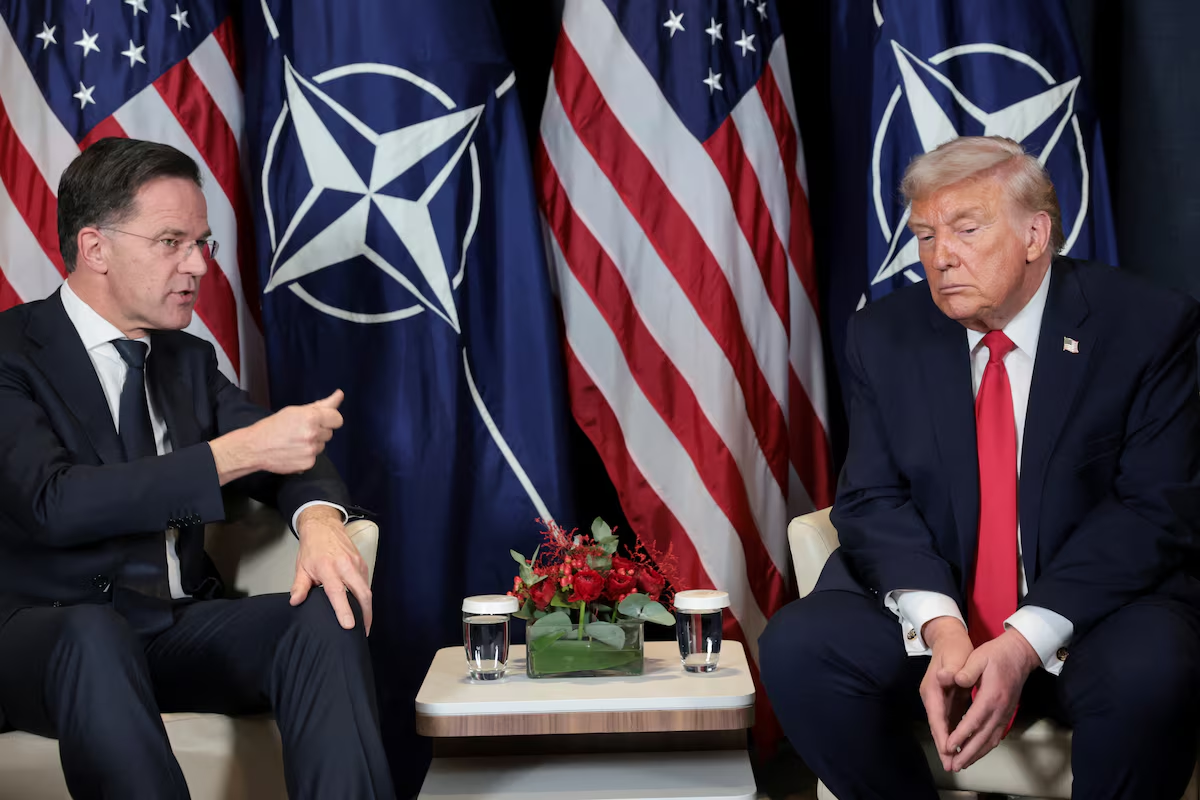

Trump’s Stance Raises Doubts Over US Commitment
The NATO alliance is confronting one of its most serious challenges in decades as tensions linked to the Iran conflict strain unity among member states. US President Donald Trump has intensified pressure on European allies, criticising their refusal to deploy naval forces to secure the Strait of Hormuz.
Moreover, Trump has openly suggested that Washington may reconsider its role in the alliance, raising concerns about a potential withdrawal. His remarks have unsettled European capitals, where leaders increasingly question whether the United States would honour its mutual defence commitments.
Although Trump stopped short of formally condemning NATO, his repeated criticism has amplified uncertainty. Consequently, analysts warn that the alliance’s foundational principle of collective defence no longer appears guaranteed.
Europe Reassesses Security Strategy
Meanwhile, European officials have begun reassessing their reliance on NATO as the cornerstone of regional security. Experts argue that the alliance now faces its weakest moment since its establishment, as internal divisions widen.
Former officials, including analyst Max Bergmann, describe the current situation as unprecedented. In addition, military leaders such as Francois Lecointre have urged Europe to prepare for a future where it may need to defend itself independently.
Furthermore, NATO Secretary-General Mark Rutte had previously dismissed such concerns; however, shifting geopolitical realities have forced a reassessment.
At the same time, the ongoing Iran war has exposed broader fractures in transatlantic cooperation. Therefore, diplomats emphasise the urgent need for renewed coordination to preserve stability.
As uncertainty grows, NATO’s future role remains under intense scrutiny, with implications for both European security and global geopolitical balance.

