


BRUSSELS: NATO’s top military leaders on Wednesday held extensive discussions on possible security guarantees for Ukraine, underscoring the latest wave of international diplomacy aimed at securing an end to Russia’s war.
Admiral Giuseppe Cavo Dragone, chair of NATO’s military committee, described the video conference of alliance chiefs as a “great, candid discussion,” stressing that the focus remains on achieving a just, credible, and durable peace for Ukraine.
While the broader meeting of NATO’s 32 members reviewed recent diplomatic efforts, a smaller group of military leaders convened separately in Washington to explore concrete options for long-term security guarantees. According to a Western official, US General Dan Caine, chairman of the Joint Chiefs of Staff, is leading the talks alongside about half a dozen NATO chiefs of defence. The official emphasised that discussions were still at an early stage, with no final framework yet agreed.
The official added that any proposals developed in Washington will eventually be brought back to the full alliance for review, though no timeline has been set, as the ultimate decision will rest with political leaders. On Tuesday, General Caine had also met European counterparts to evaluate “the best options for a potential Ukraine peace deal,” a US defence official told AFP.
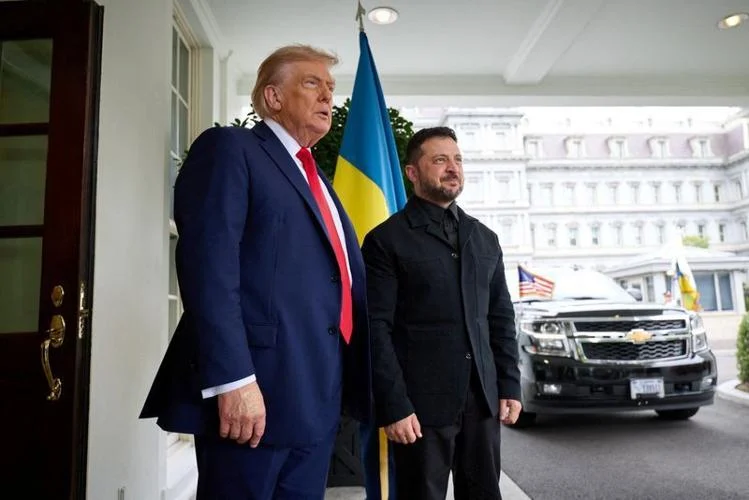
The diplomatic push follows US President Donald Trump’s high-profile meeting with Ukrainian President Volodymyr Zelensky and European leaders at the White House, days after Trump’s encounter with Russian President Vladimir Putin in Alaska. While Trump ruled out deploying US ground forces, he hinted Washington could provide air support, noting that some European allies were open to committing troops.
Moscow, however, reacted sharply. Russian Foreign Minister Sergei Lavrov warned that excluding Russia from security talks would be “a utopia, a road to nowhere.” He also dismissed speculation of an imminent Zelensky-Putin summit, insisting such a meeting must be meticulously prepared to avoid worsening the conflict.
The cautious responses from Kyiv, European capitals, and Moscow highlight the complexity of balancing Western security commitments with Russian demands—underscoring that a breakthrough peace deal remains elusive for now.
