

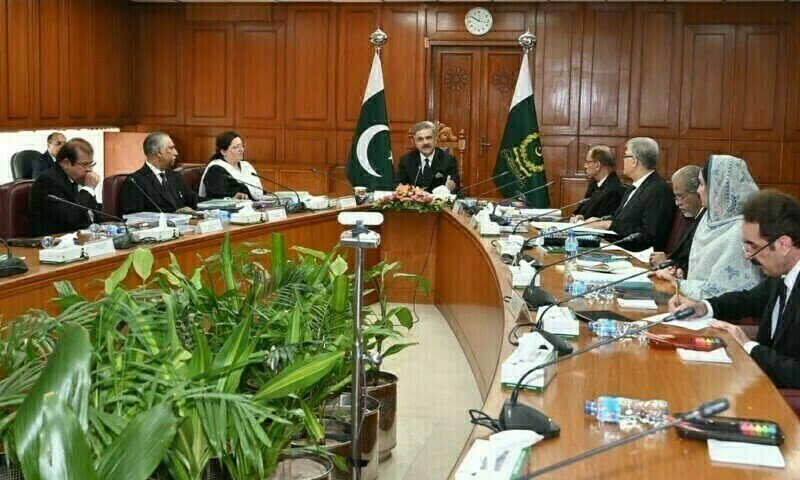

Islamabad – In a strong show of resolve, the National Judicial (Policy Making) Committee (NJPMC), led by Chief Justice of Pakistan Justice Yahya Afridi, reaffirmed its commitment to shielding the judiciary from external pressure and addressing the long-standing issue of missing persons.
During its 53rd meeting held on Friday, the NJPMC declared that the judiciary will not compromise on fundamental human rights, and announced a series of reforms aimed at improving justice delivery, accountability, and accessibility.
The high-level meeting was attended by the Chief Justices of all High Courts and the Additional Attorney General. A detailed communiqué issued after the session outlined several major initiatives:
- Formation of a special body to formulate an institutional response to the issue of missing persons.
- Adoption of new technologies to modernise the judicial system and enhance access to justice.
- Creation of structured complaint redressal systems in all High Courts to ensure transparency and timely resolution.
- Introduction of a protective framework to shield judicial officers from undue influence or interference.
- Launch of a Commercial Litigation Corridor to fast-track business-related cases.
- Approval of the “Double Docket Court Regime”, a pilot project in selected districts for faster case disposal.
- Allowing division benches in High Courts to hear constitutional petitions on tax and financial matters.
- Development of Model Criminal Trial Courts to minimise trial delays.
- Establishment of a committee, headed by Justice (retd.) Rehmat Hussain, to standardise judicial performance across the district courts.
- Creation of a Professional Excellence Index for fair and merit-based judicial appointments.
- Issuance of SOPs for remote appearances of under-trial prisoners and witnesses via video link.
The committee also appreciated a forward-looking presentation by the Inspector General of Punjab Police and directed judicial academies to arrange specialized training for law enforcement personnel.
