

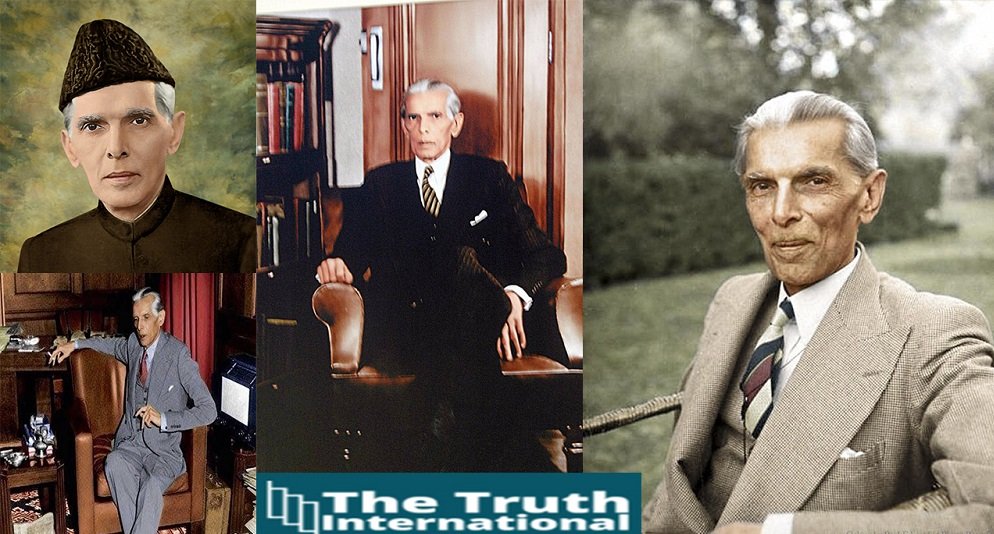

ISLAMABAD: President Asif Ali Zardari and Prime Minister Shehbaz Sharif highlighted the enduring importance of Quaid-e-Azam Muhammad Ali Jinnah’s “guiding principles” and “vision” for Pakistan’s prosperity as the nation commemorated the 76th death anniversary of its founding father on Wednesday.
In his message to the nation, President Zardari called on the people to embrace Jinnah’s principles of “unity, faith, and discipline,” emphasizing their role as a beacon for Pakistan’s development.

Similarly, Prime Minister Shehbaz urged the nation to recommit to building a peaceful, just, and equitable Pakistan in line with Jinnah’s vision.
On the occasion, top Sindh officials, including Chief Minister Murad Ali Shah, Senior Minister Sharjeel Inam Memon, and Interior Minister Ziaul Hasan, visited Mazar-e-Quaid in Karachi. They were joined by Sindh Governor Kamran Tessori, Chief Secretary Asif Haider Shah, and other provincial ministers to pay their respects, with the chief minister and governor laying a floral wreath at Jinnah’s tomb.
President and Prime Minister’s Messages
In his message, President Zardari expressed confidence that by following Jinnah’s teachings, Pakistan could become strong and prosperous. He paid tribute to Jinnah, emphasizing that the nation owes its existence to the Quaid’s relentless efforts for the creation of a homeland where Muslims could live with dignity and exercise their political, cultural, and religious rights.
“Quaid-e-Azam was a visionary leader who united the Muslims of India under one banner,” Zardari said. “His vision for Pakistan was inherently democratic, based on a state where all citizens, regardless of religion, would be equal before the law.”
He further highlighted that Jinnah’s struggle laid the foundation for Pakistan’s democratic system, which continues to inspire the country’s pursuit of parliamentary democracy and communal harmony. Zardari also noted Jinnah’s vision for a Pakistan founded on Islamic principles of democracy and socio-economic justice.
“Through his sheer determination, hard work, and advocacy, the partition of India became a reality. Today, we honor his efforts and recommit ourselves to upholding the values and ideals he championed,” Zardari added.
Prime Minister Shehbaz Sharif, in his message, described Jinnah as one of history’s most visionary leaders and statesmen. He praised the Quaid for leading the Freedom Movement for the Muslims of the subcontinent and establishing the world’s first Islamic ideological state.
“The Freedom Movement stands as a testament to Jinnah’s political acumen and leadership, reflecting his commitment to democracy and the rule of law,” Shehbaz stated.
The prime minister emphasized Jinnah’s commitment to democracy, social justice, and equality, which laid the groundwork for a nation where every citizen could thrive despite cultural differences. He also highlighted Jinnah’s focus on unity and faith, which continues to resonate within Pakistani society, reminding citizens that the country’s strength lies in its diversity and inclusiveness.
As the nation honors Jinnah’s legacy, Shehbaz stressed the importance of addressing contemporary challenges with the same determined spirit. He called on Pakistanis to work towards a future that reflects Jinnah’s ideals of peace, justice, and opportunity for all.
“Let us renew our pledge to build a Pakistan that embodies the vision of our Founding Father — a nation where peace prevails, justice is served, and every citizen has the opportunity to flourish,” the prime minister concluded.
