

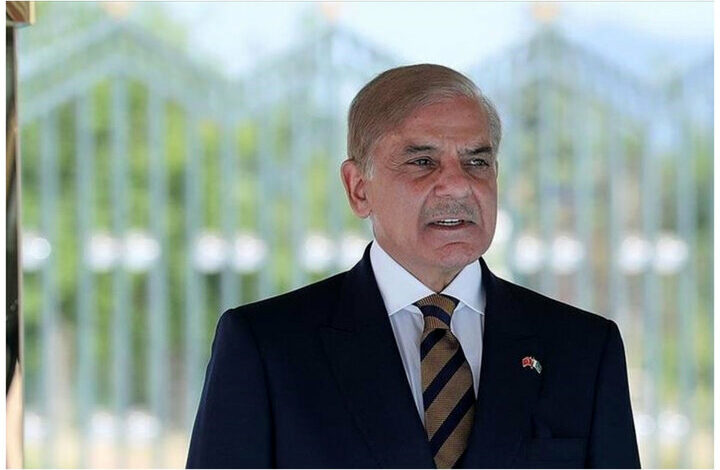

PESHAWAR: In response to India’s move to suspend the Indus Waters Treaty—an act that poses a serious threat to Pakistan’s water security—Prime Minister Shehbaz Sharif on Tuesday directed authorities to accelerate work on the Diamer-Bhasha Dam and proposed inter-provincial consultations to boost national water storage capacity.
Addressing a jirga at the Corps Headquarters in Peshawar, the premier emphasized the importance of making difficult but necessary decisions to ensure the country’s development and prosperity.
Speaking on India’s aggressive stance, PM Shehbaz underscored that every drop of water allocated under the Indus Waters Treaty was the rightful share of the Pakistani people. He warned that any further aggression by India would be met with a decisive response, adding, “India has already tasted the consequences once and will face them again if it repeats its mistakes.”
Reiterating the urgent need to enhance water security, the prime minister said, “We will invite all provinces for consultations to expand water storage capacity and counter India’s hostile intentions.” He noted that projects like Diamer-Bhasha Dam and other reservoirs are already in progress, but called for swift and strategic decision-making to ensure their timely completion.
National Finance Commission and Provincial Concerns
PM Shehbaz also addressed the concerns raised by Khyber Pakhtunkhwa (KP) Chief Minister Ali Amin Khan Gandapur regarding the long-delayed National Finance Commission (NFC) Award. Gandapur pointed out that the last NFC award was issued in 2010. In response, the PM shared that a committee had already been formed, and provinces had nominated their representatives. He announced that the next NFC meeting is scheduled for August.
The prime minister said KP had received Rs700 billion under the 1% share of the divisible pool allocated for its role in the fight against terrorism. These funds, he added, have helped strengthen law enforcement, establish a Counter-Terrorism Department, and launch Safe City projects. He assured that this support would continue until terrorism is eradicated.
To further address provincial issues, PM Shehbaz said a new committee would be constituted to meet tribal elders, the KP governor, and the chief minister. Their discussions will form the basis for policy recommendations, which the federal government intends to present before parliament.
CM Gandapur’s Demands
In a statement from the KP Chief Minister’s House, CM Gandapur urged the federal government not to impose taxes on the former FATA and PATA regions. Citing economic hardship and the devastating impact of the war on terror, he argued these areas require substantial investment, not added fiscal burdens.
He demanded the release of compensation funds for displaced persons, an end to drone strikes due to civilian casualties, and the immediate inclusion of the merged districts in the NFC Award. “We are not asking for another province’s share—we are demanding what is rightfully ours,” Gandapur asserted.
He also called for the payment of all pending dues to KP, including net hydel profits and the province’s full share of tobacco cess revenues. Moreover, he advocated for the revival of the traditional jirga system to resolve disputes in the merged districts and insisted on KP’s inclusion in any peace talks with Afghanistan, warning that sidelining the province would render negotiations ineffective.
Diamer-Bhasha Dam: A Strategic Priority
In a separate high-level meeting focused on the Diamer-Bhasha Dam, PM Shehbaz stressed the need to eliminate all obstacles hampering the dam’s construction. “Pakistan’s self-reliance depends on affordable electricity and agricultural productivity, both of which require better water storage and usage,” the PM said, according to a statement from the Prime Minister’s Office.
He directed that the completion of major infrastructure projects like Diamer-Bhasha Dam be prioritized to secure energy production and water resources for the future.
However, these efforts come amid looming budget cuts. The upcoming federal development budget plans to reduce funding for the energy sector from Rs169 billion to Rs144 billion, and for the water sector from Rs135 billion to Rs109 billion.
Planning Minister Ahsan Iqbal highlighted that the original estimated cost of the dam in 2018 was Rs479 billion, with Rs120 billion already spent on land acquisition. However, delays and mismanagement by the previous administration have led to significant cost escalations.
To address financial challenges, the planning minister proposed splitting the dam and power projects and suggested obtaining private sector funding for the power component. He also noted that a revised PC-1 for the project is still pending, even after six years.
Going forward, Ahsan Iqbal said similar projects would be developed under a public-private partnership model to avoid funding delays and ensure timely execution. Once completed, the Diamer-Bhasha Dam is expected to provide a water storage capacity of 6.4 million acre-feet.
