

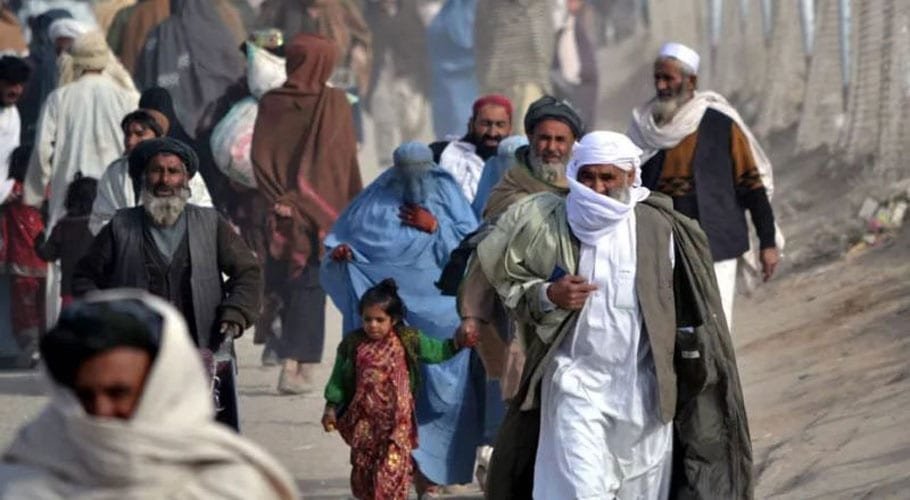

Illegal Afghan Immigrants
Pakistan has intensified the geotagging and tracking of illegal Afghan immigrants within the country, along with issuing a survey for their repatriation.
Caretaker Interior Minister Sarfaraz Bugti announced a November 1 deadline for undocumented foreigners in Pakistan following a national apex committee meeting that addressed law and order concerns.
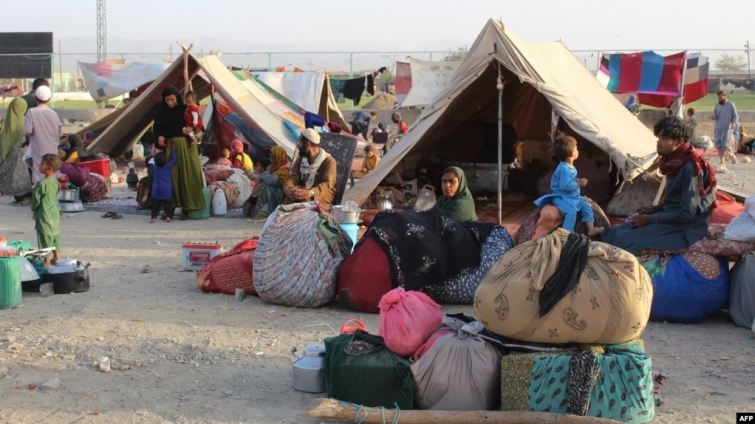
Substantial progress has occurred, including the issuance of a survey to locate and facilitate the return of illegally residing Afghan nationals.
KARACHI
A crackdown on illegal Afghan immigrants residing in Karachi has been decided upon. A comprehensive operation will target these immigrants, focusing on suburbs to verify their details.
Moreover, Sindh reportedly has a million Afghans, with the majority living in Karachi. The operation will be intelligence-driven, with a focus on deporting those who entered Pakistan unlawfully.
Also, sensitive institutions, police, and Federal Investigation Agency officials will collaborate to gather and share information. The operation will also scrutinize the presence, reasons, and details of immigrants possessing alien cards.
PUNJAB
A recent Fourth Schedule Mapping in Punjab, conducted by police and security institutions, identified 2,291 trained Afghan extremists and added 541 individuals released from Afghan jails to the watch list.
In addition, Punjab has over 275,000 documented registered Afghans, including 88,295 Afghan citizen card-holders and 186,904 with proof of registration cards. Punjab Inspector General of Police Dr. Usman Anwar stated they are working to systematically repatriate illegal Afghan residents following government policy.
Also, caretaker Punjab Chief Minister Mohsin Naqvi directed the police to verify identity cards of illegal immigrants and block incorrect ones, emphasizing no favorable treatment for illegal immigrants.
BALUCHISTAN
In Balochistan, there are 327,224 registered Afghan refugees, with an unregistered Afghan refugee population accounting for 14.3% of the total.
Meanwhile, the Afghan Refugees Quetta commissioner noted that the majority of refugees have settled in residential areas outside the refugee camps. Many refugees conduct business using national identity cards and OPF documentation.
Balochistan has established five registration centers for Afghan refugees, including one in the provincial capital, Quetta.
KHYBER PAKHTUNKHWA
In Khyber Pakhtunkhwa, authorities are actively gathering data on unregistered Afghan residents. Currently, the province has 700,000 registered Afghan residents, including 650,000 Afghan citizen card-holders.
Also, authorities estimate that there are approximately 500,000 unregistered Afghan individuals in the region. This year alone, the police have apprehended 26 Afghan individuals for street crimes, 28 for alleged involvement in murders, and 331 for participation in the drug trade.
