

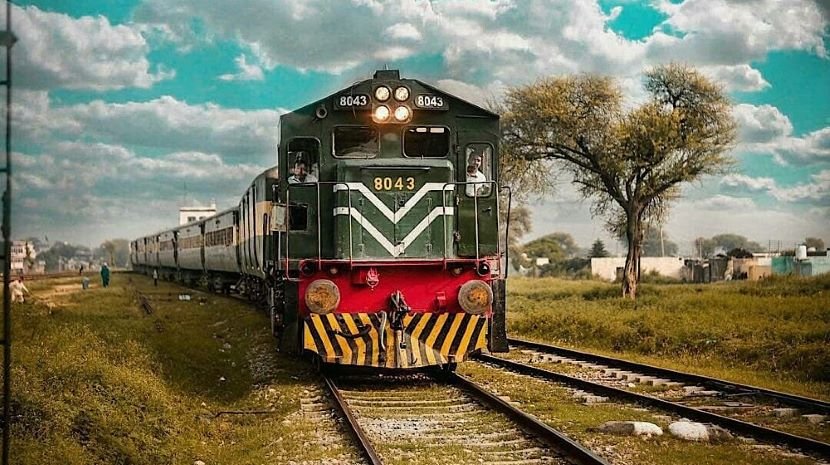

Pakistan Railways is gearing up to launch a new business train between Lahore and Karachi this week, promising passengers a modern, comfortable, and digitally connected travel experience on one of the country’s busiest inter-city routes. The move aligns with the government’s push to modernise national rail travel and meet international service standards.
According to officials, the new service will include 28 fully digitally equipped coaches, providing passengers with complimentary Wi-Fi and a dining car designed to meet international benchmarks. The goal is to transform long-distance rail travel between Lahore and Karachi, Pakistan’s two largest cities, by offering premium amenities typically unavailable on traditional trains.
Railway authorities hope the launch of this new business train between Lahore and Karachi will attract more travellers who prioritise comfort, connectivity, and modern facilities during long-haul journeys. The corridor itself is among the busiest in Pakistan, handling thousands of passengers daily.
The project is part of a broader strategy by Pakistan Railways to revitalise and modernise its services through targeted investments and partnerships. Earlier this year, Pakistan Railways began outsourcing the management of 11 additional trains under the Public-Private Partnership (PPP) model, aiming to improve operational efficiency and service quality.
Railway officials argue that partnering with the private sector is essential to upgrade ageing infrastructure and keep pace with rising expectations from travellers. They believe improved standards and modern rolling stock will encourage people to shift from road and air travel to trains, easing congestion and reducing environmental impact.
However, not everyone welcomes the shift towards premium services and privatisation. Critics and civil society organisations have voiced concerns that focusing too heavily on higher-end offerings could marginalise low-income commuters who rely on affordable inter-city rail travel. With around 100,000 passengers travelling daily, especially on routes connecting Karachi with cities in Punjab, rail remains the most economical option for many Pakistanis.
Some warn that the PPP model could result in fare hikes, potentially pricing out working-class travellers. Despite reassurances from officials that the new train will enhance the overall quality of travel, civil society representatives urge Pakistan Railways to balance modernisation efforts with its social responsibility to provide affordable services to the wider population.
While debate continues over the impact of privatisation, the new business train between Lahore and Karachi signals Pakistan Railways’ ambition to modernise its image. With its upgraded coaches, free Wi-Fi, and dining car, the service reflects an effort to redefine train travel as a premium yet practical option for business and leisure travellers alike.
For now, passengers on the Lahore-Karachi route can expect a fresh alternative that combines convenience, digital connectivity, and comfort, setting a new standard for Pakistan’s rail sector.
