


Dialogue
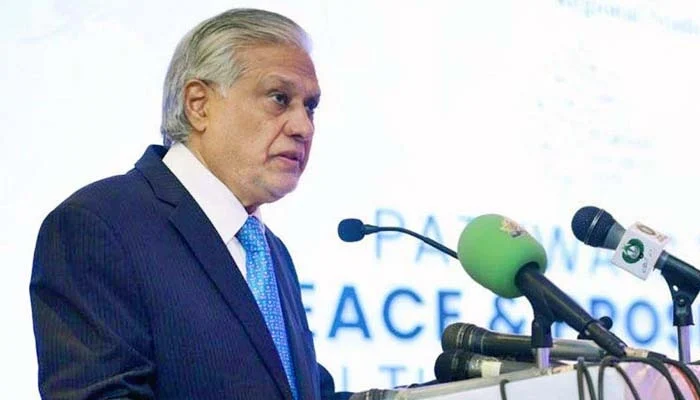
Deputy Prime Minister and Foreign Minister Ishaq Dar has reiterated Pakistan’s willingness to engage in dialogue with India, but firmly asserted that Islamabad is not desperate for talks.
Speaking at a press briefing in Islamabad on Wednesday, Dar stressed that any future negotiations must be comprehensive and inclusive of all core issues, including terrorism and the long-standing Indus Waters Treaty. He made it clear that any Indian attempt to block or divert Pakistan’s water supply would be considered an act of war.
Dar’s remarks come in the wake of heightened tensions between the two nuclear-armed neighbors following a deadly attack on Indian tourists in Pahalgam, Indian Illegally Occupied Jammu and Kashmir (IIOJK), for which New Delhi blamed Islamabad.
In response, India unilaterally announced the suspension of the Indus Waters Treaty and carried out missile strikes inside Pakistani territory. These attacks, which India claimed targeted terrorist infrastructure, resulted in significant civilian casualties, including women, children, and Pakistani military personnel.
Pakistan responded with what it described as “precision strikes” against Indian military installations, marking the most severe military escalation between the two countries in decades.
According to Dar, the Pakistan Air Force successfully downed at least six Indian fighter jets and an unmanned aerial vehicle (UAV), drawing significant international attention and concern. The 87-hour conflict ended after a United States-brokered ceasefire, but bilateral relations remain deeply strained.
Dar accused Indian political leadership of inflaming anti-Pakistan rhetoric ahead of its general elections and declared that India’s so-called “new normal” in regional dominance had been exposed. He emphasized that Pakistan’s military response and diplomatic strategy had garnered global recognition and support.
Highlighting Pakistan’s diplomatic outreach, Dar noted that a high-level delegation led by Pakistan Peoples Party leader Bilawal Bhutto Zardari had been dispatched to key international capitals, including Washington, London, and New York.
The delegation aimed to counter India’s narrative and present Pakistan’s perspective on the recent conflict. According to Dar, the mission was a success, with positive responses received at all diplomatic levels.
Additionally, Prime Minister Shehbaz Sharif has visited several regional allies, including Turkiye, Iran, Azerbaijan, and Tajikistan, to thank them for their support during the crisis. He is scheduled to visit Saudi Arabia to continue Pakistan’s diplomatic engagements.
In a significant diplomatic development, Dar announced that Pakistan will assume the presidency of the United Nations Security Council next month. During its tenure, Pakistan plans to lead discussions under the theme: “Promoting International Peace and Security through Multilateralism and Peaceful Settlement of Disputes.” This initiative underscores Pakistan’s ongoing commitment to diplomatic solutions in the face of rising regional tensions.
