

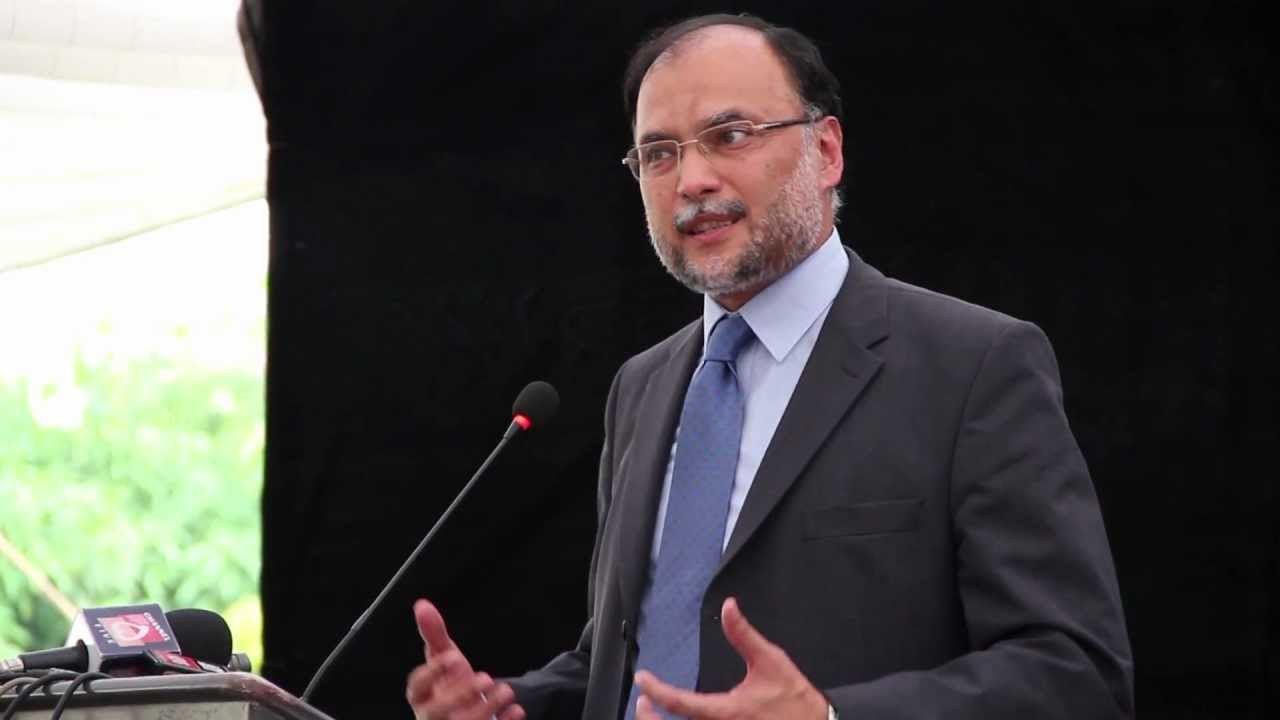

ISLAMABAD: Federal Planning Minister Ahsan Iqbal announced on Monday that the government will concentrate on high-priority, high-value development projects in the upcoming fiscal year as only Rs880 billion has been earmarked for the Public Sector Development Programmed (PSDP) in the 2025–26 federal budget.
Speaking after the Annual Plan Coordination Committee (APCC) meeting, Iqbal said Pakistan’s fiscal constraints—driven by inflation, debt servicing, and IMF loan conditions—necessitate strict financial discipline and strategic investment.
“We are operating within extremely limited fiscal space,” he said. “Given these constraints, our focus will be on projects that yield the highest return on investment and contribute meaningfully to national development.”
Limited Resources, Strategic Choices
Iqbal noted that the development budget had been reduced over the past two years due to rising loan repayments—now consuming 55% of the federal budget. He blamed the situation on excessive borrowing and poor fiscal management during the 2018–2022 period, along with high interest rates.
He revealed that while the total proposed development budget stands at Rs1 trillion, Rs120 billion has already been allocated to upgrading the Chaman-Quetta-Karachi N-25 highway, leaving Rs880 billion for other projects.
Budget Priorities
According to the breakdown provided:
- Rs664 billion will go to infrastructure, energy, water, transport, and planning.
- Rs70 billion for merged districts of Khyber Pakhtunkhwa.
- Rs63 billion for Azad Jammu & Kashmir and Gilgit-Baltistan.
- Rs53 billion for science and information technology.
- Rs11 billion for the production sector.
- Rs9 billion for institutional reform.
Iqbal said projects nearing 70–80% completion will be prioritised to avoid cost overruns and free up resources for new initiatives. “Token allocations will be discouraged, as they delay progress and inflate costs.”
He added that all projects funded by multilateral or foreign agencies will receive full rupee cover.
Key Infrastructure Initiatives
Among the flagship projects identified:
- Diamer Bhasha Dam (to tackle water scarcity)
- Sukkur-Hyderabad Motorway
- Quetta-Chaman Road
- Second Phase of the Karakoram Highway
Iqbal said these projects are critical for national connectivity and strategic development.
Higher Education & Youth Investment
Iqbal stressed the need to complete stalled Higher Education Commission (HEC) projects, citing Pakistan’s low tertiary education enrollment rate at just 13%, compared to 30% in India and 60% in China.
“We must triple our higher education enrollment. Investing in youth is key to long-term national growth,” he said.
Freezing or Scrapping Low-Impact Projects
The planning ministry has identified 118 projects worth Rs1,000 billion to be deprioritised or capped. “These projects are either low-impact or have minimal strategic value and must be frozen to conserve resources,” he said.
Broader Economic Goals
The government projects a GDP growth of 4.2% for the next fiscal year, with agriculture contributing 4.5%, industry 4.3%, and services 4%. Targets include:
- $35 billion in exports
- $39 billion in remittances (up from $27 billion in FY23)
Iqbal credited overseas Pakistanis for their continued support and noted remittances could reach $50 billion in the future.
Tax Reform as National Security
Iqbal called Pakistan’s tax-to-GDP ratio—currently under 10%—one of the lowest in the world. “Developing countries collect 16–18%. If we are serious about development, tax reform and enforcement must be treated as a matter of national security.”
He urged citizens to play a role in discouraging tax evasion and said the government is cracking down on non-filers with high incomes.
Decentralising Development
Iqbal said many development projects originally meant for provinces are still burdening the federal budget. From 12–14% of PSDP in 2013, provincial projects now account for up to 40%. Going forward, such projects will be handed over to provincial governments to ease federal expenditure pressures.
In closing, Iqbal warned that the current trajectory—starting with a Rs1,400bn PSDP last year, now reduced to Rs1,000bn—signals a worrying trend. “To reverse it, we must significantly expand our revenue base, enforce fiscal discipline, and target development spending where it matters most.”
