


Soon after India split into Pakistan, the new country woke up to its first war in Kashmir, which it calls its “jugular vein.” Men in uniform picked up their worn-out packs and walked right into hell, where they poured their blood on the fire to put it out.
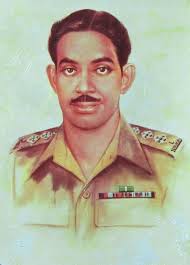
Captain Raja Muhammad Sarwar is one of them. He was the first person to get the country’s highest military honor, the Nishan-i-Haider, but he died before he could wear the medal on his chest. He is on a list of very honorable people who died before they could wear the medal.
Today is the 74th anniversary of the day he died for his country (Wednesday).
On November 10, 1910, Sarwar was born in the village of Singhori in the district of Gujar Khan Tehsil. Raja Muhammad Hayat Khan’s father was a constable in the British army.
In April 1929, he joined the army as a sepoy. From then until 1941, he was in the Baloch Regiment. Later, in 1944, he was given a commission in the Punjab Regiment. He served in World War II and was given the rank of captain in 1946 for his great work.
He was a company commander in the second battalion of the Punjab Regiment in 1948 when he was sent to Kashmir for an operation.
Later, his friends told him stories about how he wanted to lead the war on the frontline and was making plans to join the frontline troops before the war even started. He was sure of his skills, so he begged the officer in charge to let him go on the mission.
But the situation got worse, so the commanding officer gave in and told Sarwar to go destroy the enemy’s post with a whole team of soldiers. The second battalion of the Punjab Regiment gave him the rank of company commander. Under his command, the regiment was able to push the Indian troops out of the Gilgit-Baltistan battle zones.
But when his battalion tried to take over a well-guarded enemy position in the Uri sector, they ran into a lot of trouble from the other side.
Capt. Sarwar kept firing even though he was getting hit hard and the enemy was grabbing security fronts with barbed wire. He did this with cold courage even though he was bleeding from his wounds. Finally, he crossed the barbed wire with six of his other soldiers and led the final attack while shouting “Allahu Akbar” (God is great).
As he and his battalion moved forward, gunfire, grenade attacks, and mortar fire became more intense. He died as a martyr on July 27, 1948, after being shot multiple times in the chest while trying to cut through barbed wire to get closer to enemy lines.
Pakistan’s green crescent flag was flying on this hill when the sun came up in the morning.
Captain Sarwar’s body was buried on July 27, 1948, on the Hill of Tilpatra, which is near Uri in Indian-controlled Kashmir.
In his speech, General Ayub Khan spoke highly of the martyr. He said, “I am proud to mention the sacrifice of Captain Mohammad Sarwar Shaheed, who became the first person to receive the Nishan-e-Haider and added a new chapter to the history of Pakistan. By making a big sacrifice, he made sure that his name, the name of his army, and the name of his Unit would live on forever. In fact, we are all proud of what he did. Let’s all promise that we’ll always remember this golden feat and keep it fresh.”
