

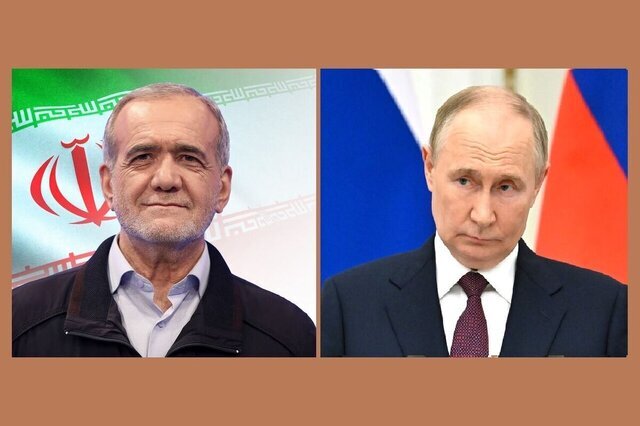

While Ukraine’s Western allies raise concerns about the growing cooperation between Russia and Iran, tensions between these two powers are being tested in the South Caucasus.
Moscow’s support for Azerbaijan’s Zangezur Corridor project—a direct transit route linking mainland Azerbaijan to its Nakhchivan exclave through Armenia’s Syunik province and onto Turkey—has reignited fears in Tehran.
Following recent statements by Russian Foreign Minister Sergey Lavrov and Foreign Ministry spokesperson Maria Zakharova about reopening regional transportation routes based on the Nov. 10, 2020 agreement between Moscow, Baku, and Yerevan, Iran’s leadership has begun openly criticizing Russia.
Lavrov notably reprimanded Armenia, accusing Prime Minister Nikol Pashinyan of reneging on the 2020 deal, which mandates Russian Federal Security Service control over the corridor.
“It is the Armenian leadership that is sabotaging an agreement signed by Prime Minister Nikol Pashinyan. It is difficult to understand the meaning of such a position,” Lavrov stated.
In response, Pashinyan declared that Russia could no longer mediate between Armenia and Azerbaijan. Simultaneously, Iran’s ambassador to Moscow filed a formal protest, warning that creating the Zangezur Corridor would heighten tensions near Iran’s northern border with Armenia.
Iran further escalated its discontent by summoning the Russian ambassador to express its deep dissatisfaction with Moscow’s stance. On Sept. 5, Iranian Foreign Minister Seyed Abbas Araghchi, referencing Russia’s support for the corridor, stated that any threat to the territorial integrity of Iran’s neighbors or changes to their borders is “completely unacceptable” for Tehran.
The following day, Iran’s ambassador to Yerevan reinforced this position, saying, “The dreams and aspirations of some [countries] regarding Armenia, including the corridor, will not become a reality.
The territorial integrity of our neighbors is our red line,” highlighting Tehran’s perception of security risks from the situation.
