

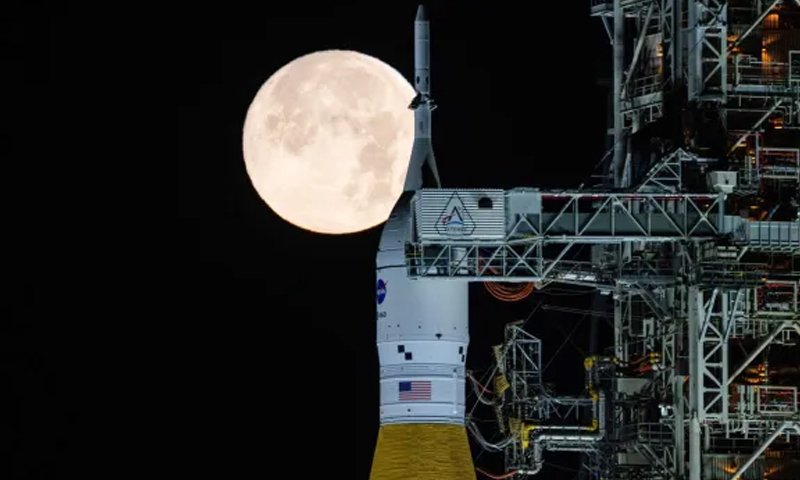

NASA’s ambitious return to the moon with astronauts has been delayed until at least March 2026, following the reemergence of a familiar and frustrating problem: hydrogen fuel leaks. The setback occurred during a critical pre-launch fueling test of the massive Space Launch System (SLS) rocket at Kennedy Space Center, pushing humanity’s first lunar mission in over half a century further into the future.
The space agency announced the decision on Tuesday, just one day after the issues forced a halt to the countdown rehearsal. NASA had been targeting a launch as early as this weekend for the Artemis II mission, which will send four astronauts—three American and one Canadian—on a historic flyby of the moon.
“As always, safety remains our top priority,” NASA Administrator Jared Isaacman stated on social media. “We will only launch when we believe we are as ready to undertake this historic mission.”
The recurring leaks cropped up multiple times during the meticulous fueling process on Monday, ultimately stopping the countdown at the five-minute mark. Launch controllers had aimed to simulate the final moments before liftoff, but repeated attempts to resolve the leaks by warming seals and adjusting fuel flow—techniques that worked for the successful uncrewed Artemis I test flight in 2022—proved unsuccessful this time.
This is not a new challenge for NASA; similar hydrogen leaks delayed the SLS rocket’s debut by months three years ago. Hydrogen, the rocket’s fuel, is extremely hard to contain due to its tiny molecules and cryogenic temperature.
As a result of the delay, the Artemis II crew—commander Reid Wiseman, pilot Victor Glover, mission specialist Christina Koch, and Canadian Space Agency astronaut Jeremy Hansen—have been released from quarantine in Houston. They will re-enter quarantine approximately two weeks before the next launch attempt, now scheduled for no earlier than March 6, 2026.
The mission faces tight launch windows each month dictated by orbital mechanics. Artemis II will not land on the moon but will perform a crucial crewed test flight, looping around the moon to validate the Orion capsule’s life support and systems ahead of future Artemis missions aimed at landing astronauts near the lunar south pole.
This delay underscores the immense complexity and inherent challenges of deep-space exploration, even as NASA builds upon the legacy of the Apollo program. The agency’s methodical, safety-first approach prioritizes crew safety over schedule, ensuring that when the SLS rocket finally launches with its human crew, it does so only when every precaution has been taken.
