


TOKYO: In Japan, a nation renowned for its robust economy and allure to foreigners seeking work, study, and other opportunities, a significant issue plagues minorities when it comes to laying their loved ones to rest—they face severe restrictions on burial.
Despite the country’s comprehensive facilities, the Muslim community, constituting merely 2% of Japan’s vast 120 million population, grapples with the absence of dedicated graveyards.
With only 200,000 Muslim residents in Japan, the lack of a suitable graveyard presents a profound challenge.
Dr. Tahir Abbas Khan, a university lecturer based in Pakistan, finds this dilemma deeply troubling, especially considering Japan’s scarcity of cemeteries. The country’s majority, following Buddhism and Shinto traditions, practices cremation, while Islamic customs dictate burial within 24 hours after death.
For many Muslims in Japan, this predicament forces them to travel considerable distances to adhere to Islamic burial practices. Muhammad Iqbal Khan, a car shop owner who relocated to Japan in 2004, recounts the emotional strain he faced when his premature baby passed away.
Despite his desire to be with his wife during this painful time, he had to travel over 1000 kilometers to the Yamanashi graveyard, a Christian and Muslim cemetery.
Cremations, which are prevalent in Japan, prompted Dr. Tahir to take action. He established the Bepo Muslim Association in Japan to advocate for the Muslim community’s burial rights.
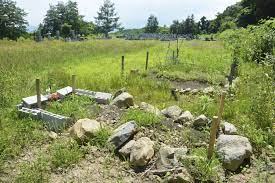
The association acquired a burial plot near a Christian graveyard with 79 grave capacities. While the landlords granted the necessary approvals, objections arose from a local community settled about 3 kilometers away, citing concerns about contamination of underground water due to burials.
Ryouko Satou, a Japanese woman who converted to Islam, sheds light on the stigma associated with burial in Japan, describing it as ‘dangerous’ or ‘shameful,’ despite being commonplace decades ago.
Dr. Khan emphasizes the urgent need for more burial grounds, highlighting that Japan only has 13 cemeteries, with Hiroshima being a recent addition that meets the needs of Muslim residents.
Iqbal Khan appeals to the government to establish dedicated places of worship and cemeteries for Muslims, citing similar challenges faced by other communities, including Jews and recent Christian immigrants from Brazil. While the likelihood of government intervention remains uncertain, Dr. Khan remains hopeful and committed to addressing this pressing issue.
