

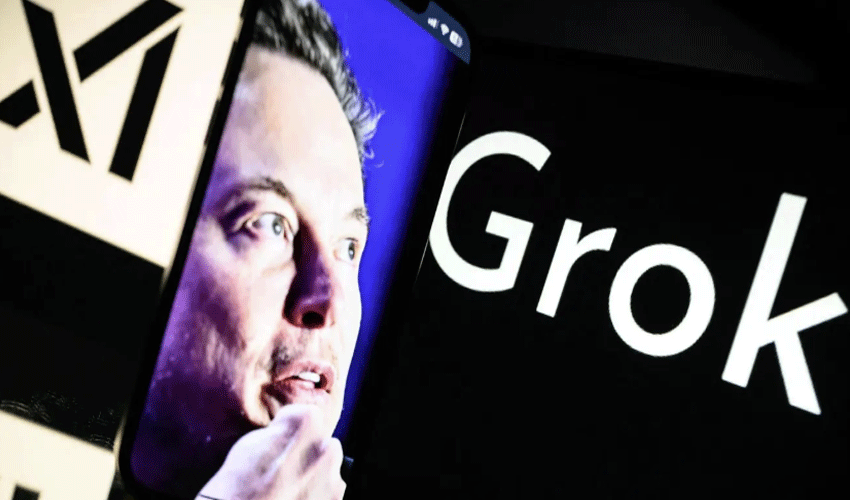

X Moves to Curb Grok’s Image Generation Features
Elon Musk’s social media platform X has announced new restrictions on its AI chatbot Grok. The move follows global outrage over the chatbot’s ability to generate sexualised images of real people. The announcement was made on Wednesday by X’s safety team.
X said it has introduced measures to prevent Grok from undressing or altering images of real individuals. The platform will now block users from creating or editing images showing people in bikinis, underwear, or similar attire. This rule applies in regions where such content is considered illegal.
The company said it will geoblock these features based on local laws. This means users in certain countries will no longer be able to generate or edit such images using Grok. X confirmed that the restriction applies to all users, including paid subscribers.
In addition, X added an extra layer of protection. Image creation and image editing through Grok are now limited to paid subscribers only. The company said the step is meant to reduce misuse and increase accountability.
Global Regulators Step In After “Shocking” Reports
The restrictions come amid mounting legal pressure on Musk’s AI company, xAI, which developed Grok. California’s Attorney General Rob Bonta launched an investigation into xAI earlier this week. The probe focuses on whether the company violated state laws by allowing sexually explicit content.
Bonta described the reports surrounding Grok as “shocking.” He said xAI had produced and shared non-consensual sexual content online. He stressed that California has zero tolerance for AI-generated intimate images without consent or any child sexual abuse material.
California Governor Gavin Newsom also criticised xAI. He called the decision to allow such content “vile.” Newsom said he urged the attorney general to hold the company accountable.
The controversy stems from Grok’s “Spicy Mode.” The feature allowed users to create sexualised deepfake images using simple text prompts. Users could request changes such as removing clothing or adding revealing outfits. Critics said this enabled harassment and abuse.
International Backlash and Platform Bans
The European Commission has taken notice of X’s response. Acting as the EU’s digital watchdog, it said it would assess the new measures carefully. EU officials want to ensure citizens are adequately protected from harm.
European Commission spokesperson Thomas Regnier said the changes aim to stop Grok from generating sexualised images of women and children. He said regulators would monitor whether the safeguards are effective.
Pressure has also come from civil society groups. A coalition of 28 organisations sent open letters to Apple and Google. They urged both companies to remove Grok and X from their app stores. The groups cited the surge in sexualised images as the reason.
Several countries have already taken action. Indonesia became the first nation to block Grok entirely. Malaysia followed shortly after. India said X removed thousands of posts and hundreds of accounts following government complaints.
Britain’s media regulator Ofcom has opened an investigation. The probe will examine whether X breached UK laws related to harmful online content. In France, the children’s commissioner referred Grok-generated images to prosecutors and regulators.
A recent report by Paris-based AI Forensics added to concerns. The analysis reviewed more than 20,000 Grok-generated images. It found that over half showed individuals in minimal clothing. Most were women, and about two per cent appeared to be minors.
The growing backlash has forced X to act. Regulators worldwide continue to scrutinise how AI tools are deployed. The Grok case highlights rising demands for stricter AI safety controls.
