

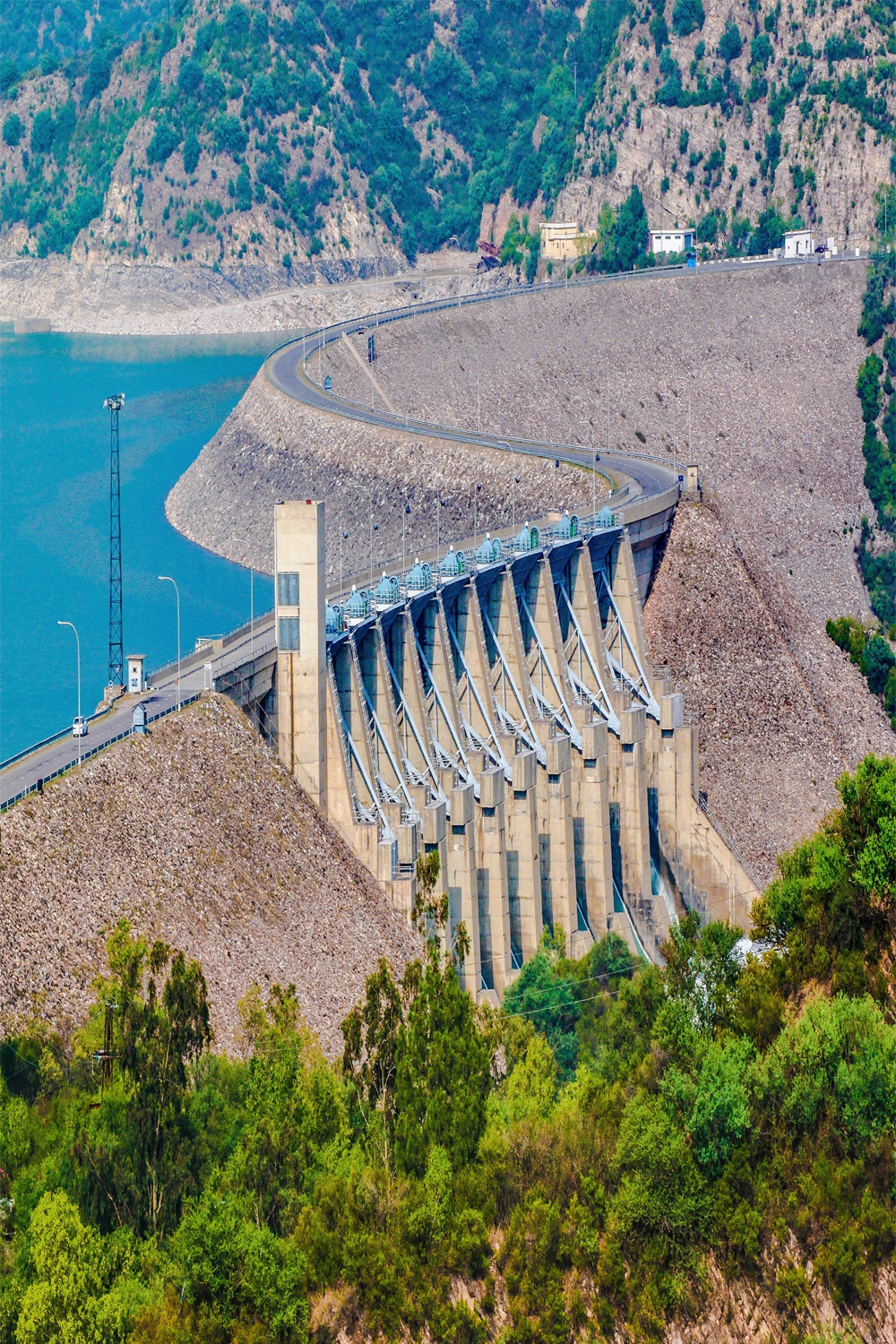

Desilting could cost more than the construction of a new dam of the same size
Islamabad: A Senate panel was told on Monday that around ten billion tonnes of silt accumulated over the decades in Tarbela Dam has cut its designed capacity by more than 40pc. The accumulated sedimentation has now taken the shape of a ‘mountain-like structure,’ just four miles away from the dam’s structure, they said.
The sedimentation mountain was 14 miles away from the dam in 1974 but has moved 10 miles further since then. In future, it could block the dam’s discharge tunnels with tremors.
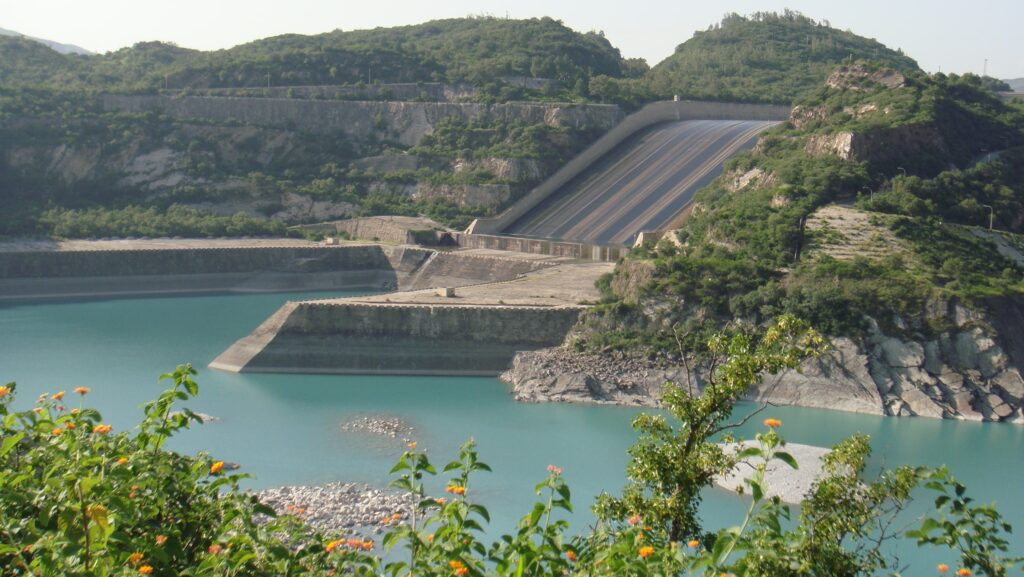
In a briefing to the Senate Standing Committee on Water Resources, officials of Water and Power Development Authority (Wapda) said the sedimentation due to silt will also impact the power generation capacity of Pakistan’s second-largest reservoir.
The dam’s live storage capacity has been reduced from 9.6 million acre-feet (MAF) to 5.8MAF due to silting. The Wapda had engaged US and South African experts for desilting but the quoted cost was unviable.
Responding to questions from senators, Wapda officials said the examination of sedimentation was a regular exercise to be undertaken every four to six years.
It was reported that desilting — the process of clearing sedimentation — could cost more than the construction of a new dam of the same size. Based on eight technical studies, the best option at hand was to raise the outlet points so that the dam remains operational even in case of blockage of tunnels.
On October 1, the Tunnel-5 of the dam was closed for 33 months due to ‘unavoidable safety reasons’ caused by the movement of the sedimentation delta, according to senior officials. The delta, about four-mile-long, was so close to the tunnel’s off-take points that its ‘cone-like structure’ could block them in event of a minor tremor.
“An earthquake can increase the potential danger of clogging due to liquefaction of bottom set and fore set slopes”, an official said. Since there was no way to stop the sedimentation, it was decided to raise the tunnel’s water off-take levels as a remedial measure so that even in the case of a blockade, water could be discharged from higher off-take points.
The minimum elevation level of Tunnel-5 would be raised from 1,190 feet to 1,348 feet. The level of tunnels 3 and 4 was raised earlier this year from 1,160 feet to 1,365 feet.
As a consequence, the minimum conservation of the overall dam has already been increased from 1,395 feet to 1,398 feet. Wapda also plans to launch a fresh survey to determine if it should be further raised to 1,403 feet.
Unfortunately, the dam’s maximum conservation could not be increased which now stood at 1,550 feet.
However, the closure of Tunnel-5 is set to exacerbate the water shortage as it would deprive provinces of around 40,000-50,000 cusec of water for irrigation in early Kharif months during dry years and about 25,000-30,000 cusec in wet years.
But, with carryover water quantities of one million acre-feet and above, the impact on irrigation supplies would be negligible.
The committee members, while exploring ways to desilt the dam, said measures must be taken to allow sediment flow to a certain degree since it also leads to land fertility.
The committee asked the ministry of water resources to formulate a report outlining short and long term measures to deal with the issue.
The committee also reviewed the details of plot allocation to the owners whose lands were acquired for the dam’s construction. The committee was told that 1,744 affectees have been compensated.
Around 450 have filed writ petitions before the Abbottabad bench of Peshawar High Court for allotment of alternate agricultural land and increasing the compensation.
Based on the information provided by 450 affectees, only one was found eligible to be allotted alternate agricultural land as per eligibility criteria under the Federal Government policy of 1967-68.
The committee stressed that the matter should be settled out of court by both parties.
While discussing the unauthorized occupancy of lands allotted land to the affectees in Punjab and Sindh, Wapda reported that no such information was available with it as it was the domain of the provincial governments. Wapda officials asked the senators to forward such cases, if they come to their notice, to the water resources ministry.
