

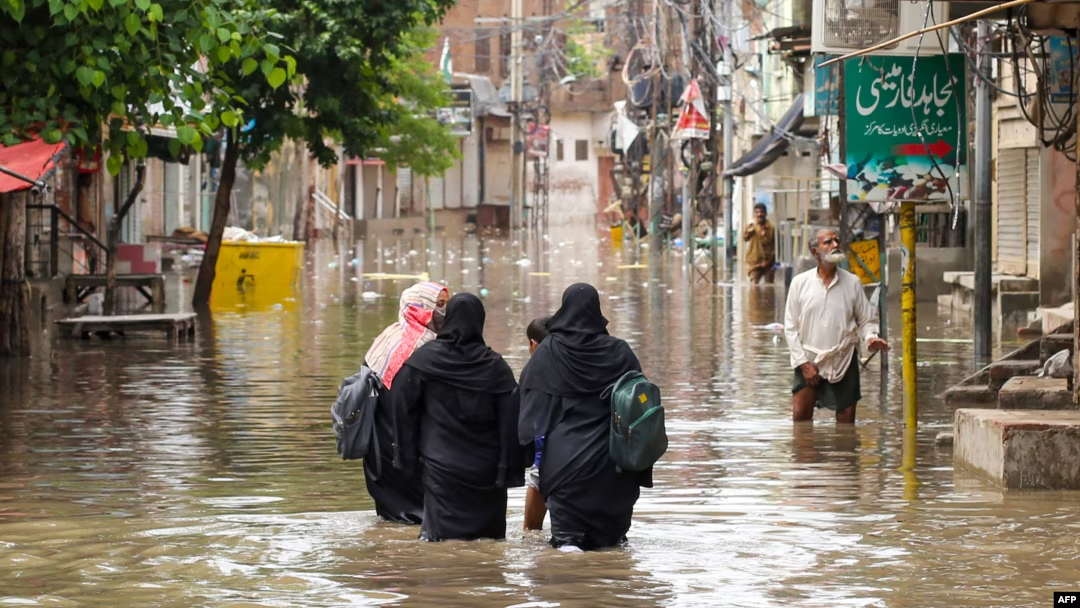

Monsoon Rainfall in Pakistan: Vital but Increasingly Dangerous
1. The Lifeblood of Agriculture — and a Rising Threat
Monsoon rainfall, fueled by moisture-laden winds from the Indian Ocean and uplifted by the Himalayas, remains Pakistan’s primary source of precipitation—especially vital for farming, water supply, and maintaining ecological balance. A normal monsoon benefits crops like rice, maize, cotton, and sugarcane. However, changes in climate patterns are turning this lifeline into a source of disruption and disaster.
2. Climate Shifts: Unrest in the Rain
-
Erratic Patterns: Sudden cloudbursts, uneven rain distribution, and rainfall during unexpected times; all signs of a monsoon increasingly thrown off balance.
-
Scientific Attribution: Studies confirm that human-induced warming has intensified extreme rainfall events by 10–15%, and in regions like Sindh and Balochistan, short-duration extremes have risen by nearly 50%.
These shifts compromise agriculture and heighten disaster risk.
3. 2025 Monsoon Snapshot: From Predictions to Crisis
Early Forecasts
Meteorologists had warned of normal to above-normal rains across central and northern Pakistan, particularly in Punjab and Kashmir, along with heightened risk of flash floods and glacial lake outburst floods due to longer heatwaves and faster glacial melt.
Devastating Realities Unfold
-
Mounting Death Toll
Over 800 people have lost their lives across Pakistan since late June, with more than half of these deaths occurring in August. Provinces most affected include Khyber Pakhtunkhwa (KP), Punjab, Sindh, Gilgit-Baltistan, Balochistan, AJK, and Islamabad. -
Displacement on a Grand Scale
Evacuations reached staggering levels:-
Punjab alone saw more than 1 million people evacuated.
-
Nearly 250,000 were displaced in eastern Punjab, affecting 1.2 million people and over 1,400 villages.
-
Over 167,000 people fled their homes after alerts of Indian dam water releases.
-
-
Regional Breakdown
-
Khyber Pakhtunkhwa was the hardest hit: flash floods and cloudbursts mid-August caused over 320 deaths, with Buner declared a disaster zone.
-
Punjab suffered with hundreds of deaths and massive evacuations along the Ravi, Sutlej, and Chenab rivers.
-
Karachi and parts of Sindh were inundated, disrupting power and mobility.
-
-
Humanitarian Efforts
The government set up hundreds of relief and medical camps in Punjab. In KP, emergency declarations enabled the mobilization of rescue teams, including Army engineers and helicopters—though a crash tragically claimed five personnel.
4. Core Insights
| Category | Key Figures & Trends |
|---|---|
| Fatalities | 800+ total deaths since late June, with KP accounting for 320+ alone in mid-August |
| Displacement | Over 1 million evacuated in Punjab; ~250,000 displaced in eastern Punjab affecting 1.2 million |
| Infrastructure Impact | Over 1,400 villages affected; hundreds of medical & relief camps; critical dam releases worsened flooding |
| Climate Link | Rainfall intensity up by 10–50%; monsoon behavior increasingly unpredictable and destructive |
