



In a sharp rebuke of Prime Minister Narendra Modi’s alleged entanglements with billionaire businessman Gautam Adani, Indian opposition leader Rahul Gandhi has claimed that Modi’s inability to stand up to former U.S. President Donald Trump stems from Washington’s ongoing investigation into Adani’s business dealings — particularly involving Russian oil.
“The reason PM Modi cannot stand up to President Trump despite his repeated threats is the ongoing U.S. investigation into Adani,” Gandhi wrote in a post on X.
“One threat is to expose the financial links between Modi, AA (Adani), and Russian oil deals… Modi’s hands are tied.”
Gandhi’s remarks refer to multiple investigations targeting the Adani Group, including a U.S. probe into alleged bribery schemes to win government contracts and secure favorable energy deals.
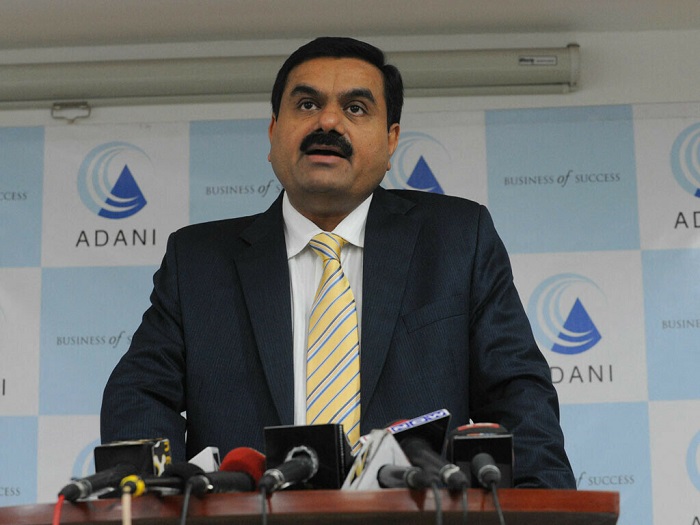
Adani Under Scrutiny
The U.S. Department of Justice (DOJ) and the Securities and Exchange Commission (SEC) are reportedly investigating the Adani Group’s alleged payment of over $250 million in bribes to Indian government officials to secure contracts worth more than $2 billion.
The inquiry further accuses Adani and several associates of concealing these payments while soliciting funds from U.S.-based investors starting in 2021.
In one notable case, U.S. officials say Adani paid bribes to ensure local Indian power companies agreed to buy electricity from a massive 8-gigawatt solar power deal — the largest of its kind — signed in June 2020.
Domestic and International Fallout
In addition to the U.S. probe, the Securities and Exchange Board of India (SEBI) is investigating Adani Group and 13 offshore investors following a 2023 Hindenburg Research report that accused the conglomerate of manipulating stock prices and misusing tax havens — charges the group denies.
The scandal has placed a spotlight on Adani’s close ties to Prime Minister Modi, especially as the group has dramatically expanded across sectors including energy, media, transport, and infrastructure.
Adani, now 62, is believed to have offered Modi the use of a private jet during the 2014 election campaign that helped catapult the Bharatiya Janata Party (BJP) into power. He later took over NDTV, a rare broadcaster known for its criticism of the Modi government — raising concerns about media freedom.
Though Adani downplayed such fears, he told The Financial Times that journalists should have the “courage” to recognize “when the government is doing the right thing every day.”
U.S.-India Tensions over Russian Oil
The controversy also intersects with growing tensions between the U.S. and India over New Delhi’s ongoing purchase of Russian oil, a sensitive issue amid the global backlash against Russia’s invasion of Ukraine.
Former President Trump, frustrated by India’s continued energy ties with Moscow, recently warned of increasing tariffs on Indian goods — potentially beyond the current 25%.
“They’re fuelling the war machine,” Trump said. “And if they’re going to do that, then I’m not going to be happy.”
Political Implications
Gandhi’s attack underscores a broader strategy by India’s opposition to link Modi’s foreign policy behavior with his alleged entanglements in domestic and international financial scandals.
With growing international scrutiny of Adani’s empire and pressure mounting on Modi’s government, the relationship between power, business, and accountability in India is facing one of its most serious reckonings in recent years.
