

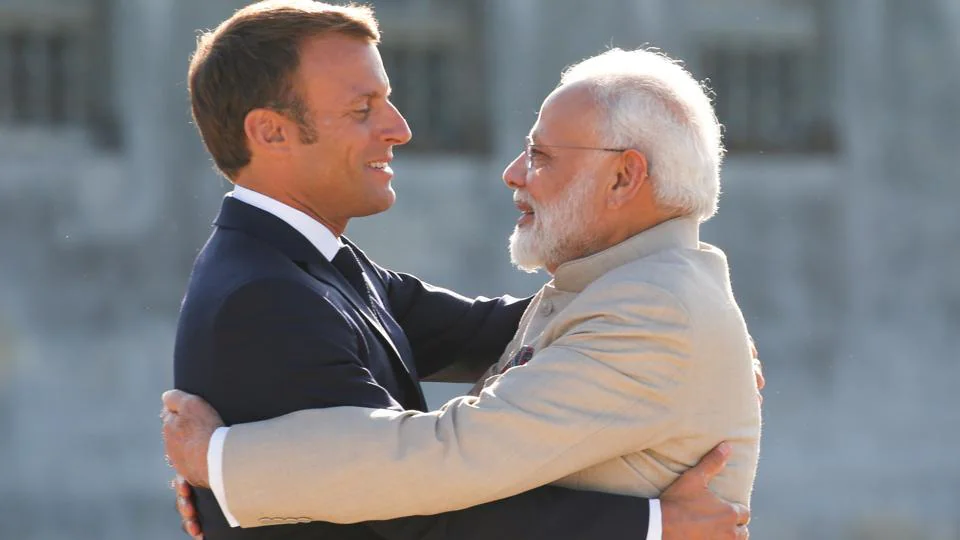

The Indian Prime Minister Narendra Modi is on a two-day visit to France, where he will attend the traditional Bastille Day military parade as the guest of honor. The visit aims to discuss major new defense deals and deepen ties between India and Western democracies, driven by mutual concerns about China.
Despite differences over the war in Ukraine and tensions surrounding human rights in India, both New Delhi and Western nations are eager to strengthen their relationship. An aide to French President Emmanuel Macron stated that “India is one of the pillars of our Indo-Pacific strategy.”
Macron has designated Modi as the guest of honor for the July 14 military parade, which marks the national day of France. The participation of Indian troops and Indian-flown French-made fighter jets in the parade will underscore the close defense ties between the two countries.
India is among the largest buyers of French arms. Modi announced a significant deal for 36 Rafale fighter jets during his visit to Paris in 2015. The deal was valued at around 4.0 billion euros ($4.24 billion) at the time.
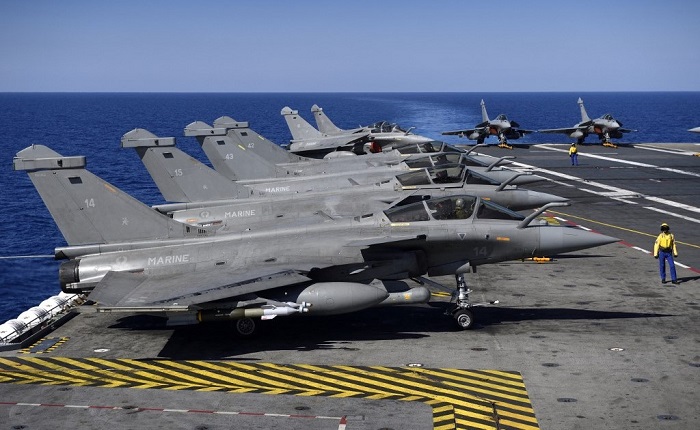
It is expected that during this visit to France, Modi will unveil the purchase of an additional 26 marine versions of the Rafale aircraft and a deal for three Scorpene-class submarines. These deals aim to aid India’s efforts to modernize its armed forces. The aim is to counter concerns about China’s assertiveness, particularly along the Himalayan frontier.
The visit follows Modi’s recent state dinner at the White House in Washington, where he received a rare honor. The visits highlight the growing importance of India among Western nations and their desire to deepen strategic cooperation.
The game of balancing
India’s growing middle class and strong economy have made it a vital market for Western companies. Many European and American businesses, including tech giant Apple, are increasing their production in India. This would reduce their reliance on supply chains from China and mitigates potential disruptions.
The war in Ukraine has raised concerns in the West about the risks of conflicts impacting the flow of crucial raw materials and technology from China. However, it has also revealed a rift between India and the West. While Western countries have strongly condemned the Russian invasion of Ukraine, India has refrained from openly criticizing the action. Additionally, India has emerged as a significant buyer of discounted Russian oil during the conflict. This has further complicated its relationship with the West.
This divergence in views on the Ukraine conflict has created a stumbling block for the India-Europe partnership. It highlights the challenge India faces in balancing its ties with Moscow and the West. It is determined to maintain strategic relationships with both sides.
The differing positions on the Ukraine conflict may impact the overall dynamics of India’s partnerships and collaborations with Europe, raising questions about alignment and shared values.
