

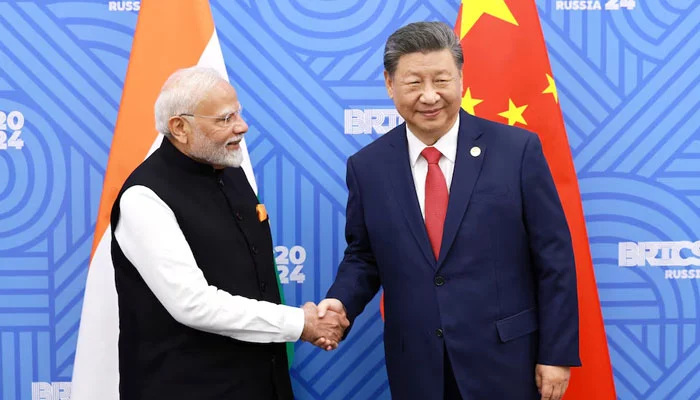

In a significant diplomatic moment, Indian Prime Minister Narendra Modi and Chinese President Xi Jinping have agreed to reposition their countries as “development partners, not rivals,” during a high-profile meeting on the sidelines of the Shanghai Cooperation Organisation (SCO) summit in China.
This marks Modi’s first visit to China in seven years and comes at a time when both nations are navigating increasing economic and geopolitical pressure from the West, particularly following U.S. President Donald Trump’s recent imposition of a 50% tariff on Indian goods — a move widely viewed as retaliatory over India’s oil trade with Russia.
Focus on Economic Cooperation and Border Stability
The leaders discussed ways to strengthen economic ties and reduce the $99.2 billion trade deficit that India currently faces with China. Modi emphasized the need to enhance mutual trust and resolve lingering issues to create a more stable and cooperative bilateral relationship.
“We are committed to progressing our relations based on mutual respect, trust, and sensitivities,” Modi said in a statement posted on his official X (formerly Twitter) account.
He noted that the atmosphere along the disputed Himalayan border has shown signs of stabilisation, adding that maintaining peace in the region is vital not only for India and China but also for the 2.8 billion people who live in the two most populous nations on Earth.
Chinese President Xi echoed similar sentiments, stating that China and India should be viewed as opportunities for each other, not threats. “We must not let the border issue define the overall China-India relationship,” Xi said, as quoted by Chinese state news agency Xinhua.
He added that by viewing each other as partners rather than competitors, the two nuclear-armed neighbours could establish ties that are “stable and far-reaching.”
Border Progress and Global Strategic Outlook
The dialogue also touched on security concerns, including the 2020 Galwan Valley clash that led to the deaths of 20 Indian and 4 Chinese soldiers. Since then, both sides have heavily militarized the disputed 3,800-kilometre border.
However, Indian Foreign Secretary Vikram Misri later informed reporters that recent progress — including a patrolling agreement signed in October — has moved the situation “towards normalisation.”
Misri confirmed that Modi and Xi also discussed the broader international economic environment, including how to navigate global trade disruptions and leverage cooperation in the face of mounting Western pressure.
“They tried to build greater understanding and explore ways to enhance their economic and commercial relationship,” he said.
The leaders also exchanged views on terrorism, regional security, fair trade, and multilateral cooperation, as stated by the Indian Ministry of External Affairs.
Their meeting signals a strategic shift in India-China relations, aiming to balance domestic and international interests while resisting external influence and pressures — especially those driven by the evolving U.S.-China-India triangle.
