

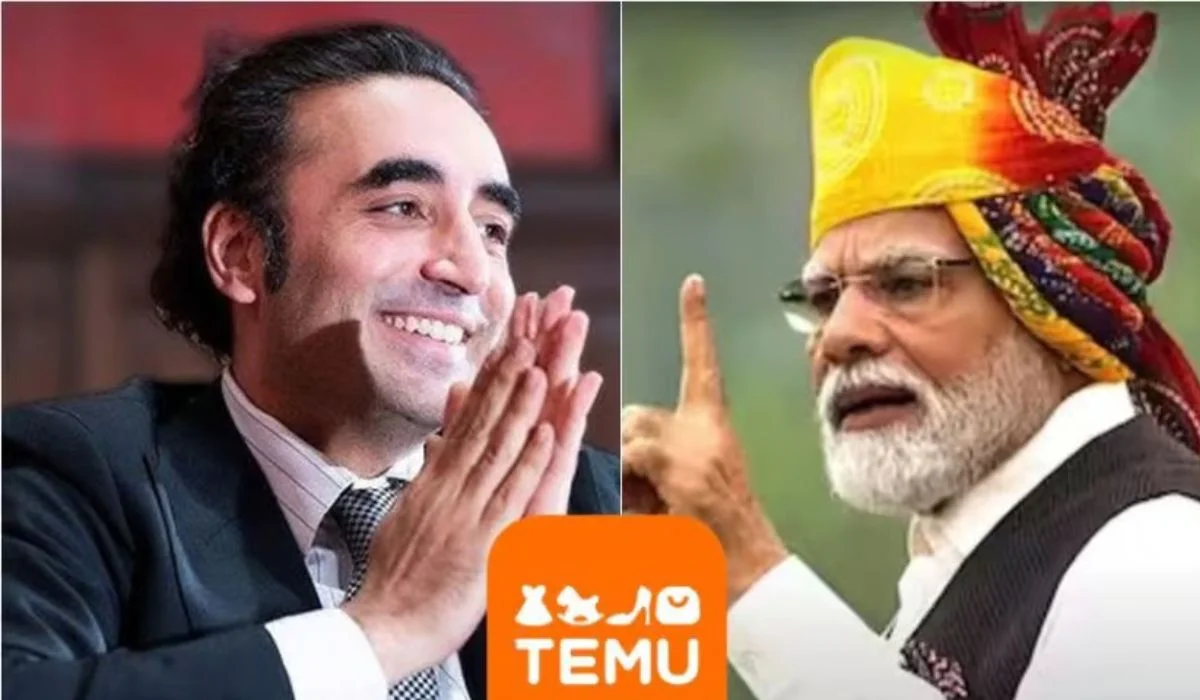

Temu Copy
In a forceful and uncompromising address at the United Nations, Pakistan People’s Party (PPP) Chairman Bilawal Bhutto Zardari launched a scathing critique of Indian Prime Minister Narendra Modi, accusing him of emulating Israeli-style policies in Indian-administered Kashmir and contributing to the destabilization of regional peace.
“Prime Minister Narendra Modi is essentially a ‘Temu copy’ of the Israeli Prime Minister,” Bilawal remarked, drawing a stark comparison between India’s actions in Kashmir and Israel’s ongoing settler colonialism in the occupied Palestinian territories.
According to Bilawal, India has adopted a model of demographic engineering and repression in Kashmir that mirrors Israel’s controversial settlement policy and occupation methods in Palestine.
He did not hold back in his criticism of Modi’s political trajectory, stating, “Narendra Modi was the Butcher of Gujarat, then of Kashmir, and now he seeks to trample the ancient Sindh civilization.”
The PPP chairman accused Modi of extending a pattern of violence and ethnic marginalization beyond borders, now targeting Pakistan’s cultural and historical identity through his inflammatory rhetoric and hostile policies.
Bilawal Bhutto Zardari further condemned New Delhi’s unilateral revocation of Jammu and Kashmir’s special status in 2019, arguing that the move was inspired directly by Israel’s playbook of territorial annexation and demographic manipulation. “India is unfortunately learning from the worst examples,” he said, adding that such actions have only intensified regional insecurity and eroded trust between neighboring states.
Touching upon the issue of terrorism, Bilawal suggested that meaningful cooperation between the intelligence agencies of India and Pakistan could yield tangible progress in reducing militancy and cross-border threats.
However, he claimed that while Pakistan has fulfilled its obligations by taking decisive action against all terrorist groups operating within its borders, India has failed to reciprocate.
He cited India’s own admission during the 2009 Sharm el-Sheikh summit, where the Indian government acknowledged its involvement in acts of terrorism on Pakistani soil. Reinforcing his point, he referred to the case of Indian intelligence operative Kulbhushan Jadhav, asserting, “He has been in our custody since 2017.”
Bilawal criticized India’s refusal to engage constructively with Pakistan on issues of mutual concern, particularly cross-border terrorism. “To this day, India has not taken any serious step to address our reservations,” he said, underscoring a lack of genuine response from New Delhi despite repeated calls for dialogue.
He emphasized Pakistan’s consistent stance on diplomacy and peaceful resolution, stating, “We are ready to discuss all issues. All our cards are on the table.” Yet, he accused India of deliberately evading its international responsibilities. “Today, only one country is running from the UN Charter—and that’s India,” Bilawal concluded, calling on the global community to hold India accountable for its actions and urging a renewed focus on regional peace through justice and diplomacy.
