

Conflicting signals have emerged from Iran as officials appear to balance diplomatic engagement with tight control over public messaging. Reports indicate that the Islamic Republic has agreed to participate in ongoing negotiations, although authorities have not fully clarified the motivations behind this decision.
Meanwhile, observers noted a subtle shift in official communication. An Iranian ambassador reportedly deleted a social media post, a move widely interpreted as an effort to avoid provoking public reaction during a sensitive period. Consequently, analysts suggest the government aims to manage internal sentiment while keeping diplomatic channels open.
Media Incident Highlights Sensitivity Around Ceasefire Debate
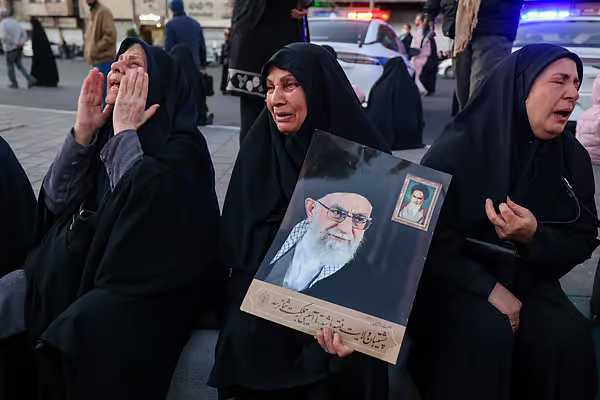
At the same time, a separate incident during a live television broadcast has drawn attention. A news network was covering a 40th-day memorial ceremony in one of Iran’s cities when an announcer unexpectedly stated opposition to a ceasefire.
Shortly afterward, the live transmission abruptly stopped and switched to a pre-recorded mourning segment. This sudden interruption raised questions about editorial control and the limits of public discourse surrounding the conflict.
Furthermore, the incident reflects broader sensitivities as authorities attempt to maintain a unified narrative. Media analysts note that such disruptions often signal efforts to prevent statements that may contradict official policy or ongoing diplomatic efforts.
Balancing Diplomacy and Domestic Messaging
As negotiations continue, Iran appears to walk a delicate line between engaging in talks and maintaining internal cohesion. On one hand, participation in diplomacy suggests openness to de-escalation. On the other, careful messaging indicates concern over domestic reactions.
Therefore, these developments highlight the complexities facing Iranian leadership. While officials pursue negotiations, they must also manage public perception and control narratives during a volatile regional environment.

