

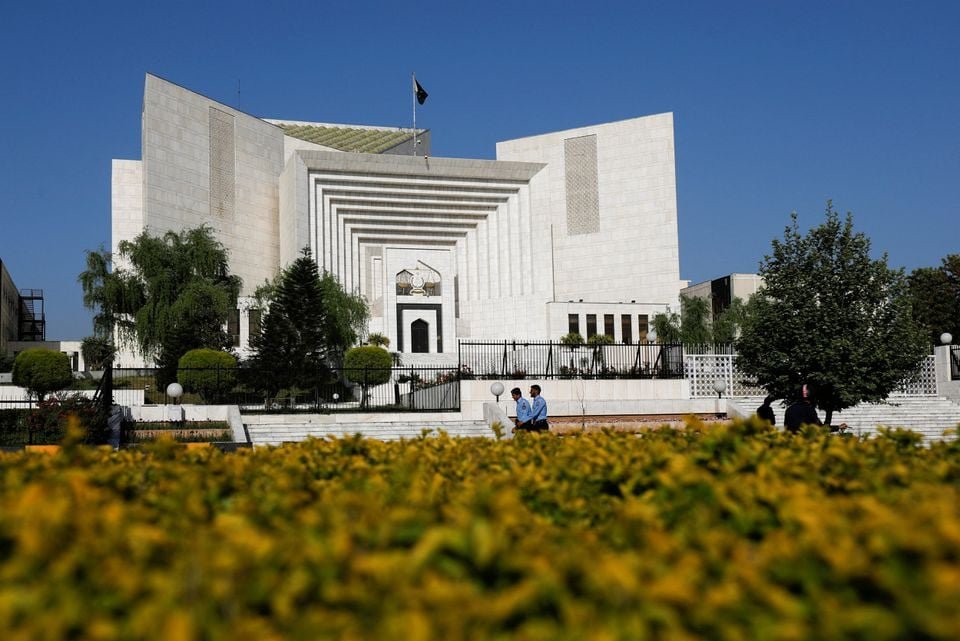

Constitutional Bench
A Judicial Commission meeting, chaired by Chief Justice of Pakistan (CJP) Yahya Afridi, concluded with significant decisions concerning judicial appointments and constitutional issues. While some matters progressed, others were deferred for further deliberation.
One major development was the nomination of Justice Shahid Bilal Hassan as a constitutional bench judge for the military courts case. The decision was made through a majority vote.
Additionally, Justices Adnan Karim and Agha Faisal were nominated for the Sindh High Court’s constitutional bench. However, the commission deferred its decision on the nominations of high court judges until December 21, insiders revealed.
Discussions during the meeting also centered around the 26th Constitutional Amendment. Justice Mansoor Ali Shah proposed that petitions against the amendment be heard by the full court.
However, CJP Afridi opposed this suggestion, maintaining that such petitions should be decided by the constitutional bench committee.
A majority of the commission members supported the CJP’s stance, resulting in the creation of a constitutional subcommittee tasked with deliberating on the petitions.
At the meeting’s outset, the CJP addressed a letter written to him by Justice Mansoor Ali Shah. In the letter, Justice Shah emphasized the need to postpone the meeting, citing unresolved challenges to the 26th Constitutional Amendment.
He argued that continuing judicial appointments under a potentially invalid amendment could undermine public trust in the judiciary.
Despite this, the CJP reiterated that the Judicial Commission does not have the mandate to address the amendment and confirmed that constitutional cases are scheduled by the Constitutional Bench Committee.
The meeting also discussed judicial appointments in detail. For the Peshawar High Court, three district and sessions judges—Kaleem Arshad, Farah Jamshed, and Inamullah Khan—and six lawyers were under consideration.
The lawyers included Junaid Anwar, Mudassar Amir, Aurangzeb, Jawad Ehsanullah, Salahuddin, and Sadiq Ali. Similarly, the names of 13 additional judges for the Sindh High Court were reviewed, although decisions were postponed.
Justice Shah’s letter, dated December 4, called for a delay in the Judicial Commission meeting due to unresolved constitutional concerns. He argued that the pending petitions challenging the 26th Amendment could render the commission’s actions void if the amendment were declared invalid.
Justice Shah highlighted the risk of undermining public confidence in the judiciary and wasting resources if appointments proceeded before resolving the petitions.
The Judicial Commission also empowered the CJP to form a subcommittee for drafting laws related to judge appointments, reflecting the importance of resolving procedural issues while maintaining public trust.
The commission’s deliberations mark a critical phase in addressing Pakistan’s judicial and constitutional challenges.
