

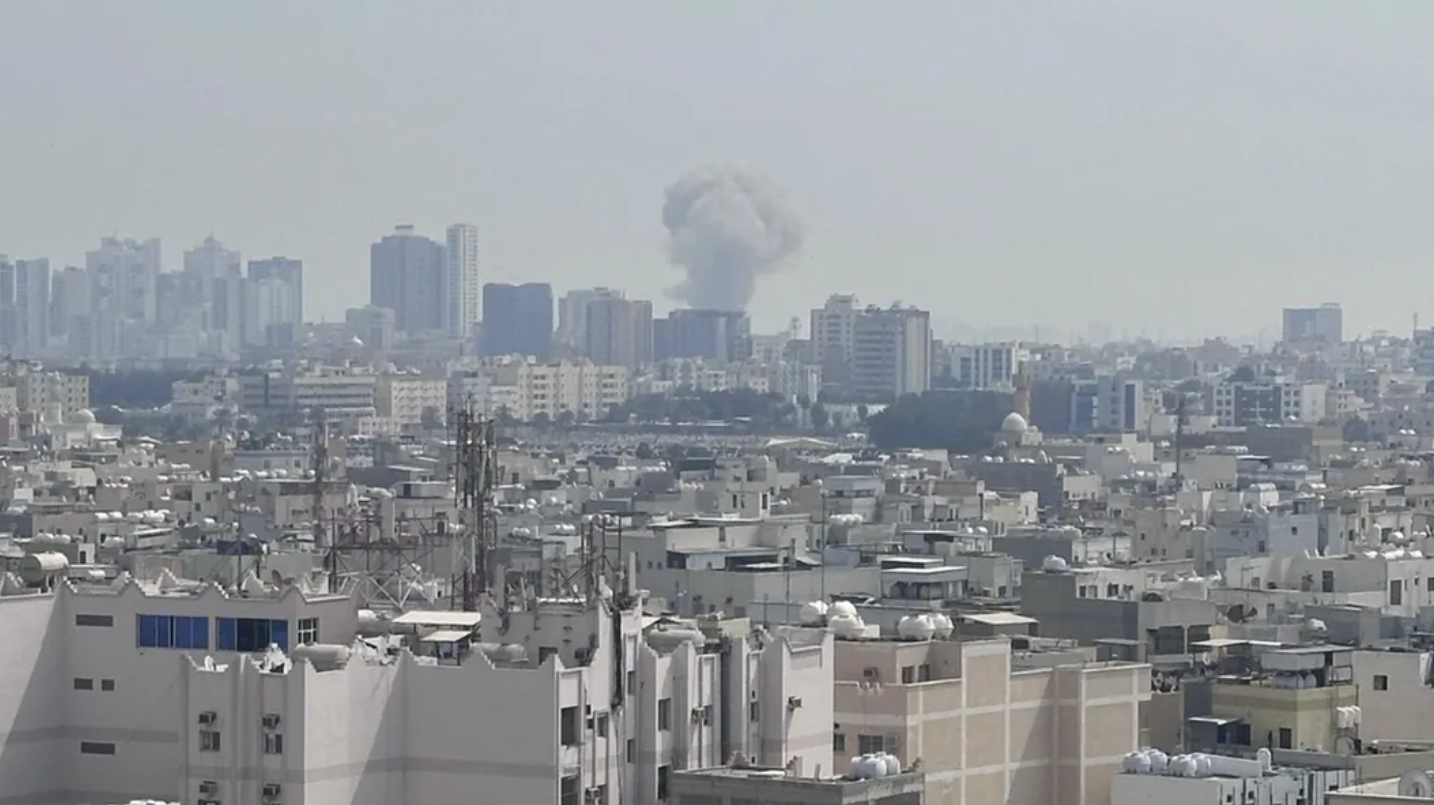

Tensions surged across the Gulf region after explosions were reported in several major cities. Blasts were heard in Doha, Kuwait City, Abu Dhabi, and Manama following retaliatory action by Iran. The escalation came after the United States and Israel carried out coordinated airstrikes on Iranian targets.
Iran’s Islamic Revolutionary Guard Corps (IRGC) announced that it had launched the first wave of missile and drone attacks in response. As a result, multiple Gulf states activated air defense systems amid rising fears of a wider regional conflict.
Missile Interceptions and Regional Impact
A Qatari official confirmed that air defense systems intercepted two Iranian missiles over Qatari territory. Although the missiles were neutralized, the incident heightened anxiety across the country. Residents reported hearing loud explosions as defensive measures were activated.
Meanwhile, authorities in Bahrain stated that a facility linked to the US Fifth Fleet headquarters was struck in what they described as a missile attack. Security forces immediately moved to secure the area. Officials have not yet released detailed damage assessments.
In addition, loud explosions were reported in Riyadh, the capital of Saudi Arabia. Witnesses described hearing a strong blast followed by several smaller explosions. These developments followed Iran’s public vow to retaliate against US and Israeli military action.
Escalating Regional Tensions
The unfolding situation has intensified concerns about broader instability in the Middle East. Gulf nations now face heightened security risks as military exchanges continue. Air defense systems across the region remain on high alert.
Although authorities have not confirmed casualty figures, governments are urging residents to remain calm and follow official safety guidance. Airports and critical infrastructure are under close monitoring as precautionary measures continue.
This rapid escalation underscores the fragile security environment in the Gulf. Diplomatic observers warn that further retaliation could expand the conflict zone. Consequently, regional and international leaders may face mounting pressure to pursue de-escalation efforts.
For now, Gulf capitals remain tense but operational. Governments continue assessing damage while reinforcing defensive readiness. The coming hours will likely determine whether the confrontation stabilizes or deepens into a broader regional crisis.
