

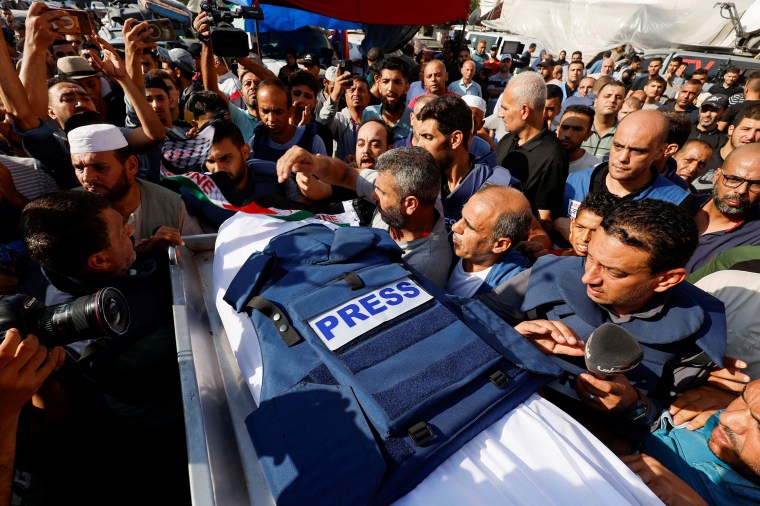

The ongoing Israeli assault on Gaza has not only claimed thousands of civilian lives but has also made the enclave the deadliest conflict zone for journalists in modern history. According to media analysts and watchdog groups, the systematic targeting of journalists by Israeli forces appears to be part of a broader strategy to enforce a media blackout, while international coverage — especially from Western outlets — remains muted.
On Tuesday, two more Palestinian journalists, Rasmi Jihad Salem and Eman Al-Zamli, were killed in separate Israeli strikes. Salem, a reporter for Manara Media, was killed in Gaza City, while Al-Zamli was reportedly assassinated by a drone strike near Khan Younis as she fetched water.
Their deaths bring the toll to at least 274 Palestinian journalists killed since October 2023, according to Al Jazeera. This figure excludes Salem and Al-Zamli and surpasses the number of journalists killed in any war in the past century, including both World Wars, Vietnam, and post-9/11 Afghanistan.
Analysts: Israel’s Media Blackout Strategy Enabled by Western Silence
Ian Williams, President of the Foreign Press Association (FPA), criticized Israel’s actions and the Western media’s complicity through silence.
“Israel wants a media blackout,” Williams told TRT World, “but a large Black Hole in the southeastern Mediterranean is hard to miss. Each barbarity by Israel erodes its remaining credibility with the world.”
He condemned foreign correspondents who fail to speak out:
“Any reporter not outraged by this latest atrocity should be relegated to covering weddings, funerals, and fashion — and not be trusted with any serious issues.”
Williams added that Palestinian journalists are not separate from their communities.
“Their fate is inextricably bound with the people of Gaza.”
Despite Israel barring international media access to Gaza, it has provided guided tours for journalists from allied nations. This has made local Palestinian journalists the primary — and most vulnerable — witnesses to the war.
Pattern of Targeting: From Smears to Strikes
Sarah Qudah, Middle East and North Africa Director at the Committee to Protect Journalists (CPJ), highlighted a troubling pattern in Israel’s targeting of journalists.
“It starts with smears and threats, then ends in assassination,” she said, citing the example of Anas Al-Sharif, a Pulitzer Prize-winning journalist who was killed in an Israeli strike just weeks after being accused — without evidence — of ties to Hamas.
In a posthumous letter published by colleagues, Al-Sharif wrote:
“If these words reach you… Israel has succeeded in killing me.”
Qudah warned that August 2025 has been one of the deadliest months on record, with at least 11 journalists killed in less than three weeks.
“This is not a series of isolated incidents. This is a pattern — and we fear it may soon become the norm.”
The Al-Shifa Hospital airstrike, where five journalists including Reuters and Al Jazeera staff were killed, prompted rare international backlash. Israel falsely claimed the journalists were filming for Hamas. Reuters later confirmed the camera belonged to their own journalist.
Political Responsibility and Global Repercussions
Following the assassination of Al-Sharif and others, Williams questioned whether Israeli Prime Minister Benjamin Netanyahu had knowledge of or directly authorized the strikes.
“Netanyahu is amoral, with shades of megalomania,” he said. “Even he must know that targeting Al-Sharif crossed a line. It sends a chilling message to all journalists, especially those who might risk entering Gaza.”
He added that the lack of accountability raises alarming concerns:
“Has Netanyahu lost control of the IDF fanatics, or is this state policy?”
Despite growing evidence and mounting death tolls, many Western news outlets remain reluctant to challenge Israel’s narrative, relying instead on official statements and failing to amplify the voices of Palestinian reporters.
