

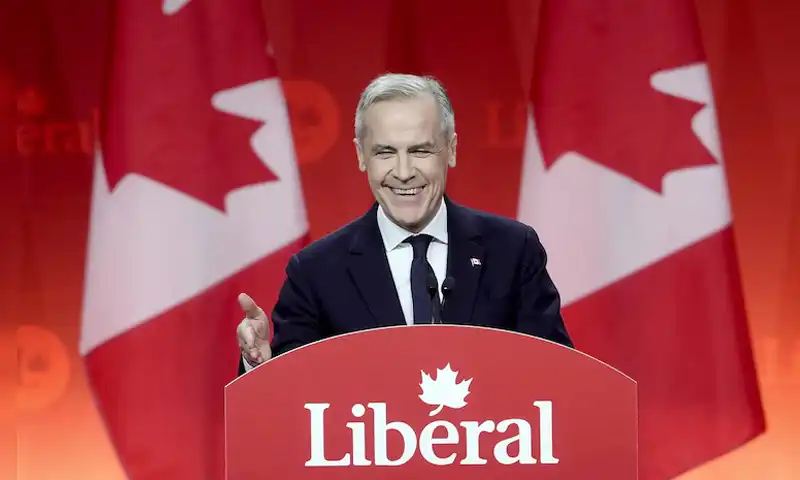

Mark Carney has led the Liberal Party to a notable victory in Canada’s federal elections, securing a return to power in what many are calling a political resurgence. The vote took place amid widespread concerns over housing affordability, a 6.7% unemployment rate, and increasingly tense relations with the United States.
According to projections from Western media outlets, the Liberals won 163 seats in the 343-seat House of Commons, ahead of the Conservative Party with 149. The Bloc Québécois secured 23 seats, the New Democratic Party (NDP) won 7, and the Green Party took 1 seat. While the Liberals have emerged as the largest party, they fall short of the 172 seats required for a parliamentary majority, leaving open the possibility of coalition governance.
In his post-election address, Carney directly confronted the challenges posed by U.S. policy under President Donald Trump, declaring, “President Trump wants to break us and take control—but that will never happen.” The statement was met with strong applause, highlighting growing public concern over Washington’s approach to Ottawa.
Conservative leader Pierre Poilievre conceded defeat, acknowledging that his party had “learned hard lessons” from the campaign.
The election outcome marks a dramatic comeback for the Liberals, who had been trailing in polls just three months prior. Analysts credit Carney’s leadership—following his succession of Justin Trudeau—and a focused campaign on defending Canadian sovereignty and addressing domestic economic anxieties as key factors in the turnaround.
The next government will be tasked with addressing urgent national issues, including rising living costs, strained public healthcare, and U.S.-imposed tariffs, all of which played a defining role in shaping voter sentiment.
