

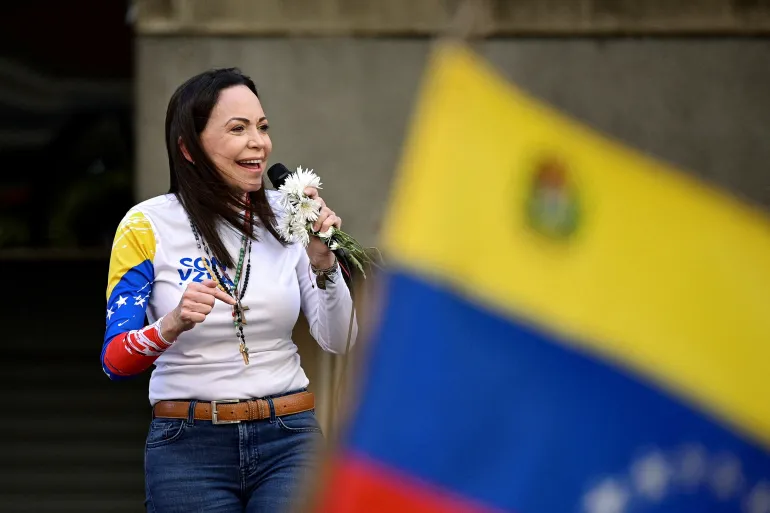

Venezuelan opposition leader Maria Corina Machado’s absence from the Nobel Peace Prize ceremony in Oslo underscores the escalating political repression in Venezuela and the international ramifications surrounding her case. Her unknown whereabouts, prolonged hiding, and continued travel ban form the backdrop of a moment that was meant to symbolize democratic resistance.
Machado Missing as Ceremony Proceeds
Norwegian Nobel Institute Director Kristian Berg Harpviken confirmed that Machado will not attend the ceremony scheduled for 1pm at Oslo City Hall. Despite expectations of her appearance—against a decade-long travel ban—officials now acknowledge they do not know her location. The absence undercuts the symbolic importance of her defiance but emphasizes the risks she faces under President Nicolás Maduro’s government.
Family Steps In
Machado’s daughter, Ana Corina Sosa Machado, will accept the award and deliver the Nobel lecture on her behalf, following standard protocol when laureates cannot appear. When Machado won the prize in October, she partly dedicated it to U.S. President Donald Trump, who has repeatedly claimed he deserves the honor.
Political Context in Venezuela
Machado has spent over a year in hiding following expanded arrests of opposition figures after the disputed 2024 presidential election. Although she won the opposition primary overwhelmingly, authorities barred her from participating in the election. The election body and top court declared Maduro the victor, but opposition groups presented ballot-level tallies that they argue prove Machado won.
International Tensions and U.S. Actions
Machado has aligned with U.S. political hawks who view Maduro as a threat to American national security. Meanwhile, the Trump administration has carried out more than 20 military strikes targeting alleged narcotrafficking operations in the Caribbean and Pacific. Several governments and human rights groups denounce the operations as unlawful extrajudicial killings.
Global Implications
Analysts argue that the Nobel Prize amplifies international recognition of Venezuela’s disputed electoral outcome. According to Christopher Sabatini of Chatham House, the award serves as a powerful signal affirming democratic values that many fear have been sidelined.
