

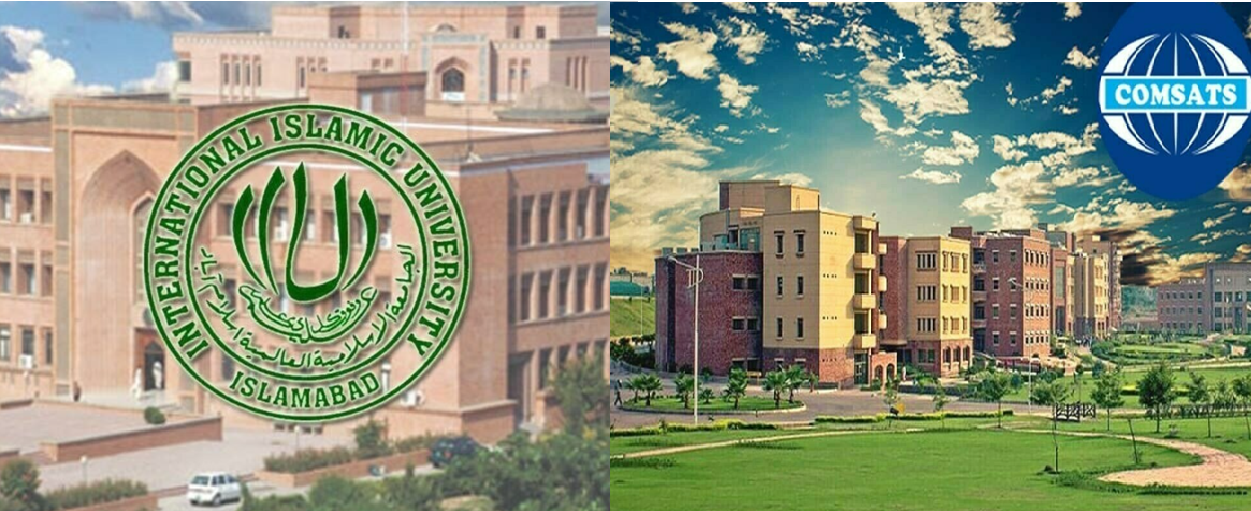

A prolonged delay in appointing permanent rectors at two prominent universities in Islamabad, Comsats University Islamabad (CUI) and the International Islamic University Islamabad (IIUI), has raised concerns over administrative inefficiencies and the performance of the supervising ministries.
While Comsats currently operates under the temporary leadership of a senior faculty member, IIUI has been left without any rector at all. The vacancy at IIUI became effective after the term of Dr Mukhtar Ahmed, who was overseeing the university’s affairs in addition to his role as Chairman of the Higher Education Commission (HEC), concluded on July 29. Since then, no new appointment has been made.
Comsats University falls under the jurisdiction of the Ministry of Science and Technology, while the Ministry of Federal Education is responsible for overseeing IIUI. Despite the significant responsibilities held by both institutions in Pakistan’s higher education landscape, both have seen key leadership positions remain vacant or filled on an ad-hoc basis for extended periods.
The position of rector at Comsats University has remained vacant since July 2023, when Dr Mohammad T. Afzal stepped down. Following his resignation, the university’s chancellor — then-President Dr Arif Alvi — temporarily appointed Senior Dean Prof Dr Sajid Qamar to manage the rector’s responsibilities. Over a year later, Dr Qamar still holds the position on an interim basis, and multiple other senior administrative posts at Comsats, including that of the registrar, are also being managed without permanent appointments.
A similar leadership gap exists at IIUI. The position of rector became vacant in November 2023 when the Supreme Court removed Dr Samina Malik from office and directed that the HEC chairman or a permanent HEC member should manage the university’s affairs until a formal appointment was made. Dr Mukhtar Ahmed, then serving as HEC chairman, took over as acting rector but stepped down at the end of his term on July 29. Since then, IIUI has been without a rector, leaving the university in administrative limbo.
An official from IIUI confirmed the absence of a rector, while a representative from the Ministry of Education claimed that steps were being taken to resolve the issue. However, university personnel have expressed concern that the post has remained vacant for nearly ten months, despite a clear court directive to expedite the appointment.
The case of Comsats further highlights the delays in bureaucratic decision-making. In September 2023, a selection committee finalized a panel of three candidates for the rector’s position and submitted it for approval to the President’s Office. President Asif Ali Zardari approved the appointment of Dr Shahid Munir, and a formal notification was issued on September 23, 2024, by the Ministry of Science and Technology.
However, Dr Munir did not assume the role, as he was simultaneously appointed as Vice Chancellor of the University of Engineering and Technology (UET) in Lahore. Since then, the position at Comsats has remained unfilled, with no clear resolution in sight.
There is now some indication that progress may be made soon. A university official from Comsats stated that the institution’s senate, the highest decision-making body, is expected to convene in the third week of August to deliberate on the appointment of a permanent rector.
As both institutions continue to operate without stable leadership, concerns are mounting over how these administrative gaps could impact decision-making, policy implementation, and the overall quality of education. The delays also highlight the need for more efficient governance mechanisms within Pakistan’s higher education sector.
