

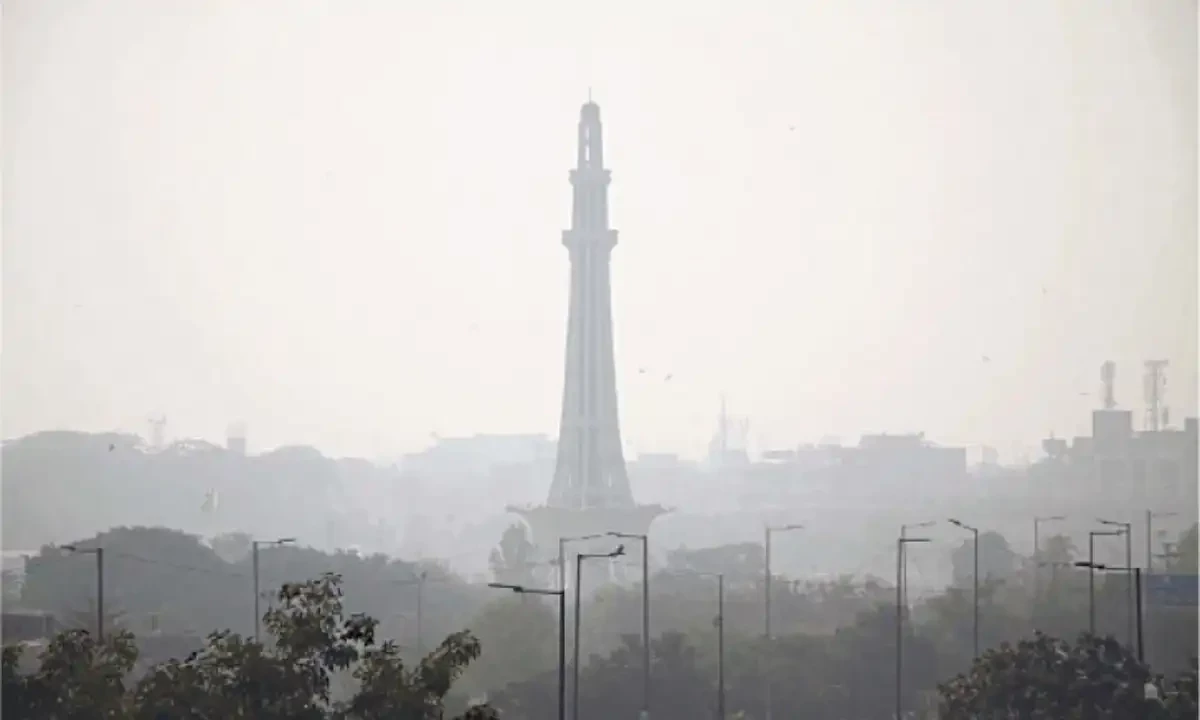

Despite government efforts, air pollution in Lahore remains critically high, with the city recording an Air Quality Index (AQI) of 477 on Monday, making it one of the world’s most polluted cities. Other major cities in Punjab, including Gujranwala, Faisalabad, and Multan, are also facing hazardous air conditions.
Smog in suburban areas like Qabula near Sahiwal is intensifying due to unchecked brick kiln operations. Rising pollution levels are causing eye, throat, and chest infections, prompting doctors to advise citizens to wear masks and glasses. The public has demanded stricter action against brick kiln owners to curb emissions.
In Karachi, air quality is also concerning, with AQI reaching 142 amid hot weather, high humidity, and a light north-east breeze. Lahore’s weather remains dry, while the Met Office predicts cloudy skies with rain, thunderstorms, and snowfall in northern regions.
To address pollution, Lahore traffic police have intensified enforcement. Vehicles without fitness certificates, over-smoke-emitting vehicles, and unsafe trolleys are being fined. In October alone, over 50,000 violations were penalized, showing a significant increase from last year. Authorities urge citizens to maintain vehicles properly to reduce smog.
These steps are part of ongoing measures to combat air pollution in Lahore, driven by vehicle emissions, industrial activity, and crop burning. Continued enforcement and public cooperation remain crucial to improving air quality.
