

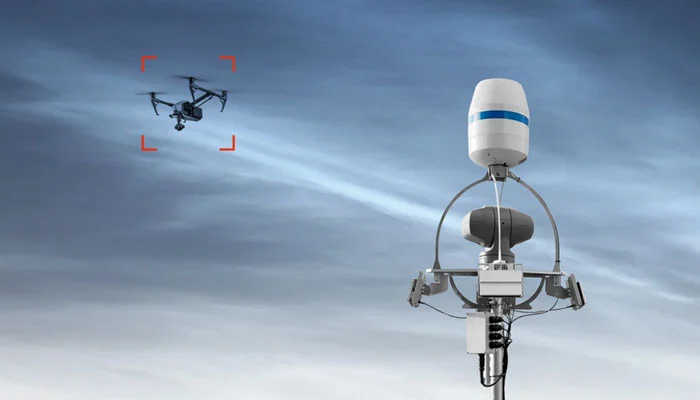

Anti-Drone Technology
In a major step toward strengthening security in a volatile region, the Khyber Pakhtunkhwa (KP) police have acquired cutting-edge anti-drone technology to counter the growing threat of aerial terrorism, official sources confirmed on Wednesday.
The newly inducted system is designed to detect, track, and neutralize hostile drones from a considerable distance, significantly enhancing the operational capacity of law enforcement agencies in the province.
Officials said the deployment of this advanced equipment will serve as a vital layer of defense for high-value government installations, public officials, and large-scale public gatherings that are often potential targets for militant groups.
The development comes amid mounting concerns over the use of drones by terrorist elements, particularly in conflict-prone areas such as North Waziristan and parts of southern KP. These regions have witnessed sporadic drone-related attacks in the past, underlining the need for modern technological solutions to preempt and neutralize such threats.
Confirming the acquisition, Khyber Pakhtunkhwa Inspector General of Police (IGP) Zulfiqar Hameed said that the induction of anti-drone systems is part of a broader strategy to modernize the provincial police force. “The force is being equipped with the latest weapons and surveillance technology to deal with evolving threats. The anti-drone system will play a critical role in our upcoming security operations,” he stated.
IGP Hameed emphasized that this move reflects a broader vision to adapt to 21st-century security challenges. “This technology marks a significant leap forward in our efforts to enhance law enforcement’s ability to combat asymmetric warfare and urban terrorism,” he added.
The introduction of anti-drone systems also comes at a time when Pakistan continues to face a steady rise in militant violence, particularly following the return of the Taliban regime in Afghanistan in 2021. Border provinces like KP and Balochistan have borne the brunt of this resurgence in terrorism.
According to a monthly report released by the Pakistan Institute for Conflict and Security Studies (PICSS), Pakistan recorded 85 militant attacks in May 2025, a modest increase from 81 in April. The 5% rise, though not dramatic, suggests that while terrorist activity is not spiraling out of control, it remains a persistent threat.
Interestingly, the surge in attacks comes despite heightened tensions with neighboring India in recent months, which had the potential to embolden extremist factions.
However, the data from PICSS indicate that militant groups did not escalate operations in response to the regional military standoff, a development some analysts attribute to increased vigilance by Pakistani security forces.
In light of these challenges, the KP police’s adoption of anti-drone measures represents not just a tactical response, but a forward-thinking investment in counterterrorism infrastructure. The province, long at the frontline of Pakistan’s fight against terrorism, now appears committed to integrating technological innovation into its security doctrine.
