
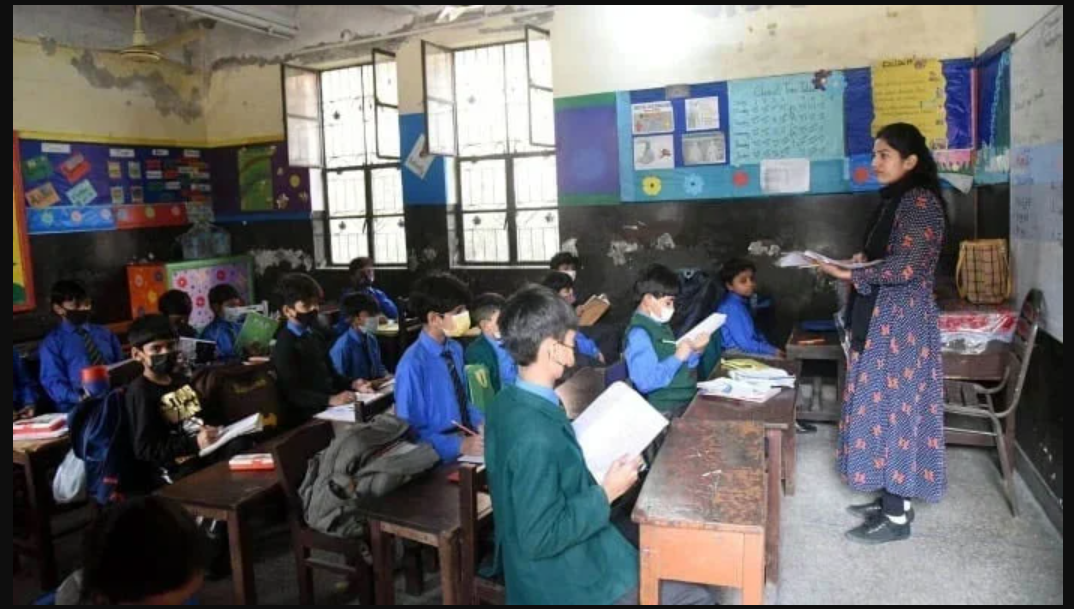

In a major policy shift, the Khyber Pakhtunkhwa education department has outsourced 500 low-performing government primary schools to private education partners. The move is part of a broader effort to improve learning outcomes and boost student enrollment across the province.
Officials say this is only the first phase. A second phase is already in motion, under which 1,500 additional schools will also be handed over to private operators. Documentation for this expansion has already begun.
The decision reflects a growing push to reform struggling public schools through public-private collaboration.
First Phase Implementation Already Underway
Out of the 500 outsourced schools, 273 have already been transferred to private partners. These schools are located in the winter zone, where academic activities have restarted under new management.
The remaining 227 schools will be handed over in September. These are located in the summer zone, where academic operations follow a different calendar.
According to education department officials, multiple private organisations are involved in the initiative. These include the Beaconhouse School System, Sarhad Rural Support Programme, Dopasi Foundation, and Hands Foundation, along with other partners.
Officials describe the initiative as a structured effort to revive underperforming schools and improve access to quality education in remote areas.
Thousands of Schools Identified for Reform
Education authorities have identified 4,147 primary schools as low-performing across the province. These are schools with fewer than 40 enrolled students.
The outsourced schools are spread across multiple districts. These include Mansehra, Abbottabad, Haripur, Bajaur, Bannu, Kohat, Swat, Karak, Mardan, Nowshera, Buner, Tank, Shangla, Lower Kohistan, Lakki Marwat, Lower Chitral, Kurram, and Dera Ismail Khan.
Officials say the goal is to increase enrollment significantly. Under the agreement, each outsourced school must raise student strength to at least 180 students.
This target is designed to improve school viability and ensure better use of infrastructure and resources.
Shared Responsibility Between Public and Private Sectors
Under the new model, responsibilities are divided between the government and private partners. The government will provide school buildings, textbooks, furniture, and a fixed stipend of Rs1,500 per enrolled student. A watchman will also be provided for security.
Private partners, however, will manage daily operations. They will hire teachers and staff, handle school administration, and cover operational expenses. They will also be responsible for maintenance and infrastructure improvements.
In addition, they must ensure effective teaching standards and improved learning outcomes. Community engagement is also part of their mandate to encourage enrollment and reduce dropout rates.
Officials say strict performance monitoring will be enforced.
KPIs Set to Measure Performance and Quality
To ensure accountability, the education department has introduced key performance indicators (KPIs). These include basic facilities like clean drinking water and backup power systems such as generators or solar energy.
Hygiene standards, particularly washroom maintenance, are also a priority. Authorities have emphasized improved attendance, teacher quality, and school discipline.
Special focus has been placed on girls’ education. Officials say increasing female enrollment is a central goal of the reform.
Regular monitoring by district education authorities will ensure compliance. Partners failing to meet targets may face corrective action.
Education Reform Aimed at Long-Term Improvement
Officials believe this outsourcing model will improve education quality in underserved regions. They argue that combining public infrastructure with private expertise can accelerate reform.
The initiative is being closely watched as one of the largest public-private education experiments in the province. If successful, it may serve as a model for other regions.
For now, authorities remain focused on implementation. The success of the program will depend on execution, monitoring, and sustained commitment from all stakeholders.

