

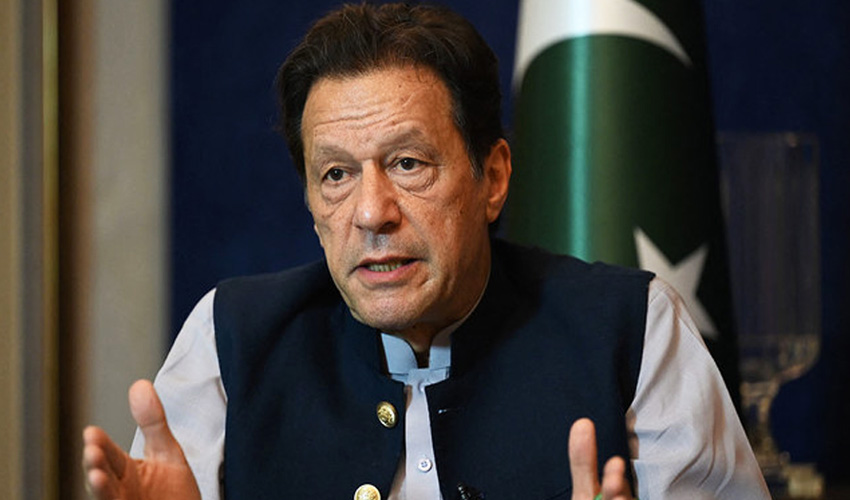

PESHAWAR – The recently passed Khyber Pakhtunkhwa (KP) budget for Fiscal Year 2025–26 has triggered internal rifts within the Pakistan Tehreek-e-Insaf (PTI), after party founder and former Prime Minister Imran Khan reportedly voiced strong opposition to the province’s Rs157 billion surplus, citing its alignment with International Monetary Fund (IMF) expectations.
The controversy erupted after the KP Assembly approved the budget on June 24, without Khan’s final go-ahead — a move that drew sharp criticism from PTI workers, who labeled Chief Minister Ali Amin Gandapur and provincial lawmakers as “traitors” for allegedly defying party consensus.
Sources within PTI revealed that Khan, who has been incarcerated at Adiala Jail since September 2023, disapproved of the surplus, arguing that such a move merely appeases the IMF while the nation sinks deeper into debt. He reportedly wanted the surplus redirected to public welfare projects in health, education, and environmental sectors.
Senior PTI insiders said that during the tenure of former KP CM Mahmood Khan, the party had refused to maintain a surplus at the IMF’s behest — a stance Khan wished to uphold. His concern was that the surplus could be interpreted as compliance with federal and IMF fiscal pressures at a time when the country’s economic negotiations with the IMF remain delicate.
Confirming the internal tensions, KP government spokesperson Muhammad Ali Saif stated that Khan had raised concerns over the surplus and questioned why KP would need federal funding if it was declaring such savings. However, he clarified that Khan was not “angry,” but wanted greater budgetary focus on public welfare.
Complicating matters further, a senior PTI leader claimed Khan was misinformed by certain party figures who framed the surplus as an IMF requirement. In reality, no direct surplus target was given by the IMF, and the funds remain under provincial control rather than being surrendered to the federal government.
Adding to the drama, PTI leader Dr. Shahbaz Gill acknowledged procedural flaws in the budget’s approval, saying the party’s political committee had not formally authorised it. Former finance minister Taimur Saleem Jhagra, a member of Khan’s review committee, said he was only consulted after the budget was passed.
Another member of the political committee revealed that a unanimous decision was taken on June 22: the budget should not be passed without Khan’s input, and if necessary, the process should be delayed until June 30. However, CM Gandapur went ahead and pushed the budget through — becoming the first province to do so.
“Why the rush?” the member asked, questioning the motives behind Gandapur’s haste.
PTI Secretary General and senior lawyer Salman Akram Raja also took to social media, writing that the budget’s approval directly violated Khan’s directive and party consensus.
In response, CM Gandapur defended his decision, saying the budget had to be passed to prevent a constitutional crisis. He alleged that the federal government was plotting to impose Governor’s Rule in KP and that any delay could have played into their hands. Gandapur added that he had attempted to consult Khan but was denied access.
Meanwhile, Adviser to the CM on Finance Muzzammil Aslam clarified the budget figures, stating the surplus was not dictated by the IMF but is part of provincial savings, which can be used for development initiatives. He said KP is expecting Rs125 billion in savings by June 30 and stressed that the funds remain within the province.
According to Aslam, the Rs157 billion surplus is only an estimate, and the total KP budget stands at Rs2,119 billion, with Rs1,800 billion expected in federal transfers. He noted that a national shortfall in tax collection has already affected transfers to provinces.
Aslam concluded by saying the budget was prepared in line with Khan’s broader vision for development, and if Khan wishes to amend any provisions, the government is ready to revise them accordingly.
The episode has not only exposed deep divisions within PTI but has also raised concerns over governance, fiscal coordination, and communication within one of Pakistan’s most politically significant provinces.
