

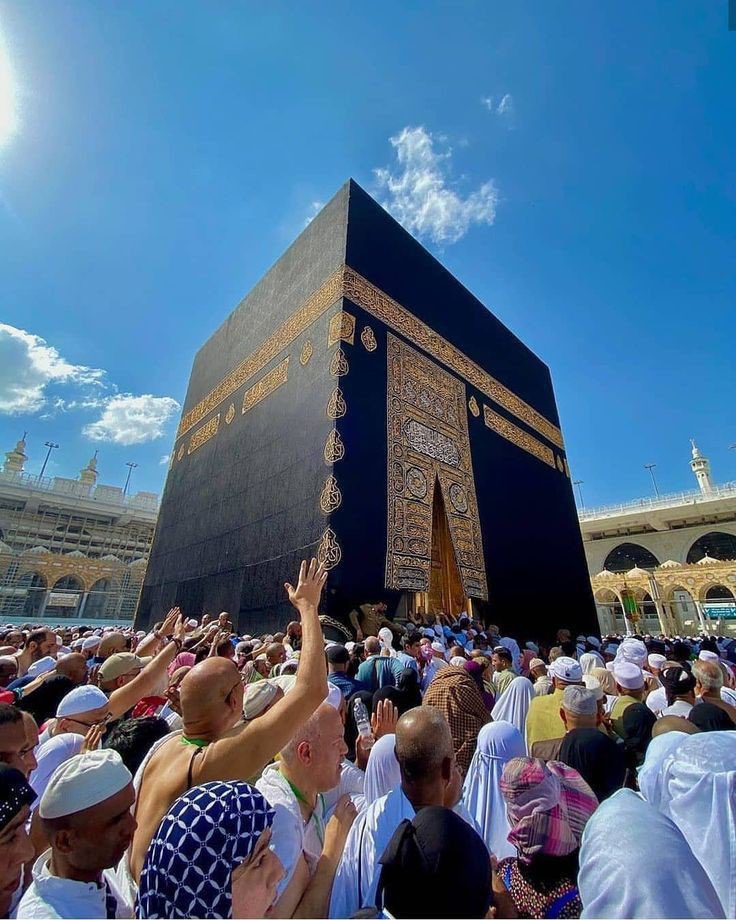

For the first time in history, the sacred covering of the Holy Kaaba, known as the Kiswa, is being exhibited outside Makkah, allowing visitors to admire its intricate craftsmanship up close.
The Kiswa, which Muslims around the world face in prayer, is currently on display at the Islamic Arts Biennale at King Abdulaziz Airport in Jeddah.
A Rare Glimpse into the Art of Kiswa-Making
This interactive exhibition offers insights into the detailed artistry involved in creating the Kiswa, from hand-weaving to embroidery using gold and silver threads. Running until May 25, the event highlights the rich heritage of Islamic arts and the centuries-old tradition of Kiswa production.
Held at the Hajj terminal of Jeddah airport, the exhibition walks visitors through the meticulous process of crafting the Kiswa, from selecting the finest silk to its final preparation before it is draped over the Holy Kaaba in Makkah.
Crafted by Master Artisans in Makkah
The Kiswa is manufactured at the King Abdulaziz Complex in Makkah, where over 200 artisans and administrative staff contribute to its production. The facility includes specialized departments for dyeing, weaving, printing, and embroidery, equipped with the world’s tallest computerized sewing machine.
The making of the Kiswa requires approximately 1,000kg of black-dyed silk, 120kg of gold threads, and 100kg of silver threads. Each year, on the first day of the Islamic lunar Hijri year, the Kiswa is ceremoniously replaced at the Grand Mosque in Makkah, Islam’s holiest site.
Exploring the Historical Evolution of the Kiswa
The biennale also delves into the historical evolution of Kiswa-making, showcasing the advanced artistic techniques that have been refined over centuries to preserve its spiritual and cultural significance.
Hajj 2025 Registration Opens for Domestic Pilgrims
Meanwhile, the Saudi Ministry of Hajj and Umrah has announced the opening of Hajj 2025 registration for domestic pilgrims, including citizens and residents. Applicants are urged to register through the Nusuk app or the official e-portal.
The ministry emphasized the importance of early registration, advising applicants to complete their health information, add accompanying pilgrims, and submit exemption requests for the Mahram requirement if necessary.
