

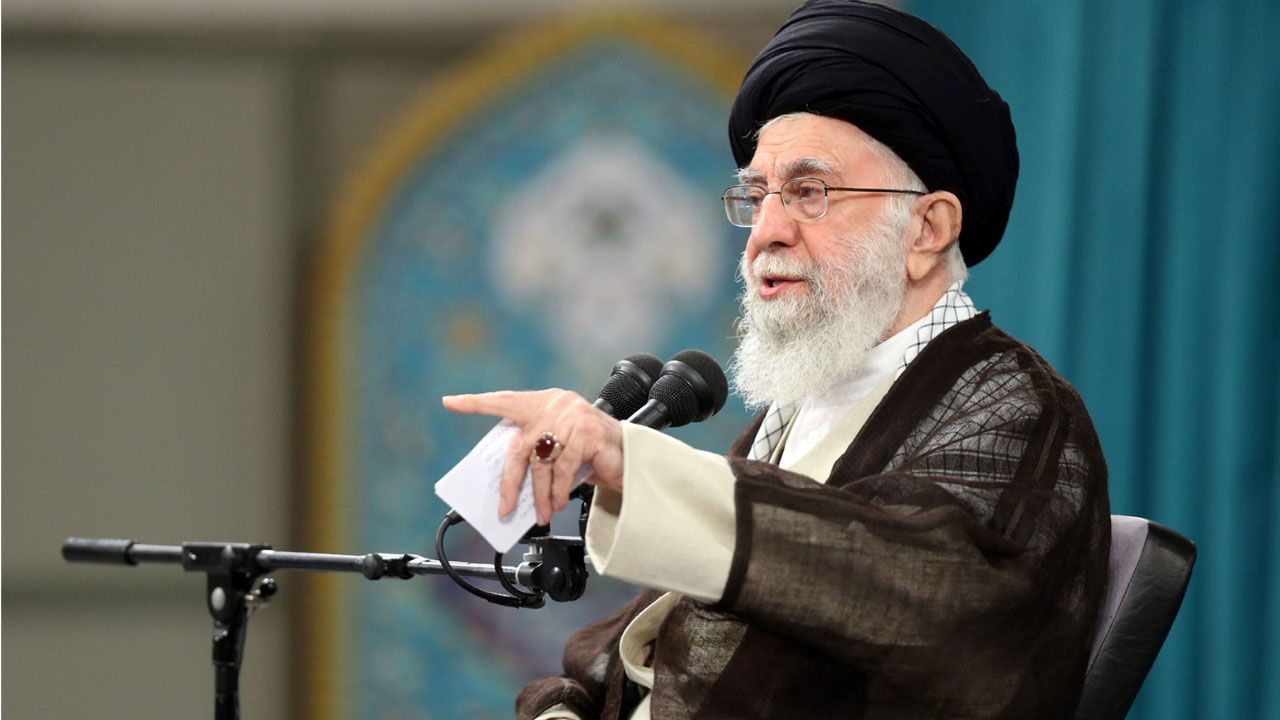

Who will lead Iran after Supreme Leader Ayatollah Ali Khamenei? That question has taken on new urgency amid rising regional tensions — and, according to The New York Times, Khamenei has already quietly selected three possible successors.
The U.S. newspaper reports that in the event of Khamenei’s death — particularly through assassination during the current volatile climate — Iran’s powerful Assembly of Experts has been instructed to choose his replacement from a list of three pre-approved candidates. The move aims to ensure a stable transition and avoid internal chaos.
The list, compiled in secrecy and kept strictly confidential, reportedly does not include Khamenei’s son, Mojtaba Khamenei. Once seen as a frontrunner due to his close ties to the Islamic Revolutionary Guard Corps (IRGC), Mojtaba’s exclusion is believed to be a strategic decision to avoid perceptions of nepotism and maintain the legitimacy of the process.
The identities of the three potential successors have not been disclosed. However, they are said to be senior clerics chosen for their religious credentials and alignment with the ideological framework of the Islamic Republic.
Traditionally, the selection of a new Supreme Leader involves extended deliberations among Iran’s senior clerics. But sources cited by The New York Times say that Ayatollah Khamenei is seeking a swift and orderly transition, particularly under wartime conditions. His goal: to prevent instability and preserve the continuity of Iran’s theocratic system.
This revelation comes amid mounting fears of a broader regional conflict following U.S. airstrikes on Iranian nuclear facilities and a surge in Israeli military activity. The report also claims that Iran’s Ministry of Intelligence has advised top officials to relocate to secure underground sites — a precaution that underscores the seriousness of the current threat environment.
If accurate, Khamenei’s succession planning marks one of his most consequential and proactive measures in decades, reflecting both his concern for national continuity and the rising security risks facing Iran’s leadership.
