

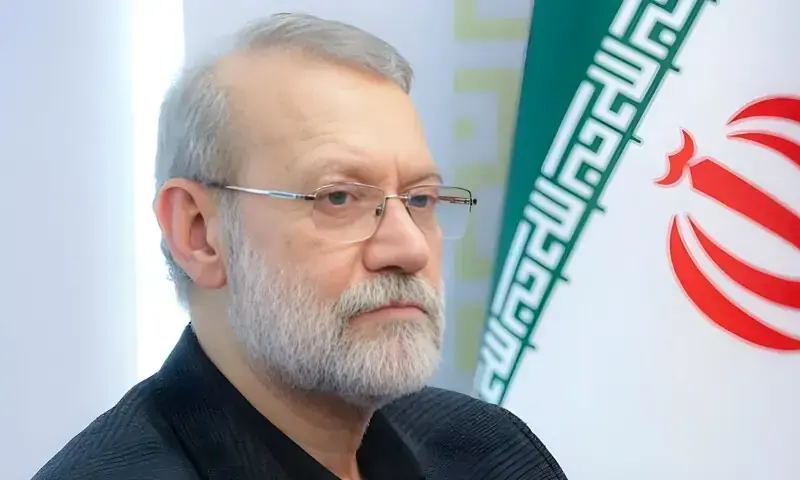

Iran’s Supreme Leader Ali Khamenei has delegated significant authority to seasoned politician and national security chief Ali Larijani, reportedly positioning him as a key figure in crisis management amid escalating tensions with the United States, a report by The New York Times said. Larijani, 67, currently heads Iran’s Supreme National Security Council and has taken charge of sensitive political and security decisions since early January, when unrest and external threats intensified.
The report, citing senior Iranian officials and Revolutionary Guards members, said Tehran is preparing for the possibility of a broad military conflict with Washington, deploying missile systems and placing armed forces on high alert along strategic borders. Amid these developments, Larijani is overseeing ongoing negotiations with the United States and coordinates diplomatic contacts, with even routine outreach requiring his clearance, sources told the newspaper.
According to the NYT report, Supreme Leader Khamenei has established a four-tiered succession system across key military and government posts to ensure continuity of command should communication break down or senior leaders be incapacitated. Commanders must name up to four alternate candidates for each role, and a limited circle of trusted aides, including Larijani, can make decisions if Khamenei is unreachable.
In a potential war scenario, Iran’s parliament speaker Mohammad Bagher Ghalibaf could assume command of the armed forces, while Larijani may lead interim authority if the top leadership suffers losses. Former president Hassan Rouhani also remains under consideration within the succession framework.
Despite Larijani’s rise, analysts note he is not positioned to succeed as Supreme Leader since the role traditionally requires senior clerical credentials. Nevertheless, his expanded portfolio reflects deep trust from Khamenei during a period of both domestic unrest and external pressure, with diplomatic talks on Iran’s nuclear program continuing even as leadership readies for worst-case conflict scenarios.
