

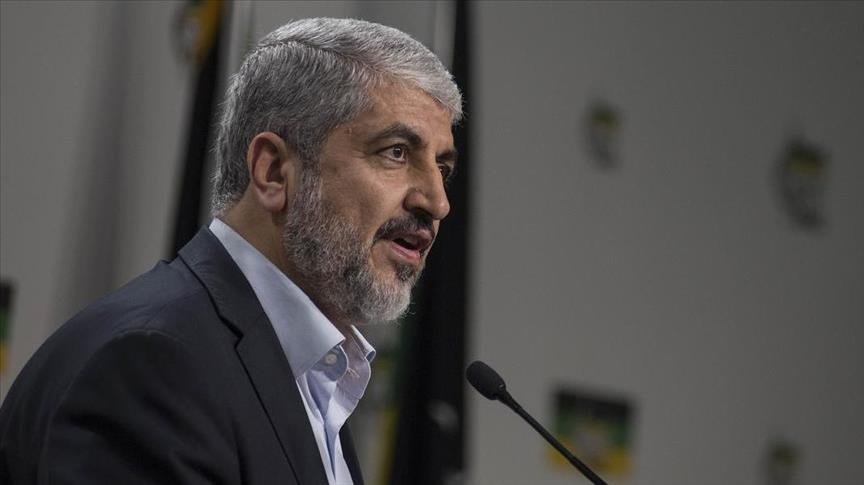

Khaled Meshaal, poised to become the new Hamas leader, first gained global attention in 1997 when Israeli agents attempted to assassinate him by injecting poison in a failed operation outside his office in Amman, Jordan.
The botched attack on this prominent figure within the Palestinian militant group, authorized by Israeli Prime Minister Benjamin Netanyahu, enraged Jordan’s then-King Hussein. The king threatened to execute the captured Israeli agents and annul Jordan’s peace treaty with Israel unless an antidote was provided. Israel complied and also released Hamas leader Sheikh Ahmed Yassin, who was later assassinated in Gaza seven years afterward.
Hamas, which has carried out suicide bombings and engaged in multiple conflicts with Israel, is considered by Israel and Western states as a terrorist organization intent on Israel’s destruction. However, to Palestinian supporters, Meshaal and Hamas leaders are seen as resistance fighters striving for liberation from Israeli occupation, particularly when diplomatic efforts have failed.
Meshaal, now 68, became Hamas’ political leader in exile a year before Israel’s attempt on his life, allowing him to engage with foreign governments without the travel restrictions that hindered other Hamas officials. Hamas sources indicate that Meshaal is expected to replace Ismail Haniyeh, who was assassinated in Iran early Wednesday morning, with both Tehran and Hamas promising retaliation against Israel.
Senior Hamas official Khalil al-Hayya, based in Qatar and involved in truce negotiations with Israel, is another potential candidate for leadership, particularly favored by Iran and its regional allies. However, Meshaal’s relationship with Iran has been strained due to his past support for the 2011 Sunni-led revolt against Syrian President Bashar al-Assad.
Israel has repeatedly targeted Hamas leaders since the group’s founding during the first Palestinian uprising in 1987. Despite this, Meshaal has remained a key figure in Hamas leadership, mostly operating from exile. After Sheikh Ahmed Yassin was killed in a 2004 airstrike, and his successor Abdel-Aziz Al-Rantissi was assassinated shortly thereafter, Meshaal assumed overall leadership of Hamas.
Meshaal has grappled with whether to pursue a more pragmatic approach toward Israel in the quest for Palestinian statehood or to continue the fight, as Hamas’ 1988 charter calls for Israel’s destruction. While he rejects a permanent peace deal with Israel, Meshaal has suggested that Hamas might accept a Palestinian state within the 1967 borders as a temporary solution in exchange for a long-term ceasefire.
Following the Hamas-led attack on Israel on October 7, 2023, which resulted in 1,200 Israeli deaths and over 250 kidnappings, Israel retaliated with a massive offensive in Gaza, killing over 39,000 Palestinians and decimating much of the region. Meshaal claimed that the attack brought renewed global attention to the Palestinian cause and urged Arabs and Muslims to join the battle against Israel. He also insisted that Palestinians alone would decide Gaza’s post-war governance, opposing Israel and the United States’ desire to exclude Hamas from future rule.
Born in Silwad near Ramallah, Meshaal moved to Kuwait as a child, where he joined the Muslim Brotherhood at age 15. The Brotherhood played a crucial role in founding Hamas during the late 1980s. Meshaal, who was working as a schoolteacher, eventually became involved in international lobbying for Hamas. He narrowly survived the 1997 assassination attempt while overseeing international fundraising in Jordan. The incident, widely covered, elevated his status within the Palestinian resistance.
Jordan later closed Hamas’ Amman office and expelled Meshaal to Qatar, after which he relocated to Syria in 2001. Meshaal led Hamas from Damascus until he left in 2012 due to Assad’s crackdown on Sunni opposition. Since then, he has divided his time between Doha and Cairo.
Although Meshaal’s departure from Syria initially weakened his position within Hamas, he regained prominence. In December 2012, he visited Gaza for the first time since leaving the West Bank as a child and spoke at Hamas’ 25th-anniversary rally. During his time abroad, Hamas solidified its control over Gaza, especially after the brief 2007 civil war against the Palestinian Authority (PA).
Tensions between Meshaal and Gaza-based Hamas leaders arose over his attempts to reconcile with PA President Mahmoud Abbas. Meshaal eventually stepped down in 2017, replaced by Ismail Haniyeh. In 2021, he was elected to head Hamas’ office in the Palestinian diaspora.
