

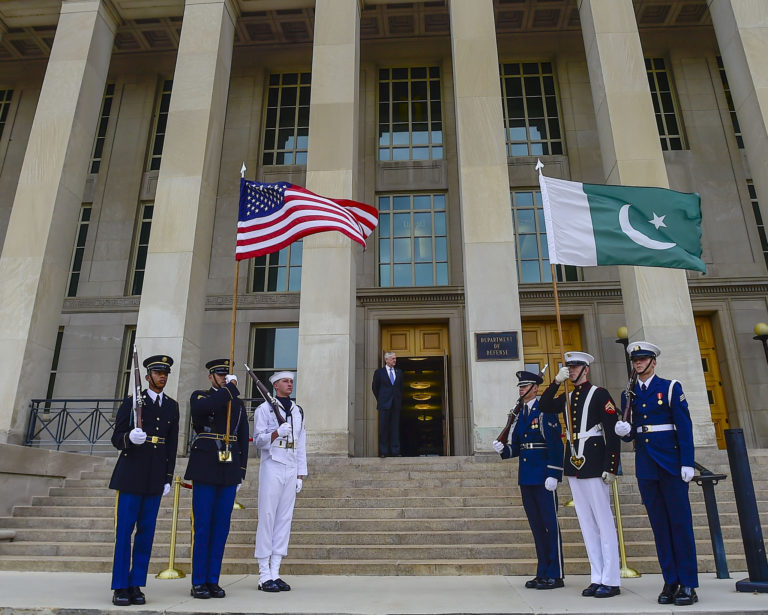

WASHINGTON: Two key concerns – losing a nuclear-armed country to China and having no influence over the Taliban — prevent the Biden administration from moving further away from Pakistan, shows a set of documents leaked to the media.
The Politico — a news outlet that covers the US capital city – published a report on Friday on messages exchanged between Washington and Islamabad recently.
The messages also show that “the Biden administration is quietly pressing Pakistan to cooperate on fighting terrorist groups such as ISIS and Al Qaeda in the wake of the Taliban takeover of Afghanistan,” the report claimed.
The messages show that Washington sees Pakistan as “a nation with links to the Afghan Taliban whose cooperation on fighting terrorism can be helpful. It’s also a nuclear-armed country American officials would prefer not to lose entirely to the Chinese influence,” the report added.
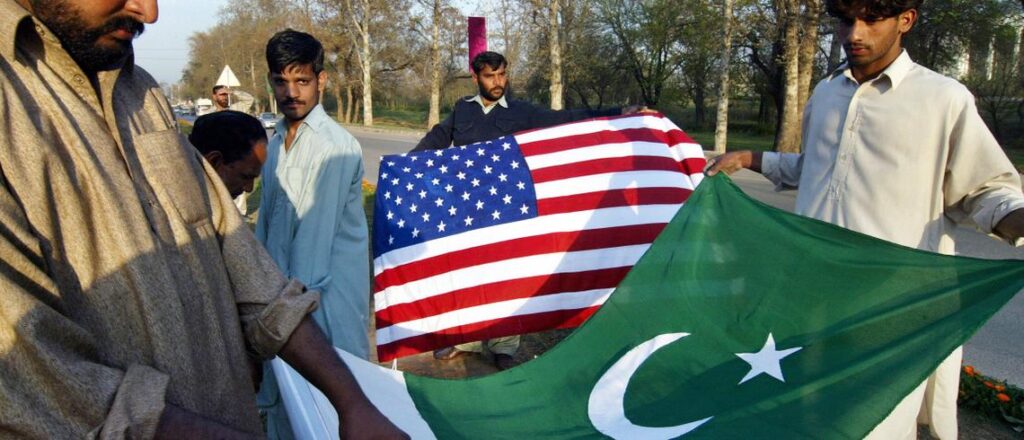
In response, Pakistan “has hinted that Islamabad deserves more public recognition of its role in helping people now fleeing Afghanistan, even as it has downplayed fears of what Taliban rule of the country could mean,” the report adds.
On Wednesday, US Under Secretary of State for Political Affairs Victoria Nuland included Pakistan on a list of countries that provided “critical support” to US evacuation efforts. “We are enormously grateful” to these countries, who have helped transit Americans and others to safety.” Previous US statements had omitted Pakistan.
The exchanges between the US and Pakistan “suggest that the two governments are far from lockstep on the road ahead, even now that the United States has pulled its troops from Afghanistan,” Politico observed.
In one discussion with a US official, Pakistan’s Ambassador Asad Majeed Khan appeared to question reports that the Taliban were carrying out revenge attacks in Afghanistan.
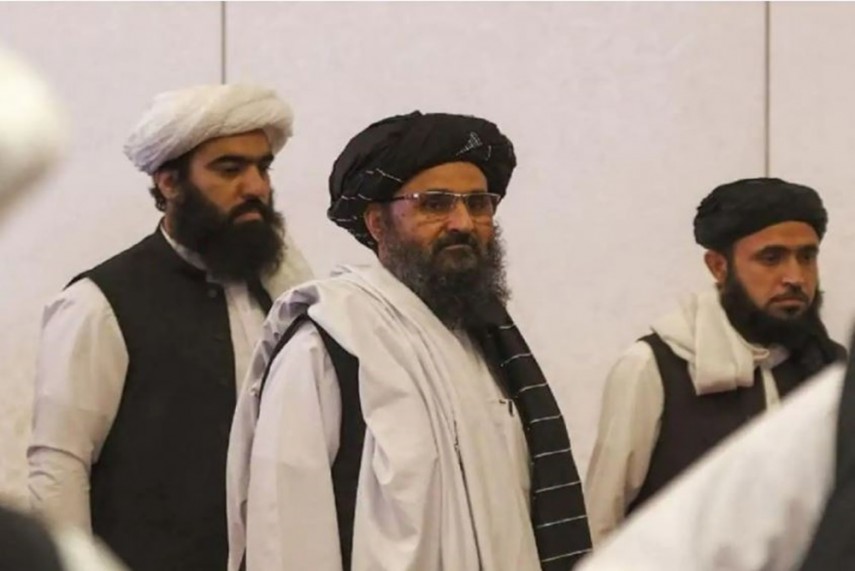
Quoting Pakistani “ground observations,” Ambassador Khan told the US officials that the Afghan Taliban “were not seeking retribution, and in fact they were going home to home to assure Afghans that there will not be reprisals.”
The US official, Ervin Massinga of the State Department, however, said that “he has seen reports to the contrary and hopes the Taliban do not seek revenge.”
The leaked documents include messages from the US Embassy, Islamabad, telling Washington that they were “being strained by the Afghan refugee crisis” and seeking guidance on how to deal with the situation.
The meeting between Mr. Massinga and Ambassador Khan took place on Aug. 26, the day that some 170 Afghans and 13 US troops were killed in a bombing at the Kabul airport. US officials have blamed the attack on the militant Islamic State group, seen as a rival of the Afghan Taliban.
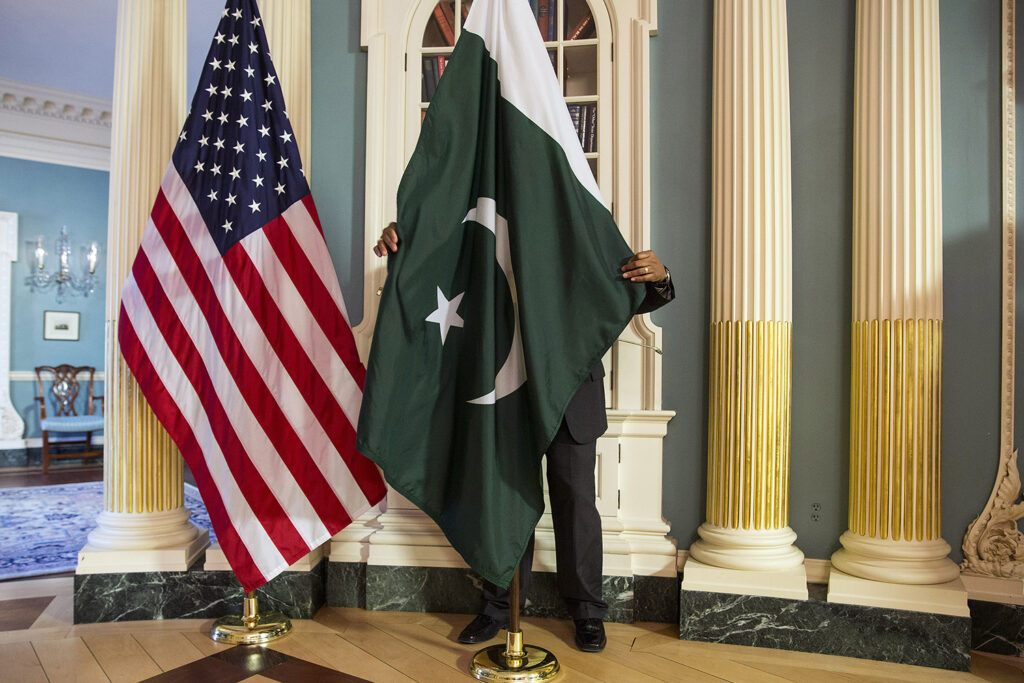
An official description of the meeting shows that Ambassador Khan offered condolences and the use of Pakistani medical facilities. The US official, however, suggested that Pakistan could help on other fronts.
“Acknowledging the tragedy, Mr. Massinga underscored the mutual interest Pakistan and the United States have in targeting ISIS and Al Qaeda.” In response, Ambassador Khan “acknowledged ISIS was a common enemy for the Taliban as well.”
Mr. Massinga expressed appreciation for Pakistan’s role in helping evacuees get out of Afghanistan, according to the meeting notes. The portions seen by POLITICO did not specify exactly what Pakistan was doing.
At one point in the talk, however, Ambassador “Khan intimated the Pakistani government would also appreciate public acknowledgment for the country’s assistance on the evacuation front.” An Aug. 20 statement of gratitude from Blinken to several countries for their help in the evacuations did not mention Pakistan.
Aside from his questioning of the reports about Taliban reprisals, Mr. Khan also said that “the Taliban were not stopping any third country nationals from getting to [the Kabul airport] but acknowledged there were some issues with Afghans getting through checkpoints.” Mr. Khan also highlighted Pakistan’s “effort in pushing the Taliban (while acknowledging it was increasingly difficult to get in contact with them) to form an inclusive government in Kabul.”
A separate message obtained by POLITICO contains an Aug. 28 cable described as “an urgent request for guidance” on how to deal with “a rapidly increasing number of requests to assist Afghans in Pakistan” who were or claimed to be eligible for resettlement to the United States.
In many of the cases, the embassy referred inquiries to the United Nations refugee agency or partner NGOs. But it was struggling to handle requests “from offices within the State Department and the interagency — as well as from international organizations, sponsors, and individual applicants, some of whom have appeared in person” to deal with myriad specific cases that included helping people arriving at the Afghan-Pakistan border.
The embassy officials asked for guidance on several questions, such as how they should help Afghans with a Special Immigrant Visa application “in process but not yet approved,” and those who say they are eligible for that visa program or others but who have no referrals on file.
Embassy officials indicated that things would only get harder as more Afghans ‘cross into Pakistan over land.”
Two days later, on Aug. 30, the embassy issued a staff notice, obtained by POLITICO, announcing it was creating a “task force for Afghanistan-Pakistan issues.”
The goal of the unit, the notice said, was “to lead and coordinate the mission’s response to humanitarian, refugee, evacuee, and related issues associated with Afghanistan.”
