

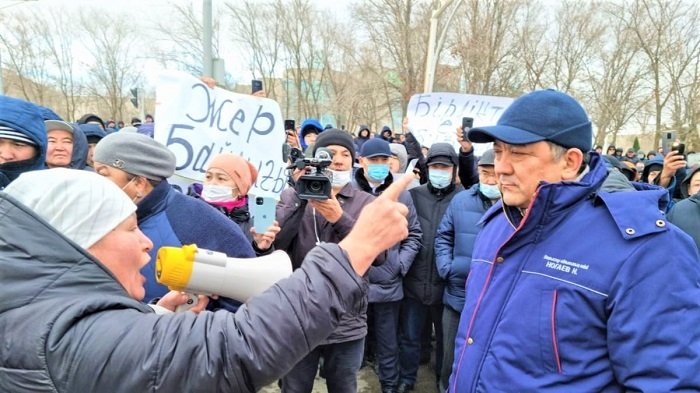

Kazakhstan government announced resignation amid mass protests triggered by gas price hikes.
President of Kazakhstan Qasym Zhomart Tokayev today accepted the resignation of Askar Mamin’s government and issued a presidential decree.
According to decree, “In accordance with Article 70 of the Constitution of the Republic of Kazakhstan, I decide to accept the resignation of the government of the Republic of Kazakhstan.”
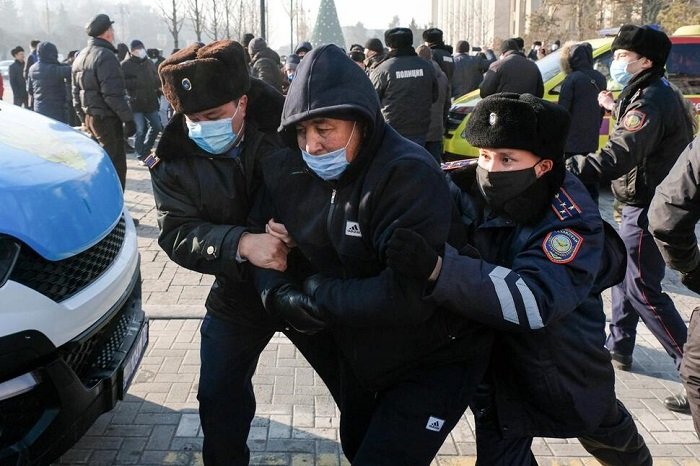
Earlier, Tokayev imposed states of emergency in Almaty and an oil-rich western region after unprecedented protests erupted in the country over a regional energy price hike which engulfed other parts of the country.
The southeastern city of Almaty, Kazakhstan’s financial capital, was in chaos since Tuesday as police fired tear gas and stun grenades to disperse protesters.
After resignation of the government, Tokayev said Smailov Alikhan Askhanovich will be the caretaker prime minister of Kazakhstan.
Members of the current government will continue to fullfil their jobs until a new government is formed, the decree said.
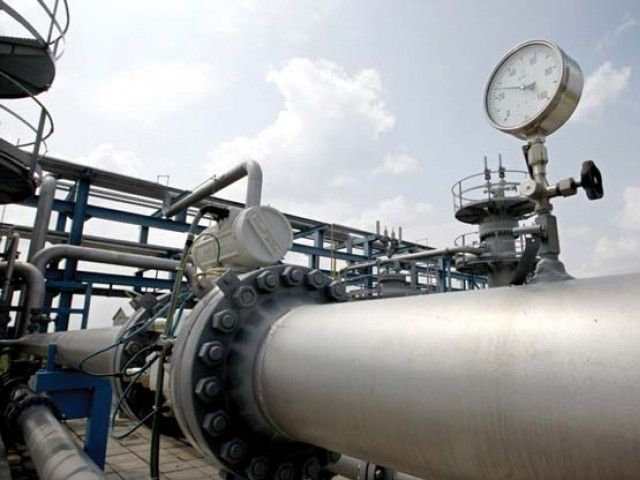
Tokayev has directed the interim government to regulate prices of fuel and other socially important goods after rolling back liquefied petroleum gas price hikes which triggered violent protests.
Rare protests
The oil-rich country’s government announced on Tuesday evening that it was restoring the price cap of 50 tenge ($0.11) per litre, or less than half the market price, in Mangistau province.
Many Kazakhs have converted their cars to run on LPG, long far cheaper than gasoline as a vehicle fuel in Kazakhstan because of price caps. But the government argued that the low price was unsustainable and lifted the caps on January 1.
After the price of the fuel spiked, rallies involving thousands of people erupted on January 2 in the town of Zhanaozen, an oil hub and site of deadly clashes between protesters and police a decade ago.
Demonstrations spread to other parts of surrounding Mangistau province and western Kazakhstan, including provincial centre Aktau and a worker camp used by sub-contractors of Kazakhstan’s biggest oil producer, Tengizchevroil. The Chevron-led venture said output had not been affected.
