

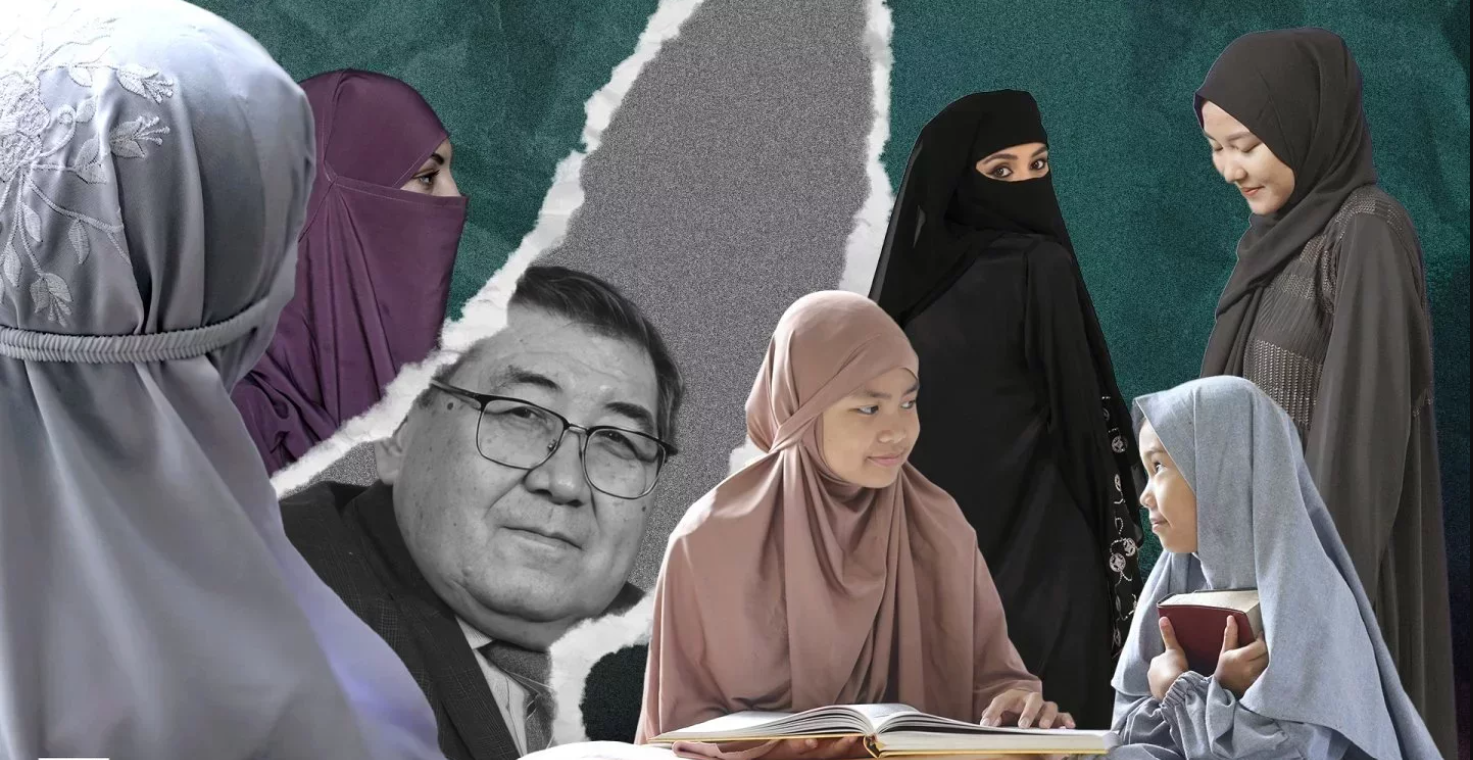

Kazakhstan’s President Kassym-Jomart Tokayev has signed into law a measure that prohibits people from wearing face-covering clothing in public places, aligning the country with similar restrictions recently adopted by other Central Asian states.
The newly approved legislation bans attire that “interferes with facial recognition” in public spaces, though it allows exceptions for medical needs, extreme weather conditions, and during cultural or sporting events. While the law itself avoids explicit reference to religion or specific religious garments, it reflects broader efforts to limit face-covering Islamic dress such as the niqab or burqa.
Kazakhstan, a majority-Muslim nation and former Soviet republic, has positioned this move as part of a push to reaffirm national cultural identity. Earlier this year, President Tokayev expressed support for the measure, suggesting that traditional Kazakh attire better highlights the country’s heritage. “Rather than wearing face-concealing black robes, it’s much better to wear clothes in the national style,” he remarked, as reported by local media. “Our national clothes vividly emphasise our ethnic identity, so we need to popularise them comprehensively.”
Similar bans have appeared across Central Asia in recent years. In Kyrgyzstan, local media reports say police have conducted patrols to enforce a ban on the niqab, while Uzbekistan’s law penalises wearing the niqab with fines exceeding $250. In Tajikistan, President Emomali Rakhmon introduced a law prohibiting public clothing deemed “alien to national culture.”
These measures have drawn both domestic debate and international attention, reflecting a regional trend where secular governments aim to curb overt religious symbols in public life, often under the banner of promoting cultural unity and security.
Monday’s signing was part of a broader package of legal amendments endorsed by Tokayev, underscoring his administration’s focus on shaping national identity and social cohesion through legislative change.
