

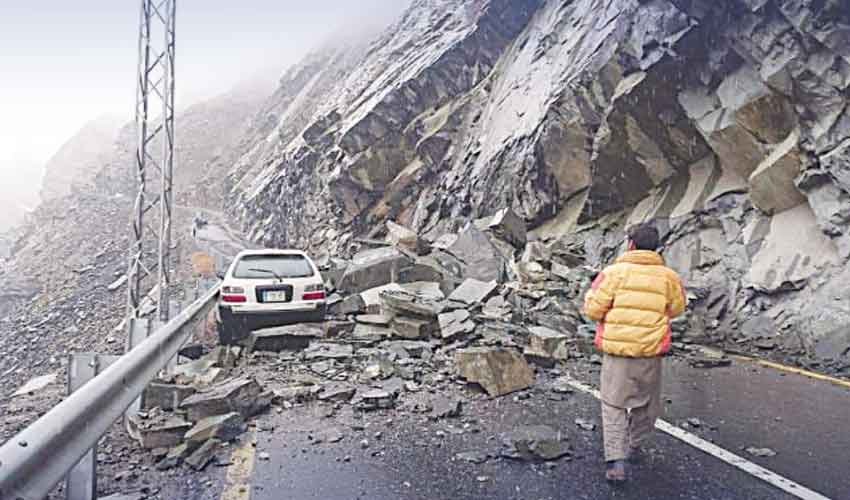

Rapid glacier melt in Hunza has caused the Hunza River’s water level to surge, severely damaging sections of the Karakoram Highway at Morkhun and Garcha. The destruction has forced a complete road closure, cutting off Pakistan’s land connectivity with China.
The rising river, swollen to dangerous levels, has triggered flooding across the region. At Morkhun, intense riverbank erosion has rendered the highway impassable, halting all types of vehicular traffic. Local residents have been urged to remain alert due to the threat of further flooding.
Several streams and rivers across the Hunza Valley are experiencing high water levels, posing serious risks to communities living along their banks.
District authorities and emergency agencies are implementing urgent measures to prevent potential loss of life and property.
The Meteorological Department and the Disaster Management Authority have warned that continued rapid glacier melt could cause further flooding in the coming days.
PMD predicts more rain
The Pakistan Meteorological Department (PMD) has forecast another intense spell of monsoon rains set to begin on Monday, August 4, raising alarms over the potential for flash floods and urban inundation in low-lying areas. The system is expected to impact large swathes of the country, particularly northern and central regions, over the coming days.
According to the PMD, areas in Azad Jammu and Kashmir and Gilgit-Baltistan are expected to experience heavy downpours and possible cloudbursts. Meanwhile, Khyber Pakhtunkhwa will see thunderstorms and gusty winds accompanying the rainfall.
Punjab, which has already been severely affected by continuous rains, and Islamabad are also bracing for more heavy showers. Rain activity will likely extend into parts of Sindh and Balochistan by August 6, though in these regions, the showers may be more scattered.
Meteorologists have warned that this monsoon system could persist well beyond its usual seasonal duration, possibly stretching into late September due to shifting weather patterns linked to climate change. With southern regions of Pakistan so far receiving below-average rainfall, experts suggest that monsoon currents could begin moving southward around August 10, bringing much-needed rain to areas like Sindh.
The Met Office has advised local administrations to remain on high alert and prepare for potential overflow of streams, clogged drains, and water accumulation in vulnerable urban centers.
