

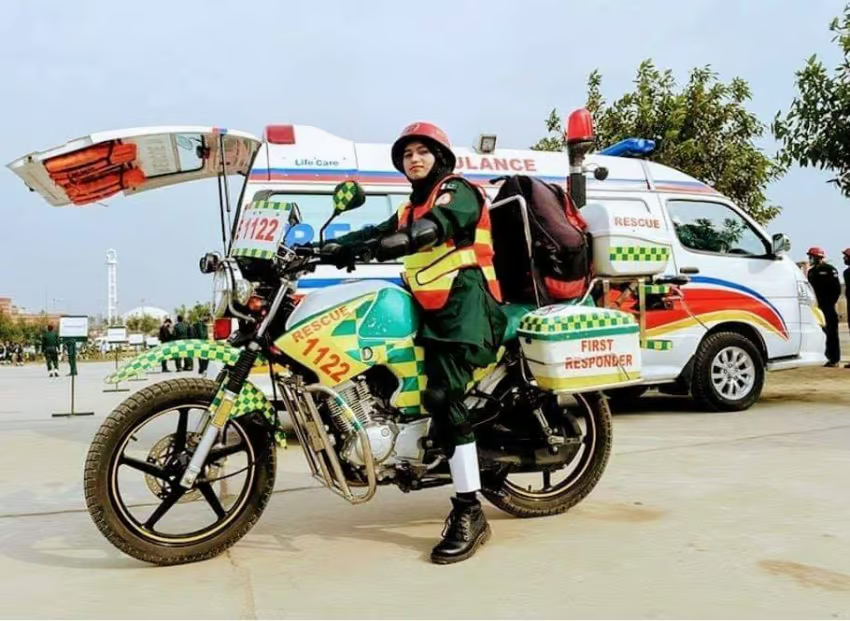

Cycle Ambulance Service
In a pioneering effort to enhance emergency medical care accessibility in Karachi’s congested and hard-to-reach neighbourhoods, Rescue 1122 has launched a unique cycle ambulance service.
This innovative initiative is designed to tackle the challenges posed by narrow lanes and heavy traffic congestion, where traditional ambulance vehicles often struggle to reach patients in time.
The cycle ambulances are pedal-powered and operated by specially trained female volunteers, marking a remarkable intersection of healthcare innovation and women’s empowerment. By involving women as frontline responders, the project not only aims to improve emergency response times but also to promote gender inclusion in a sector traditionally dominated by men.
Though compact in size, these cycle ambulances are equipped with vital medical supplies necessary for immediate on-site treatment. Each unit carries essential first-aid equipment, including oxygen masks, nebulisers, sugar testing kits, and other life-saving tools, enabling volunteers to provide crucial initial care before patients can be transported to medical facilities. This rapid response capability can be a game-changer in critical situations where every second counts.
Brigadier (R) Tariq Qadir, CEO of Rescue 1122, highlighted the multiple benefits of the new service, describing it as both environmentally friendly and highly efficient. He emphasized that beyond the healthcare advantages, the initiative serves as a powerful symbol of female empowerment in Pakistan’s healthcare sector.
According to him, the project represents a significant step toward extending essential medical services to all citizens, especially those living in underserved and informal settlements where healthcare access has traditionally been limited.
The female volunteers involved in the program have expressed great pride in their roles. They consider their participation not only a professional responsibility but also a meaningful way to contribute to community welfare. Their dedication underscores the project’s potential to inspire further social change by breaking gender barriers and fostering a culture of inclusivity.
The initiative has garnered widespread appreciation from Karachi’s residents, many of whom recognize the practical and transformative impact cycle ambulances can have in improving healthcare outcomes.
More than just a medical response service, this project embodies a broader vision of social progress—one that integrates innovation, community support, and gender equality to create a healthier, more inclusive city for all.
