

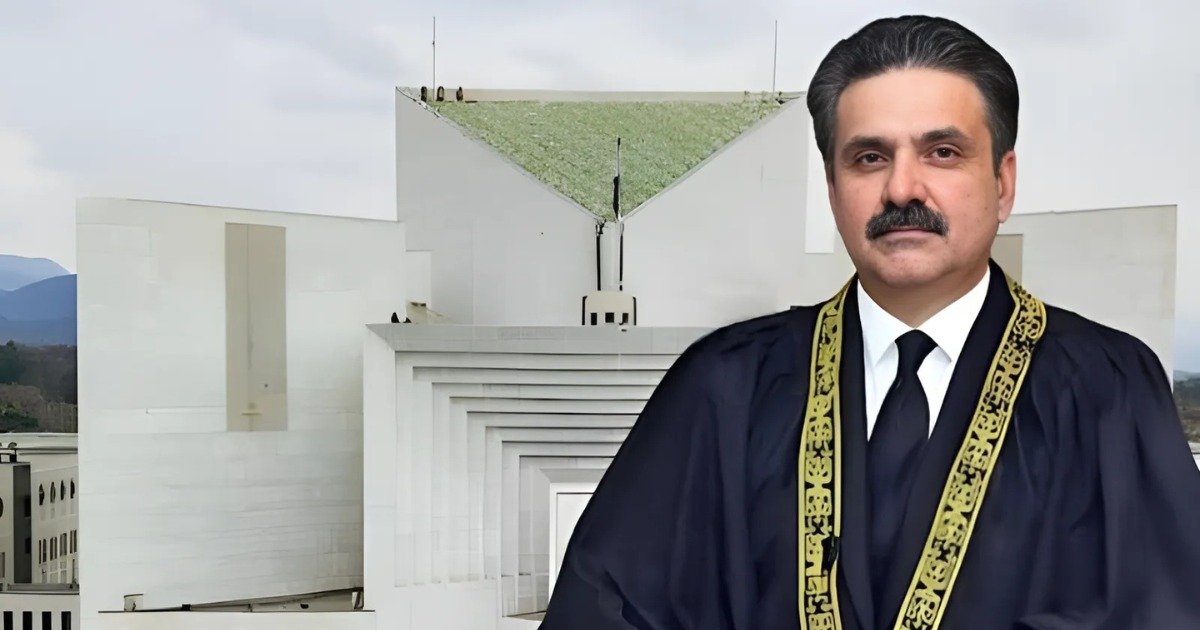

Chief Justice Yahya Afridi said that the Judicial Policymaking Panel will review the missing persons and other key cases next week. He also stated that the Supreme Court will begin scheduling cases through artificial intelligence in the coming months.
Digital Transformation Underway
The judiciary is moving towards a paperless system with e-services, online case records, and a facilitation centre for litigants.
Transparency and Accountability
The Supreme Judicial Council decided 64 complaints against judges, with pending cases to be distributed this month.
Chief Justice of Pakistan (CJP) Yahya Afridi announced that the Supreme Court will soon use artificial intelligence (AI) to schedule cases. He admitted, however, that the judiciary is not fully prepared for immediate implementation.
Speaking at the Judicial Conference in Islamabad, Justice Afridi highlighted the importance of reforms, transparency, and technology in delivering justice. Judges of the Supreme Court and high courts, the Attorney General for Pakistan, and representatives of bar councils attended the event.
He stressed that the new judicial year was not ceremonial but an opportunity to review performance. Justice Afridi said reforms were built on five pillars, including technology adoption, transparency, and case management.
The Supreme Court, he revealed, is shifting to a paperless system. Case registration, records, and judgements are now available online. A facilitation centre for litigants will become operational on October 1. He confirmed that 61,000 files are being scanned digitally, with completion expected within six months.
Discussing accountability, Justice Afridi disclosed that the Supreme Judicial Council had decided 64 complaints against judges, while 72 cases remain under consideration and 65 are pending. He assured that pending matters would be assigned on a first-come, first-served basis.
He also announced completion of internal audits and shared draft rules with judges for feedback. A full court meeting will review the rules, ensuring objections are considered in writing.
The chief justice clarified leave rules for judges and outlined reduced security protocols. He said his own security convoy had been cut from nine vehicles to two.
Justice Afridi reaffirmed his commitment to visiting remote regions to assess the justice system. He announced that the National Judicial Policymaking Committee will meet on October 17 to review key issues, including missing persons cases.
Pakistan Bar Council Vice Chairman Tahir Nasrullah praised Afridi’s initiatives, especially e-services, internet and solar facilities in remote courts, and video link hearings. He noted that pending Supreme Court cases had already decreased, raising hope for stronger access to justice at all levels.
